
Samer Choucair: IMF Warning Places Algeria at a Critical Economic Crossroads as Fiscal Reform Becomes Essential
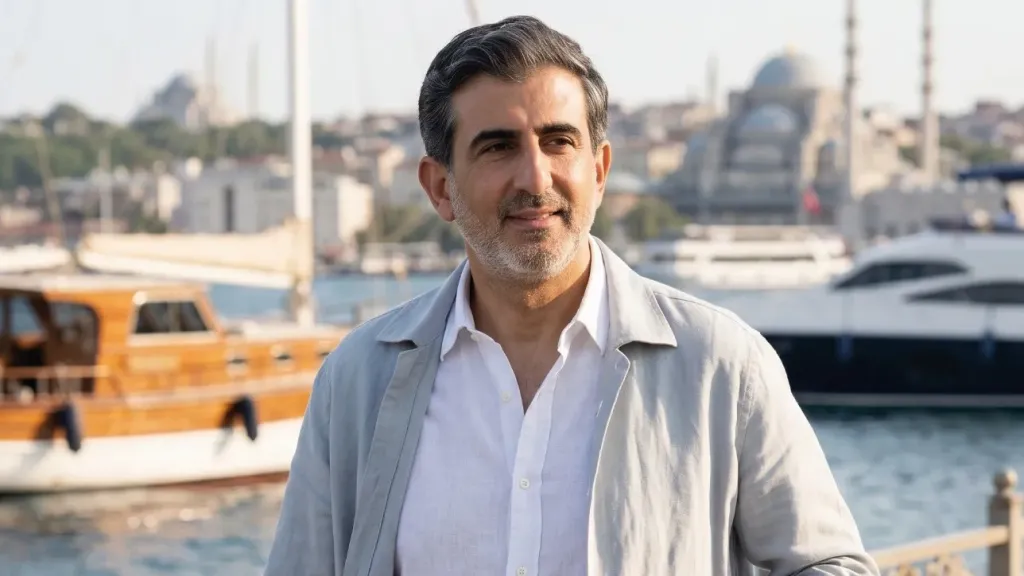
Investment entrepreneur Samer Choucair said that the International Monetary Fund's warning regarding the need for significant fiscal adjustment in Algeria signals that the country's economy has entered a phase requiring strategic policy decisions to preserve financial stability and foreign exchange reserves, despite continuing to record positive economic growth.
Choucair explained that the IMF forecasts Algeria's economy will grow by 3.8% in 2026, following 3.9% growth in 2025. However, the persistence of large fiscal deficits financed through reserve drawdowns and central bank funding underscores the urgency of accelerating structural reforms to ensure sustainable growth and create new opportunities for economic diversification.
He added that the image centered around the statue of Emir Abdelkader in the heart of Algiers symbolizes a historic legacy that now reflects a new economic challenge: transitioning from an economy heavily dependent on hydrocarbon revenues to one that is more diversified and resilient against global economic fluctuations.
The Algerian economy faces a new test
Samer Choucair noted that the IMF's Article IV consultation concluded that Algeria continues to maintain solid economic momentum compared with many emerging markets, but that this growth masks mounting pressures on public finances.
He explained that the Fund warned that maintaining fiscal deficits at current levels would gradually reduce foreign exchange reserves while increasing public debt, which reached 52.1% of GDP in 2025, thereby narrowing the government's future fiscal flexibility.
According to Choucair, the IMF's central message is that reform is no longer a policy option that can be postponed but has become a necessity for preserving medium- and long-term economic stability.
What does fiscal adjustment mean?
Samer Choucair emphasized that fiscal adjustment should not be interpreted as broad austerity measures, but rather as a gradual reform process that balances economic growth with long-term fiscal sustainability.
He explained that such reforms include expanding the tax base, improving tax collection efficiency—particularly in non-oil sectors—gradually restructuring subsidy programs while preserving social safety nets, increasing the efficiency of government spending, and encouraging private-sector investment alongside foreign direct investment to strengthen non-hydrocarbon revenues.
He added that these measures have become increasingly urgent amid continued pressure on the current account and foreign exchange reserves.
Foreign reserves remain the first line of defense
Samer Choucair stressed that foreign exchange reserves represent one of Algeria's most important pillars of macroeconomic stability, providing the capacity to finance imports, support the stability of the Algerian dinar, and cushion the economy against volatility in global energy markets.
He added that the stability of domestic markets, commercial activity, and the services sector remains closely linked to the strength of foreign reserves, noting that any rapid decline could affect exchange rates, investor confidence, and the government's ability to finance development projects.
Current growth requires new engines
Samer Choucair explained that while projected growth of 3.8% is encouraging, it may not be sufficient to generate the number of jobs required for Algeria's expanding young workforce.
He added that the economy's continued reliance on hydrocarbons leaves growth highly exposed to fluctuations in global oil and natural gas prices, making economic diversification essential for increasing the contribution of productive non-oil sectors to GDP.
Economic diversification represents the greatest opportunity
Samer Choucair believes Algeria possesses significant competitive advantages that position it to accelerate economic diversification, including abundant natural resources, exceptional potential in solar energy and green hydrogen, substantial mineral wealth, agriculture, and tourism.
He noted that the development of Algeria's historic cities and cultural landmarks, including Emir Abdelkader Square, could become part of a broader strategy to promote cultural tourism and the creative economy, strengthening the contribution of non-oil sectors to long-term growth.
Choucair emphasized that achieving these objectives requires a stable economic environment capable of attracting both domestic and international investment.
Partnership opportunities with Gulf countries
Samer Choucair said that the Gulf region's experience in economic diversification, particularly Saudi Arabia's Vision 2030, offers valuable lessons that Algeria could leverage to accelerate its own reform agenda.
He added that successful implementation of fiscal reforms and improvements to the business environment would create new opportunities for strategic partnerships with Gulf sovereign wealth funds across renewable energy, infrastructure, tourism, and manufacturing industries.
According to Choucair, Algeria's economic stability carries importance not only domestically but also for European energy security and the broader stability of North Africa.
Early reform is less costly
Samer Choucair stressed that the greatest challenge lies not in implementing reforms themselves but in delaying them.
He explained that prolonged fiscal deficits would continue to erode foreign reserves and increase public debt, ultimately reducing policymakers' available economic options.
Early reform, he argued, provides governments with greater flexibility to manage economic transformation gradually without facing severe financial pressures.
Key risks
Samer Choucair identified the principal risks as continued declines in foreign exchange reserves, rising public debt levels, delays in implementing structural reforms, and the economy's ongoing dependence on oil and gas revenues amid volatile global commodity markets.
He also warned that limited private-sector participation could slow the pace of economic growth needed to create employment opportunities and improve living standards.
Investment opportunities
Choucair emphasized that Algeria's current economic transition presents substantial investment opportunities across renewable energy, green hydrogen, mining, agriculture, cultural tourism, infrastructure, and public-private partnerships.
He added that institutional investors and sovereign wealth funds may increasingly view Algeria as an attractive investment destination if fiscal reforms are accompanied by improvements in the investment climate and stronger governance standards.
Strategic guidance for investors
Concluding his remarks, Samer Choucair said investors should closely monitor the Algerian government's next policy steps, particularly regarding fiscal reforms, efforts to expand non-oil revenues, and initiatives to improve public spending efficiency.
He noted that Algeria possesses all the fundamental ingredients necessary to achieve a successful economic transformation, but the outcome will ultimately depend on the speed of reform implementation and the country's ability to attract long-term investment.
Choucair concluded that the statue of Emir Abdelkader, a symbol of resilience and leadership throughout Algeria's history, could also come to symbolize a new era of economic transformation if the country successfully converts its natural resources and human capital into a more diversified, sustainable economy capable of generating growth and attracting investment for decades to come.