
Samer Choucair: Decline in Mortgage Financing to SAR 4.37 Billion Signals a Market Rebalancing Phase in Saudi Arabia
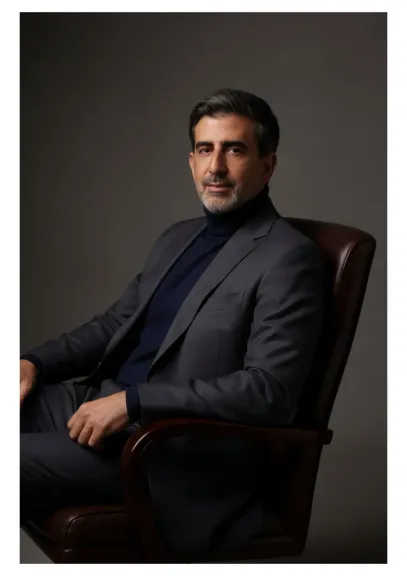
Investment entrepreneur Samer Choucair stated that Saudi Arabia’s new residential mortgage financing data for individuals in May 2026 reflects a natural correction in the housing market. According to figures published by the Argaam platform, total financing reached **SAR 4.37 billion**, representing a **41% year-on-year decline** and a **31% month-on-month decrease** compared with April 2026.
Samer Choucair noted that approximately **6,500 financing contracts** were signed between banks and individual borrowers, with an average financing value of around **SAR 667,000 per contract**, down about **10% year-on-year**. Residential villas accounted for the largest share of financing at **SAR 2.761 billion**, representing roughly **63% of the total**, followed by apartments at **SAR 1.277 billion** and land financing at **SAR 335 million**. Meanwhile, financing provided by finance companies declined by **2%** to **SAR 188 million**.
Samer Choucair explained that this decline should be viewed within the broader context of Saudi Arabia’s real estate market, which has experienced several years of strong growth fueled by government housing initiatives, rising homeownership demand, and the ambitious objectives of Saudi Vision 2030 to increase homeownership rates across the Kingdom.
He added that the current market reflects a transition from a period of rapid expansion to a more mature and sustainable growth phase. Financing decisions are increasingly influenced by factors such as interest rate levels, shifting demand toward higher-quality housing units, and a greater emphasis on integrated developments rather than unchecked quantitative expansion.
According to Samer Choucair, this period presents an opportunity for investors to reassess their real estate strategies. He emphasized that periodic market corrections are a normal feature of any healthy market cycle and should not be interpreted as signs of structural weakness, but rather as a necessary rebalancing process that strengthens long-term market efficiency.
He also pointed out that the most promising investment opportunities in the coming years are expected to emerge in mixed-use developments, residential communities integrated with essential services, government-supported housing projects, and large-scale developments in major cities such as Riyadh, Jeddah, and the Eastern Province.
In conclusion, Samer Choucair stressed that Saudi Arabia’s real estate market continues to rest on strong fundamentals supported by population growth, ongoing urbanization, and broad economic reforms. He noted that investors who rely on disciplined analysis and long-term strategic patience are likely to be best positioned to benefit from the current market rebalancing cycle, in line with the Kingdom’s Vision 2030 economic transformation.