
Samer Choucair: Listing 5 Moroccan Groups in Forbes Reflects the Strength of the Arab Family Economy
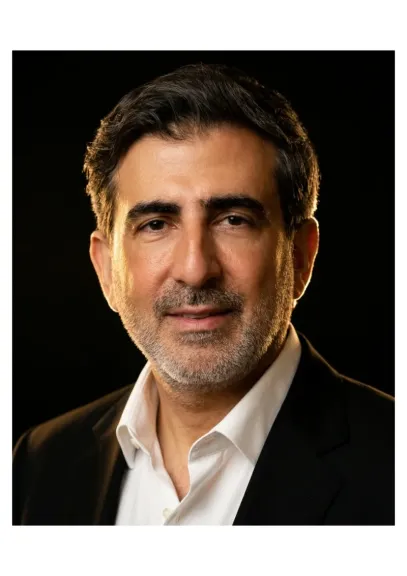
Five Moroccan family business groups in Forbes Middle East's list of the Arab world's 100 most powerful family companies — investment entrepreneur Samer Choucair sees that number as carrying a message well beyond Morocco itself. He affirmed that this reflects the growing strength of family companies outside the Gulf states, confirming that institutional governance and considered expansion have become among the most important success and sustainability factors.
He noted that the list showed continued GCC dominance across 86 positions, with 32 Saudi companies, 31 Emirati, and 10 Qatari, but Morocco's strong presence offers clear evidence of the diversity of economic growth drivers in the region, and presents important lessons for investors in Saudi Arabia and the Gulf states under Vision 2030's targets.
*Family Companies Have Become a Key Growth Driver*
Choucair explained that Forbes data confirms the pivotal role family companies play in creating private wealth and providing millions of jobs, pointing out that Arab GDP reached roughly 3.8 trillion dollars during 2025, with expectations of exceeding 4 trillion dollars in 2026.
He added that company rankings relied on a set of criteria, including size and market value, geographic and sectoral diversity, financial performance, and institutional legacy, in addition to workforce size, reflecting the importance of building companies capable of achieving sustainable growth.
*Five Moroccan Groups Offer Different Success Models*
Choucair noted that the highest-ranked Moroccan group was O Capital Group, coming in at regional position 21, explaining that it was founded under the leadership of Othman Benjelloun in 2021 following the restructuring of FinanceCom and its merger with Holding Benjelloun Mezian, operating in financial services, telecommunications, agriculture, transport, real estate, and media, and standing behind prominent projects like Mohammed VI Tower.
He added that Holmarcom Group occupied position 75, having continued its expansion in finance, agricultural industries, logistics, and real estate, alongside expansion in West Africa, particularly Senegal, Benin, and Ivory Coast, noting that the group strengthened its position during 2025 and 2026 through acquiring a stake in BMCI and attracting international investors such as IFC.
He explained that Addoha Group came in at position 83, managing to expand its real estate activity to five African countries, with more than 26,000 residential units under construction, roughly 30% of which are in West Africa, while its founder Anas Sefrioui's wealth is estimated at roughly 1.3 billion dollars.
He noted that Diana Holding occupied position 84, drawing on its diverse activity in agriculture, poultry, beverages, seafood, packaging, and distribution, managing more than 8,300 hectares of agricultural land through 30 subsidiaries, employing roughly 7,200 people.
He added that YNNA Holding (Al Chaabi Group) came in at position 85, continuing its activity in hospitality, industry, construction, retail, food production, and real estate, alongside owning well-known brands such as Aswak Assalam, Super Cérame, and Chaabi Housing, while signing a partnership during 2025 to establish a 100 MW wind energy project.
*Institutional Governance Is the Key to Sustainability*
Choucair affirmed that the success of these Moroccan groups proves that combining family legacy with modern institutional governance represents the fundamental pillar for continued growth.
He added that investors need to understand the deep mechanisms driving markets, explaining that companies that absorb the nature of local demand, and succeed in regional expansion in a considered manner, are most capable of creating sustainable value for shareholders and achieving long-term growth.
*African Expansion Opens New Opportunities for Saudi Investors*
Choucair noted that the expansion of groups such as Holmarcom, Addoha, and O Capital into African markets offers a practical model that Saudi companies can benefit from during 2026.
He explained that Vision 2030 encourages economic diversification and establishing international partnerships, making the investment bridges between Morocco and Africa a promising opportunity for Saudi investors in sectors such as real estate, smart agriculture, and financial services.
He added that strategic investment is no longer limited to injecting capital, but has come to depend on building long-term partnerships achieving added value for all parties.
*Saudi Arabia Possesses a Strong Growth Base*
Choucair affirmed that 32 Saudi companies on the list reflects the strength of the family sector in the Kingdom, noting that the period ahead will see greater competition among companies adopting modern governance and opening the door to institutional investment and capital market listing.
He added that these companies will be best positioned to attract capital and achieve high growth rates in the coming years, aligning with Vision 2030's targets.
*Investment Lessons From the Moroccan Experience*
Choucair explained that the ranking presents a number of important messages for investors, most prominently that diversification in sectors such as real estate, agriculture, financial services, and logistics aligns with Vision 2030's priorities, particularly in food security, housing, and non-oil growth fields.
He added that expansion toward African markets gives Gulf investors the opportunity to enter promising markets through strategic partnerships reducing risk, while governance and professionalism have become among the most important factors necessary for attracting institutional investment, sovereign wealth funds, and family offices.
*Family Investment Creates Sustainable Economic Strength*
He concluded by affirming that family companies are no longer just entities carrying historical legacy, but have become key drivers of growth and investment in the region.
He added that the investor who understands the mechanisms of these companies' development, and participates in developing them and expanding their business scope, will be better positioned to achieve strong investment returns during 2026 and beyond, affirming that Saudi Arabia and the Gulf states today possess all the fundamentals qualifying them to lead the next phase of family company growth at both regional and global levels.