
Samer Choucair: Why Did the Gulf Economy Emerge Stronger From the War With Iran?
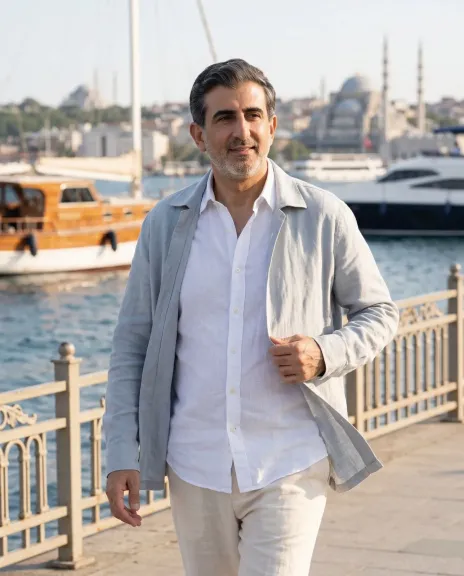
Investment entrepreneur Samer Choucair affirmed that GCC economies proved their ability to withstand one of the most difficult geopolitical challenges the region experienced during 2026, noting that the repercussions of the war with Iran, and the accompanying temporary closure of the Strait of Hormuz and effects on trade movement and infrastructure, didn't prevent the Gulf economy from maintaining significant resilience.
He explained that reports issued by "Bloomberg" and "Fitch Ratings" analyses showed five main factors behind this resilience, affirming that these factors don't just reflect Gulf economies' strength, but also represent clear indicators of promising investment opportunities during the recovery phase.
He added that World Bank estimates, despite lowering GCC economies' growth projections to roughly 1.3% during 2026, simultaneously confirmed that the strength of economic fundamentals and continuous reforms prevented a deeper economic contraction.
*Sovereign Funds Formed the First Line of Defense*
Choucair said that Gulf sovereign funds were the most influential factor in maintaining financial stability during the crisis.
He explained that Gulf sovereign fund assets exceeded 5 trillion US dollars, while the Saudi Public Investment Fund alone manages assets estimated at roughly 1.15 trillion dollars, providing significant capacity to absorb shocks and finance reform plans estimated at roughly 200 billion dollars without affecting major development projects.
He added that sovereign funds are no longer just wealth preservation tools, but have become key drivers of long-term investment, noting that partnering with these funds gives investors opportunities to enter diverse, sustainable sectors.
*Economic Diversification Strengthened the Saudi Economy*
Choucair affirmed that the continued implementation of the Kingdom's Vision 2030 targets played a pivotal role in strengthening the Saudi economy's resilience during the crisis.
He noted that non-oil GDP continued growing at rates ranging between 4.3% and 4.6% in recent years, with expectations of this performance continuing, backed by the private sector's rising contribution and expansion in tourism, entertainment, logistics services, and technology sectors.
He added that this performance reflects the Kingdom's success in reducing reliance on oil, and building a more diverse economy capable of attracting local and foreign investment.
*Infrastructure Ensured Continued Energy Exports*
Choucair explained that Saudi Arabia and the UAE owning pipelines bypassing the Strait of Hormuz helped continue energy export flows despite maritime disruptions.
He added that this strategic infrastructure confirmed the importance of continued investment in developing transport networks and logistics services, as one of the most important elements protecting the economy from geopolitical risks.
*Legislative Reforms Strengthened Investor Confidence*
Choucair noted that the economic and regulatory reforms the Gulf states have implemented, led by Saudi Arabia, helped maintain the region's investment appeal even amid volatility.
He explained that easing visa procedures, developing commercial regulations, and opening new sectors to foreign direct investment strengthened the business environment's competitiveness and cemented investor confidence in the Gulf economy.
*Gulf Cooperation Supported Economic Stability*
Choucair affirmed that continued coordination between GCC states, alongside strategic international partnerships, played an important role in limiting the crisis's repercussions.
He added that this cooperation helped strengthen security and economic stability, and opened new areas for joint investments, supporting the coming recovery phase.
*Where the Opportunities Lie During the Recovery Phase*
Choucair explained that the current stage opens the door to a number of promising investment opportunities, most notably the tourism, entertainment, and hospitality sector, with expectations of activity quickly returning and confidence in Gulf destinations being restored; renewable energy and green hydrogen projects, which continue growing alongside the global shift toward the sustainable economy; technology, artificial intelligence, and advanced industries sectors, amid the major expansion of Public Investment Fund investments in these fields; and capital markets and strategic real estate, which offer attractive investment opportunities as the recovery and re-expansion phase begins.
*Samer Choucair's Advice for Investors*
Choucair affirmed that crises often create the best investment opportunities for investors who possess a long-term vision.
He explained that focus should be on sectors tied to local consumption, non-oil exports, and the digital economy in Saudi Arabia, noting that Vision 2030 has become a clear roadmap for achieving sustainable returns over the medium and long term.
*The Gulf Continues Recovering and Growth Opportunities Are Expanding*
He concluded his analysis by affirming that the Gulf states, led by Saudi Arabia, possess all the fundamentals qualifying them to emerge from crises stronger, drawing on large financial reserves, continuous economic reforms, and the accelerating pace of economic diversification.
Choucair said that investing in Saudi Arabia no longer depends only on the strength of the current economy, but rests on a clear strategic vision for the future, affirming that the investor who understands market mechanisms and moves according to a long-term reading will be best positioned to benefit from the opportunities the economic recovery phase creates.