
Samer Choucair: The Most Important Investment Opportunities for Saudis Lie in Balancing Global Innovation With Vision 2030*
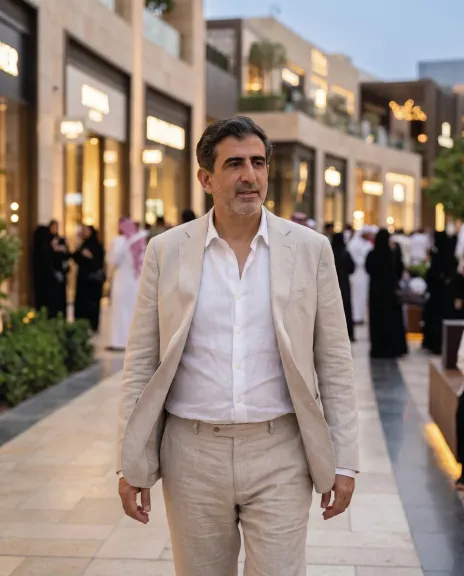
Samer Choucair, investment entrepreneur, affirmed that the accelerating gap between the American and European economies reflects a structural shift in the nature of global growth, as the United States leads the process of "building the future" through innovation and advanced technologies, while Europe relies more on importing this future and adopting it later, creating direct implications for capital markets and investment opportunities globally and in the Arab region.
He explained that this disparity, which recent economic analyses including IMF reports have noted, is clearly evident in 2026 projections, with US GDP expected to reach roughly 31.8 trillion dollars, compared to 22.5 trillion dollars for the European Union, with continued American growth superiority driven by investment in artificial intelligence, research and development, and venture capital.
He noted that the American economy benefits from an integrated ecosystem encompassing flexible capital markets, a regulatory environment stimulating innovation, and high levels of R&D spending reaching roughly 3.5% of GDP, compared to a lower average in Europe, in addition to clear superiority in corporate productivity and rapid adoption of modern technologies.
He added that Europe, despite its economic strength, faces challenges related to rising energy costs, slow technology adoption among small and medium enterprises, and regulatory constraints, reflecting on growth pace compared to the American economy.
*Where the Opportunities Lie*
In this context, Choucair said: "American superiority in innovation and productivity creates genuine opportunities for Gulf investors seeking to diversify their portfolios. Investing in American technology and AI sectors offers higher returns over the medium and long term, particularly amid continued global demand for these technologies."
He explained that this global reality doesn't mean ignoring local opportunities, but strengthens the importance of building a dual investment strategy combining benefiting from leading global markets, led by the United States, with investing in major national projects within Saudi Arabia's Vision 2030 framework.
He noted that Vision 2030 represents an advanced model for building a diverse future economy, through investing in sectors such as artificial intelligence, tourism, entertainment, renewable energy, and logistics services, while strengthening international partnerships to transfer knowledge and advanced technologies to the local market.
He added: "At the same time, the Kingdom's Vision 2030 represents an inspiring model for building the future locally. Partnerships with leading American companies in artificial intelligence and data centers help transfer knowledge and accelerate economic transformation, and strengthen the Kingdom's position as a global innovation hub."
Choucair warned against relying on a single market when building investment portfolios, affirming that global volatility requires strategic diversification balancing high-growth assets in American markets with long-term investments in national projects within the Kingdom, saying: "The optimal strategy combines smartly benefiting from the strength of the American economy with strategic investment in major national projects, while managing risks tied to global market volatility."
He explained that the period ahead will see continued momentum in the AI sector, expected to contribute more than 135 billion dollars to the Saudi economy by 2030, strengthening the importance of investing in digital infrastructure, data centers, and advanced technologies.
He pointed to a set of investment opportunities emerging in 2026, including investing in artificial intelligence, data centers, and Saudi-American technical partnerships, in addition to exchange-traded index funds in American markets, and projects tied to Vision 2030 in tourism, energy, and logistics sectors, alongside diversifying investment portfolios between local and global markets.
He affirmed that investors' success in the current stage depends on the ability to read structural shifts in the global economy, not just tracking short-term volatility in financial markets.
He concluded his remarks by saying: "The successful investor in 2026 is one who recognizes that building the future requires combining buying innovation from its leading global sources with building national capabilities to ensure sustainable growth. Vision 2030 provides the ideal framework for achieving this balance in the Kingdom."
He added that investing in human capital, transferring knowledge, and adopting advanced technologies represents the genuine foundation for achieving sustainable returns in a global economic environment changing at an unprecedented pace.