
Samer Choucair: Investment Excellence in the AI Era Is Achieved When Technology Merges With Human Expertise*
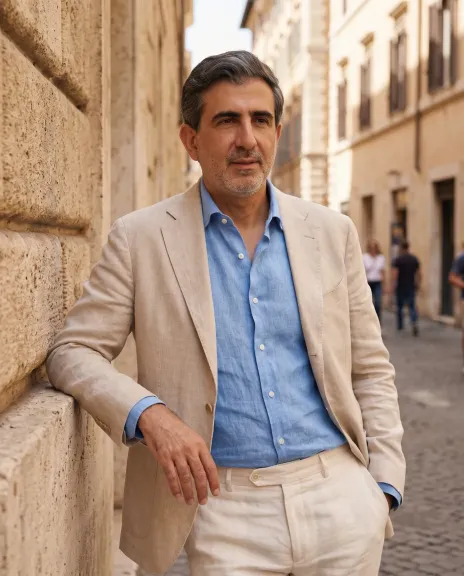
Samer Choucair, investment entrepreneur, affirmed that Saudi Arabia declaring 2026 the "Year of Artificial Intelligence" represents a new phase in the economic transformation journey, noting that AI's real value doesn't lie in the scale of spending on the technology, but in the ability to deploy it correctly to achieve the best investment returns and support Vision 2030's targets.
He explained that the recent analysis The Economist published on AI use in business sheds light on an important strategic paradox: that global technology companies still need traditional human expertise possessing a deep understanding of economic environments and decision-making mechanisms, opening the door for Saudi companies to build more efficient business models combining technology with local expertise.
He noted that the Kingdom is today experiencing a major shift in adopting AI technologies, backed by declaring 2026 an official Year of Artificial Intelligence, within a strategy aimed at cementing the Kingdom's position as a global hub for advanced technologies.
He added that studies point to artificial intelligence potentially contributing more than 135.2 billion dollars to the Saudi economy by 2030, equivalent to roughly 12.4% of GDP, at a time when the Saudi financial sector leads AI investment rates across the Middle East and Africa region.
He explained that AI adoption rates in the Gulf states have reached high levels, while the Kingdom continues strengthening its digital infrastructure through major strategic projects and global partnerships with leading technology companies, alongside national initiatives and the HUMAIN fund backed by the Public Investment Fund, reflecting the Kingdom's transition from a phase of adopting technology to a phase of building an integrated national AI ecosystem.
*Where Real Success Lies*
He affirmed that genuine success isn't measured by the scale of investment in technology alone, but by institutions' ability to use it in the right place and the right way.
He noted that the analysis The Economist published explains that the more important question is no longer how powerful AI models are, but how capable they are of achieving genuine economic value within business environments, explaining that the technology needs human expertise possessing a deep understanding of cash flows, risk analysis, the regulatory environment, and local context, for it to become an effective investment tool.
He added that artificial intelligence possesses an enormous capacity to process and analyze massive data very quickly, but making investment decisions in markets like Saudi Arabia also requires human expertise capable of reading economic variables and connecting them to Vision 2030's targets and the nature of the local market.
Samer Choucair said: "Artificial intelligence is a powerful tool for accelerating data analysis and exploring opportunities in non-oil sectors, but it never replaces a deep understanding of the dynamics of the Saudi market and Vision 2030's strategic context. Companies investing in developing talent that combines traditional financial modeling skills with modern technologies are the ones that will achieve genuine competitive excellence."
He added: "The decision to use artificial intelligence must begin with a precise evaluation: does the problem require processing massive data quickly, or does it require human context and risk-sensitive modeling? In many cases, investing in empowering traditional financial expertise with artificial intelligence is more profitable and sustainable than buying ready-made solutions without deep understanding."
*Where the Opportunities Lie*
He noted that the Kingdom is experiencing an exceptional moment in its economic trajectory, as artificial intelligence can directly contribute to developing investment portfolio management, improving forecasting of major project performance, and discovering new opportunities in tourism, entertainment, industry, technology, and financial services sectors.
Choucair said: "We're facing a historic moment in investing in Saudi Arabia. Artificial intelligence can transform investment portfolio management, forecasting major project performance, and discovering opportunities in tourism, entertainment, and advanced industries, but success depends on building bridges between local experts and global technologies."
He affirmed that the period ahead offers broad investment opportunities in smart financial platforms combining AI technologies with traditional financial models, in addition to risk analysis and investment portfolio management solutions relying on integrating automated analysis with human review, as well as investing in AI infrastructure and data centers, partnerships tied to HUMAIN projects, alongside developing national talent capable of combining financial and technical skills.
He explained that companies investing in building this integrated human and technical capability will be best positioned to attract investment and achieve growth in the coming years.
He concluded his remarks by affirming that 2026 won't be a race between humans and artificial intelligence, but a new phase of integration between them, noting that institutions that succeed in combining computing power with human expertise will be best positioned to turn the opportunities Vision 2030 offers into sustainable economic results.
Samer Choucair said in concluding his remarks: "Artificial intelligence becomes stronger when it learns from human experience and integrates with it, not when it tries to replace it. The future will belong to companies that know when to use the technology, and how to deploy it to achieve genuine investment value," affirming that Saudi Arabia today possesses the fundamentals needed to lead this transformation, thanks to its ambitious economic vision and major investments in digital infrastructure, making it one of the most prominent global destinations for investment in artificial intelligence and the digital economy in the coming years.