
Samer Choucair: Banking Investment in 2026 Will Be Decided by Branch Location and Asset Quality
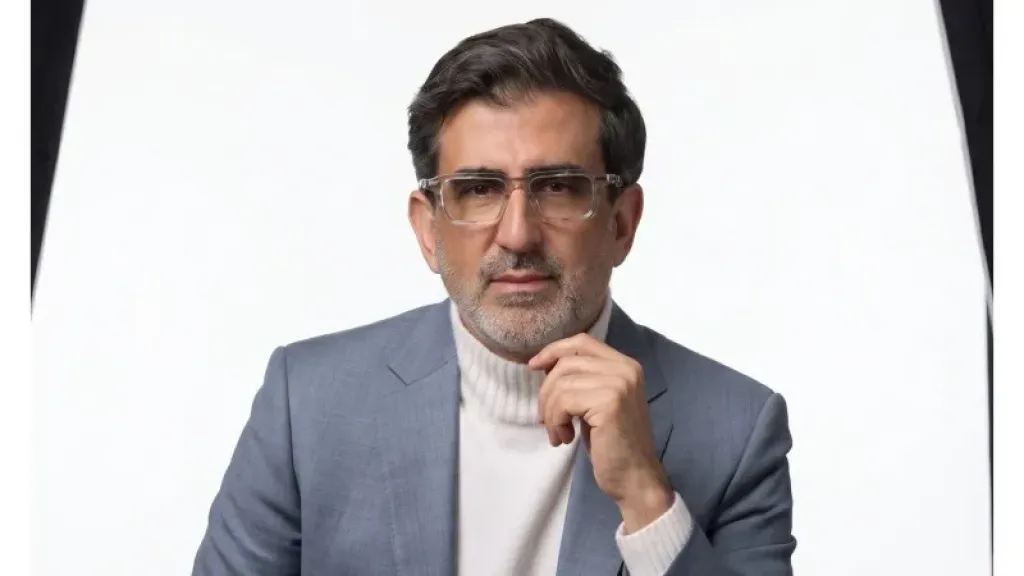
Investment leader Samer Choucair said the rise in the number of bank branches operating in Saudi Arabia to 1,929 by the end of the first half of 2026 represents a shift in the distribution of banking services across the economy rather than a retreat from digitalization.
Samer Choucair explained that banks are increasingly moving toward a hybrid model that combines digital transactions with a physical presence in areas where demand for credit and investment is being generated.
According to the data cited in the analysis, the number of branches increased by 19 during the first half of the year compared with the end of 2025, reaching its highest level since 2021 after several years of network contraction.
The increase came as total banking assets reached approximately SAR 4.81 trillion, deposits rose to around SAR 3.15 trillion, and combined profits across listed banks reached SAR 48.82 billion during the first half of the year.
Samer Choucair said the significance of these figures lies not in the number of branches alone, but in the relationship between physical expansion and the credit cycle linked to megaprojects, mortgage financing, small and medium sized enterprise lending, and wealth management.
Samer Choucair said: “A branch in the 2026 cycle is no longer simply a fixed cost unit. It has become a real option on the physical economy of Vision 2030: a mortgage in a new district, contractor financing at a project site, wealth management for a client relocating to Riyadh, and a banking relationship with a small business that cannot be adequately financed through a mobile application alone.”
He added that interpreting branch expansion as a return to traditional banking overlooks the major development of digital payments and services.
Samer Choucair said the optimal role of a branch is increasingly tied to transactions that require credit decisions or long term relationships, while applications and digital platforms continue to handle recurring transactions.
The banking network remains heavily concentrated in Riyadh, Makkah, and the Eastern Province, which together account for 1,337 of the 1,929 branches.
Riyadh has 597 branches, Makkah has 390, and the Eastern Province has 350. They are followed by Asir with 124, Qassim with 117, and Madinah with 101.
Samer Choucair said this concentration reflects the economic structure of these regions.
Riyadh is linked to regional headquarters, financial services, and real estate. Makkah is driven by Hajj, Umrah, tourism, and hospitality, while the Eastern Province is tied to energy, industry, logistics, and trade finance.
Choucair said institutional investors should not treat all branches as economically equivalent.
A branch located in an area experiencing population, housing, and industrial growth has a very different economic profile from one operating in a more saturated market.
At the same time, the digital transition has not slowed. Electronic payments accounted for 85% of retail transactions by the end of 2025, while the number of fintech companies reached 371 by August 2026, reflecting intensifying competition for traditional banks.
Samer Choucair said: “Institutional capital in 2026 will distinguish between a bank expanding its network because it has credit demand that can be priced and a bank expanding defensively to protect market share in a business where margins are eroding.”
At the individual bank level, expansion remains uneven.
Al Rajhi Bank and Saudi National Bank continue to operate the largest branch networks, while other institutions are pursuing more selective expansion or placing greater emphasis on operating efficiency and digital channels.
Samer Choucair said these differences will push investors to focus on the quality of loan and deposit growth, funding costs, fee income, wealth management, and the ability of new branches to generate assets with attractive returns rather than valuing banks simply by the number of physical locations.
From a venture capital and private equity perspective, Choucair said opportunities extend into the technology infrastructure surrounding the sector, including compliance solutions, artificial intelligence based credit analysis, smart branch systems, and platforms serving small and medium sized enterprises.
Samer Choucair warned that the return of branch expansion does not necessarily mark the beginning of a long growth cycle.
He pointed to risks including slower credit growth, higher deposit costs, changes in the housing market, and rising competition from digital banks and fintech companies.
Choucair said: “Banking investment in Saudi Arabia through the rest of the decade will not be decided by a choice between digital and traditional banking. It will be decided by who owns the customer data and who owns the credit relationship. Branches opened today will only be profitable if they become factories for credit decisions rather than marble storefronts.”
Samer Choucair concluded that the future shape of Saudi banking will not represent a return to the pre 2019 model.
Instead, it will involve a redistribution of locations and channels according to the map of economic growth.
He said the most important investment question is not how many branches exist, but where new branches have been added, how much in assets and credit they can generate, and how that ultimately affects return on equity.
Samer Choucair added: “The branch has not defeated the application. The real economy has simply forced the sector back onto the ground where financing decisions are made.”