
Samer Choucair: Cooling the AI Race Is Reallocating Capital, Not Ending the Investment Cycle
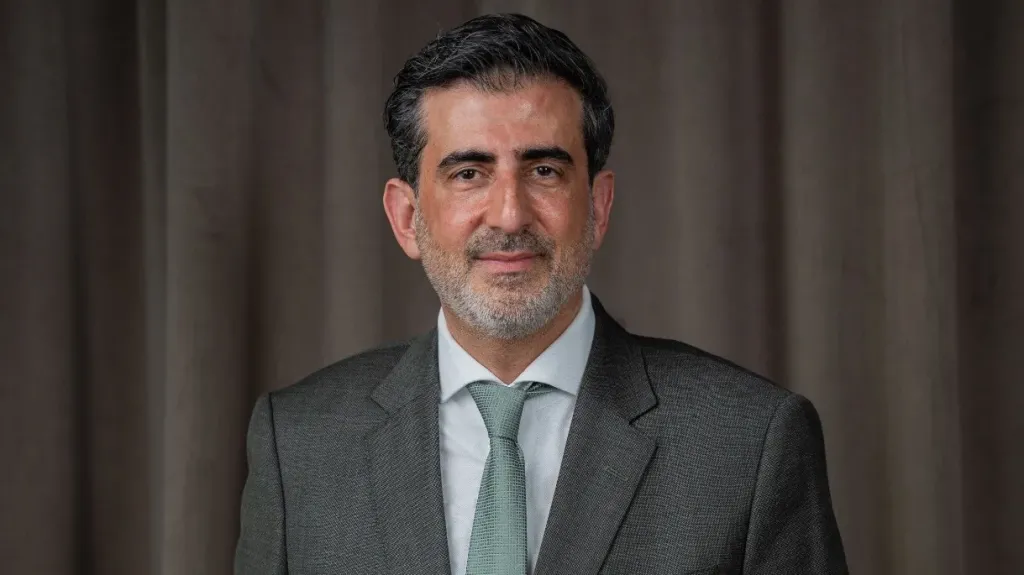
Investment leader Samer Choucair said the public alignment between Anthropic chief executive Dario Amodei, OpenAI chief executive Sam Altman, and xAI founder Elon Musk on the need to moderate the pace of the advanced model race is repricing artificial intelligence risk, but does not yet amount to a binding operational agreement to reduce capital expenditure or slow innovation.
Samer Choucair explained that Amodei has called for a slower pace of capability expansion while allowing innovation to continue. He proposed a framework beginning with independent evaluators inside AI laboratories, followed by coordination among democratic countries, and eventually international limits on more dangerous capabilities such as recursive self improvement. Altman has also supported the idea of independent evaluation and said that managing the pace of development has become an important issue inside OpenAI, while Musk publicly backed Amodei’s position.
Samer Choucair said markets interpreted these statements as a sign that safety and governance are becoming increasingly important in the valuation of AI companies. Nasdaq futures fell by around 1% on Sunday, while Nvidia shares came under closer scrutiny because of the company’s role as a key indicator of expectations for spending on processing capacity.
He stressed that the development is better understood as a signaling convergence among three competing laboratories rather than an agreement involving spending caps, coordinated training schedules, or enforcement mechanisms.
Samer Choucair said the distinction matters for institutional investors because a signal can move valuations immediately, while the impact of any real operational change will only become visible later through demand for chips, electricity, and data centers.
He believes private equity and venture markets had been pricing the speed of model releases as a pure competitive advantage. Any genuine slowdown could therefore increase compliance costs, delay revenue realization, and push back initial public offering windows. At the same time, institutional demand for inference and operational AI applications is likely to continue even if frontier model development slows.
Samer Choucair said this shift could place pressure on valuation multiples for advanced model companies, but it does not imply the end of the infrastructure cycle. Investment opportunities continue across chips, servers, electricity, cooling systems, and industrial real estate, as well as cybersecurity, independent evaluation tools, governance, and compliance.
In the Gulf, Samer Choucair sees Saudi Arabia and the United Arab Emirates as having a strategic opportunity that goes beyond competing to build the most powerful model. He said the stronger opportunity lies in sovereign computing, energy, data centers, and sector specific applications.
Saudi Arabia, through the Saudi Data and AI Authority, the Public Investment Fund, and HUMAIN, is working to build a broader AI ecosystem, while the United Arab Emirates is advancing through platforms such as G42 with a strategy that combines computing capacity and international partnerships.
Choucair added that Gulf demand for AI in energy, logistics, government, manufacturing, healthcare, and financial services does not necessarily depend on the release of a new model every quarter. This makes auditable infrastructure more resilient to changes in the pace of the global AI race.
Samer Choucair warned that any coordination between competitors must remain focused on safety rather than the alignment of release schedules, as broader coordination could raise antitrust concerns. He also pointed to risks arising from differences in the pace of development between the United States and China, delays to public listings, and operational incidents linked to autonomous agents.
He said investors in 2026 must manage three potential scenarios. The first is a partial slowdown while spending on computing infrastructure continues. The second is a broader regulatory response following a major incident. The third is a return to rapid acceleration if China continues to advance at a faster pace.
Samer Choucair concluded that intelligent capital allocation should not depend on a single bet that the AI race will either stop or continue without constraints. Instead, investors should build portfolios capable of performing under both conditions by combining sovereign infrastructure, energy, compliance, and platforms that can turn regulatory oversight into a competitive advantage.
He said long term value will be created where artificial intelligence evolves from a race for capabilities into a production system that can be governed, invested in, and held accountable.
Samer Choucair added that the most important question for markets is not how Nvidia trades in a single session, but whether capital expenditure on computing remains structurally strong now that safety has become part of the valuation framework for AI assets.