
Samer Choucair: Riyadh International Book Fair Is Repricing the Content Industry in Saudi Arabia
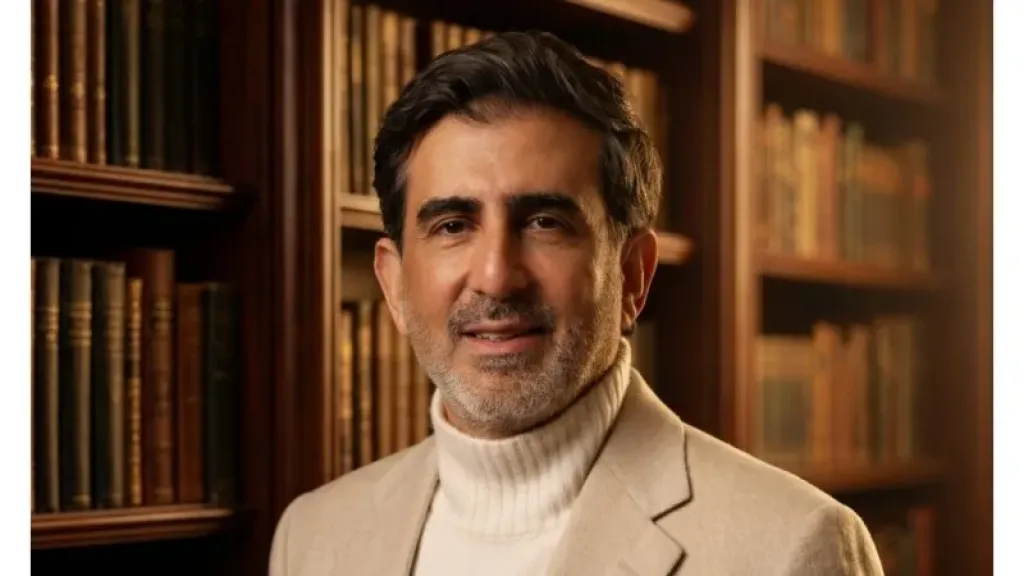
Investment leader Samer Choucair said the Riyadh International Book Fair is increasingly moving beyond its traditional role as an annual cultural event and evolving into an economic platform for testing consumer demand, trading intellectual-property rights, and stimulating Saudi Arabia’s publishing, translation, education, retail, hospitality, and digital-services industries.
The shift comes as the Literature, Publishing and Translation Commission prepares for the 2026 edition of the Riyadh International Book Fair, scheduled to take place in the capital from December 10 to 19. The 2025 edition attracted more than 1.38 million visitors, representing year-on-year growth of 37%, while sales increased by 20% and more than 2,000 publishing houses and agencies from over 25 countries participated.
Samer Choucair said the numbers point to a deeper transformation in the structure of the market.
“The institutional investor makes a mistake by treating the book fair as a retail holiday,” Choucair said. “In reality, it is a wholesale marketplace for rights and ideas. Direct sales to visitors are only the visible layer of the economic cycle.”
According to Choucair, the fair’s most important investment value does not lie solely in the number of books sold during the event. The larger opportunity is found in agreements surrounding translation, digital distribution, educational content, adaptation rights, and children’s intellectual property.
Those channels can transform a book from a seasonal product into an asset capable of generating recurring revenue across multiple formats and markets.
From Book Sales to Intellectual-Property Economics
Samer Choucair said the business zone at the 2025 edition recorded more than 55 agreements alongside over 10,500 specialized consultations covering publishing, marketing, and rights management. The business program itself included more than 45 events.
For investors, those figures strengthen the case for viewing the Riyadh International Book Fair as a professional and commercial marketplace operating alongside its cultural function.
The early announcement of the 2026 edition also gives publishers, literary agencies, and service companies more time to plan inventory, shipping, translation, and associated programming.
Hospitality, transportation, and retail companies can similarly use the event as an early indicator of expected demand in Riyadh during December.
“Capital allocation in Saudi Arabia’s creative economy remains disproportionately tilted toward highly visible assets such as live entertainment and destinations, while the rights and distribution layers capable of generating compounding returns receive less attention,” Choucair said. “A book may look less exciting in an investment presentation, but it can have a much higher density of repeat use when a platform is built around it rather than a single season.”
Vision 2030 and the Economics of Content
Choucair said the growth of publishing and translation intersects directly with Saudi Vision 2030’s broader objectives of economic diversification and the development of cultural and creative industries.
For Samer Choucair, however, the real transformation should be measured by the market’s ability to turn an author into a licensable intellectual-property asset and a book into a multi-format product.
A single title can potentially generate value through print editions, digital books, audiobooks, educational adaptations, translations, licensing, and visual content.
That changes the investment logic of publishing.
Instead of evaluating a book primarily through first-sale economics, investors can assess the lifetime value of the underlying intellectual property and the number of formats, territories, and distribution channels through which that asset can be monetized.
Choucair sees the most scalable opportunities concentrated in intellectual-property rights and literary agencies, educational publishing and children’s content, digital book infrastructure including distribution, subscriptions and audiobooks, as well as supporting services such as logistics, print-on-demand, payments, and hospitality.
The education segment represents a particularly structural opportunity because of sustained demand for educational materials, specialized translation, and reference titles.
Children’s content offers another potentially attractive model because successful intellectual property can have a longer commercial life and expand across schools, digital platforms, educational products, and other formats.
Artificial Intelligence Could Reshape Publishing Economics
Samer Choucair said artificial intelligence could materially alter the economics of the publishing industry by improving content discovery, book recommendations, demand forecasting, and analysis of reader behavior.
AI could help publishers identify emerging demand more efficiently, improve inventory decisions, and match readers with titles more precisely.
At the same time, the technology creates new challenges surrounding intellectual-property ownership, piracy, licensing, and the tracking of digital content.
For investors, this means technology should not be viewed simply as a distribution tool. It increasingly becomes part of the infrastructure required to protect and monetize intellectual property.
Visitor Numbers Are Not Enough
Choucair cautioned that the success of the Riyadh International Book Fair should not be measured by visitor numbers alone.
The larger economic challenge is converting a period of concentrated seasonal activity into a permanent industry capable of producing revenue throughout the year.
“In relatively high interest-rate cycles, capital has less patience for growth stories that cannot demonstrate clear unit economics,” Samer Choucair said. “Saudi Arabia’s cultural industry needs operating metrics such as revenue per title, subscription renewal rates, and the value of rights catalogs. It cannot rely on a narrative built around crowds alone.”
Hospitality, retail, and transportation businesses benefit directly from the concentration of visitors during the fair, but Choucair said the more compelling investment opportunity lies with companies capable of extending that demand beyond the event itself and building recurring revenue streams around cultural consumption.
The selection of Syria as guest of honor for the next edition could also create additional opportunities for cultural exchange, translation, and the circulation of Arabic-language rights, potentially strengthening Riyadh’s position as a regional hub for content creation and distribution.
Building Platforms Rather Than Individual Publishers
Choucair said the opportunity for private investment funds and family capital does not necessarily lie in acquiring stakes in individual publishing houses.
A potentially stronger model is the creation of integrated platforms combining rights agencies, digital distribution, educational publishing, and children’s content.
Such platforms could address one of the industry’s structural challenges: fragmentation.
By consolidating complementary capabilities, investors could create businesses with greater scale, stronger distribution, larger intellectual-property catalogs, and clearer pathways toward acquisitions and regional expansion.
The investment thesis therefore shifts from financing individual books or publishers toward building an infrastructure capable of repeatedly monetizing intellectual property.
From a Cultural Event to a Recurring-Revenue Industry
“If Riyadh wants to become a knowledge hub rather than simply an attendance hub, the benchmark is not how many people visit in December,” Samer Choucair said. “It is how much of that visit becomes recurring revenue in January.”
Choucair concluded that the Riyadh International Book Fair has become an important indicator of the evolution of Saudi Arabia’s creative economy.
The next stage, however, will be determined by whether the industry can convert audiences, events, and cultural transactions into intellectual-property, digital, and educational assets capable of producing sustainable economic value.
For Samer Choucair, that is where the deeper investment opportunity lies: not simply in selling more books during ten days in Riyadh, but in building a content economy capable of monetizing ideas repeatedly throughout the year.
If that transition succeeds, the Riyadh International Book Fair could become more than one of the region’s largest cultural gatherings. It could serve as a marketplace through which Saudi Arabia’s broader shift toward knowledge, content, and creative industries becomes increasingly investable.