
Samer Choucair: The Gulf Can Turn Prevention From a Healthcare Burden Into an Investment Engine
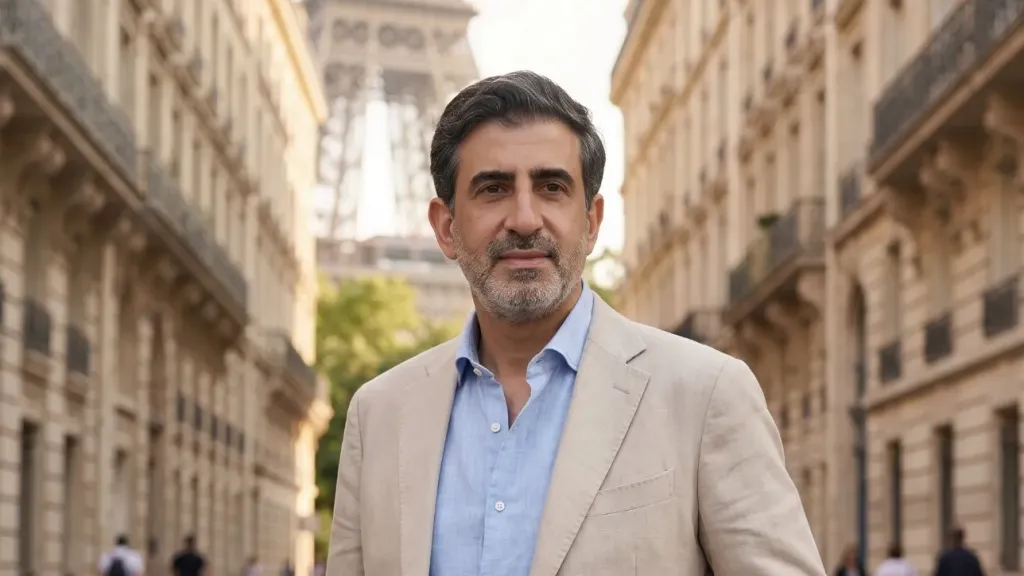
Investment leader Samer Choucair said a long-term study of Finnish men is helping redefine the economics of longevity from a more realistic investment perspective. The value, he argued, does not lie in promises of extending human life, but in reducing the risk of chronic disease and frailty decades before old age.
The study, published in the European Journal of Preventive Cardiology, found that the probability of reaching age 90 increased from 6.8% among men who met none of five low-risk criteria in early midlife to 41.9% among those who met all five.
The criteria included not smoking, having a body mass index below 25, systolic blood pressure below 140 mmHg, total cholesterol below 6.0 mmol/L, and a one-hour post-glucose-load level below 9.0 mmol/L.
The study followed 2,690 men whose average age at baseline was 42. Frailty, quality of life, and psychological well-being were later assessed at an average age of 79.
Frailty was recorded in only 2.2% of participants who met all five favorable criteria, compared with 24.5% among those who met none. The findings strengthen the link between cardiovascular health in midlife and both longevity and the quality of later-life years.
Samer Choucair said the results matter to institutional investors because they move the longevity economy away from a narrative dominated by experimental technologies and toward a more measurable market built around metabolic medicines, early diagnostics, digital primary care, insurance, and longevity-risk management.
“Institutional capital does not need to wait for a miracle drug that extends life,” Choucair said. “Economic value begins when known risk factors can be converted into interventions that are measurable, scalable, and reimbursable.”
Prevention as an Investable Market
Choucair said the investment implications extend across medicines targeting blood pressure, diabetes, cholesterol, obesity, and metabolic disease, as well as diagnostic laboratories, biomarker-monitoring devices, and digital healthcare platforms.
Insurers and pension providers could also benefit from more precise models for pricing longevity risk, while business models that depend heavily on late-stage treatment may come under increasing pressure if prevention succeeds in delaying disability and reducing the frequency of costly complications.
For Samer Choucair, this creates an important distinction between the popular idea of longevity and the actual economics of longevity.
The investable opportunity is not necessarily a technology promising radical life extension. In many cases, it may be a much less glamorous system that identifies hypertension earlier, improves diabetes control, reduces smoking rates, or keeps obesity from developing into a more expensive chronic condition.
Those interventions may ultimately have a larger and more predictable economic impact because they affect healthcare spending, insurance claims, workforce participation, and productivity over decades.
A Growing Gulf Healthcare Opportunity
The investment case becomes particularly relevant in the Gulf, where healthcare expenditure across GCC countries is expected to increase from approximately $109.1 billion in 2024 to $159 billion by 2029, representing a compound annual growth rate of 7.8%.
Saudi Arabia is expected to record the fastest healthcare spending growth in the GCC at approximately 8.8%, while Saudi Arabia and the United Arab Emirates together are projected to account for 82.6% of total GCC healthcare expenditure by 2029.
Samer Choucair said Saudi Arabia has an opportunity to make prevention part of the economic infrastructure supporting Vision 2030.
Raising average life expectancy to 80 years by 2030 is one of the objectives associated with the Kingdom’s healthcare transformation, while noncommunicable diseases have become among the most significant causes of death and disability.
“The Gulf can avoid part of the future cost of aging if it treats midlife risk factors as productive infrastructure rather than simply a public-awareness campaign,” Choucair said. “Investment in prevention today can mean a more durable workforce and more predictable healthcare expenditure tomorrow.”
That approach could shift the economic logic of healthcare from treating expensive complications after they emerge toward identifying and managing risk much earlier.
For governments, insurers, and employers, the return may appear in lower long-term claims, fewer years lived with disability, stronger labor-force participation, and a healthier population capable of remaining economically active for longer.
The Economics of Healthy Longevity
Choucair said longevity should increasingly be understood not simply in terms of how many years people live, but how many of those years are lived without serious disability or chronic disease.
That difference has significant financial implications.
A population living longer but spending more years with diabetes complications, cardiovascular disease, or severe frailty can create substantial additional healthcare and social-care costs.
By contrast, extending healthy years may improve the economics of aging by delaying expensive medical interventions and allowing people to remain productive for longer.
This creates potential opportunities across preventive care, remote monitoring, personalized nutrition, metabolic medicine, digital health, diagnostics, and chronic-disease management.
It could also encourage insurers to reward measurable improvements in health outcomes rather than simply reimbursing treatment after disease progression.
Investors Should Avoid the Longevity Hype
Choucair nevertheless warned against overinterpreting the Finnish findings.
The study was observational and involved a relatively socially and economically homogeneous population of Finnish men. Its conclusions therefore cannot be directly generalized to women or to Gulf populations.
The relationship between lower risk factors and longer life also does not mean that changing a single variable will automatically produce the same outcome for every individual.
That distinction is important for investors because longevity has become a powerful marketing theme across biotechnology, wellness, supplements, diagnostics, and digital health.
Choucair said venture capital will continue to search for opportunities in obesity and metabolic medicines, at-home diagnostics, telemedicine, smoking-cessation programs, and therapeutic nutrition.
However, he expects valuation premiums increasingly to move toward companies capable of demonstrating measurable health outcomes rather than businesses relying primarily on the language of longevity.
The strongest companies may be those able to show not merely that users engage with a platform, but that blood pressure improves, glucose becomes better controlled, smoking rates fall, hospitalizations decline, or disease progression slows.
In that environment, clinical evidence becomes part of the investment moat.
From Healthcare Cost to Productive Infrastructure
For Samer Choucair, the broader investment lesson is that prevention should not be viewed only as a healthcare expense.
It can also be treated as economic infrastructure.
A healthier middle-aged population can translate into lower future healthcare liabilities, greater productivity, reduced absenteeism, stronger insurance economics, and potentially more sustainable pension and social-support systems.
That makes familiar health indicators such as blood pressure, glucose, cholesterol, body weight, and smoking status economically relevant variables rather than isolated medical statistics.
“The investment message is not that reaching 90 has suddenly become guaranteed,” Samer Choucair said. “It is that a meaningful part of the probability of healthy longevity is determined decades before retirement.”
“Anyone allocating capital over a long horizon should view blood pressure, glucose, cholesterol, weight, and smoking as economic variables that affect healthcare spending, insurance, and productivity — not simply as separate medical data points.”
For Gulf economies, that shift in perspective could be especially important.
If prevention becomes integrated into digital health systems, insurance incentives, employer benefits, diagnostics, and national healthcare infrastructure, the region could turn part of the future cost of aging into a new investment market.
The opportunity would not be built on selling the promise of living forever.
It would be built on something far more measurable: helping people remain healthier for longer, while reducing the economic cost of disease before it becomes irreversible.