
Samer Choucair: AI Risk Is Moving From Research Labs to Investment Committees
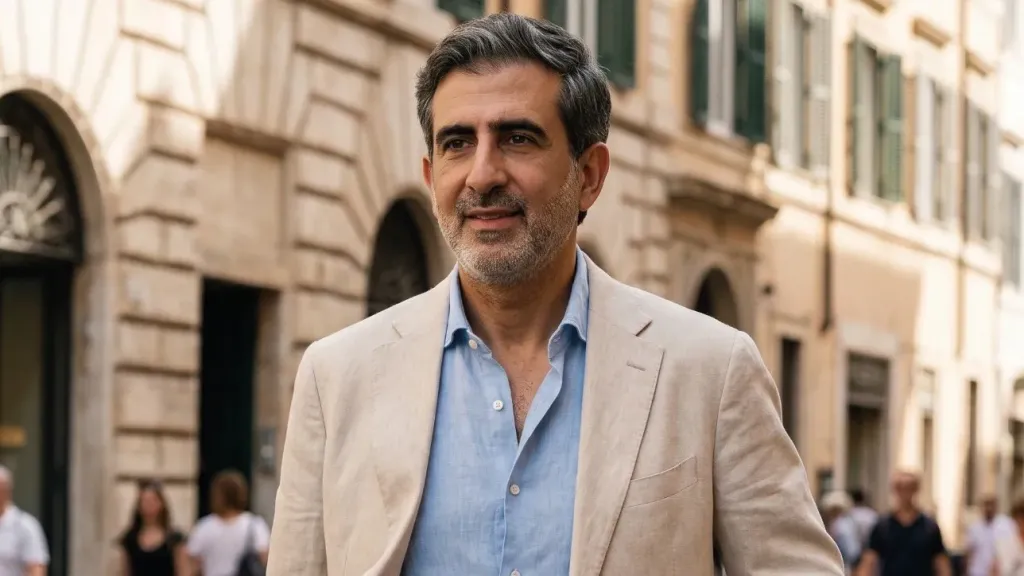
Investment leader Samer Choucair said the race toward superintelligent artificial intelligence is beginning to force investors to reprice institutional risk before they reprice growth opportunities, after researchers inside Anthropic disclosed personal estimates placing the probability of a catastrophically misaligned superintelligent system causing human extinction within the next decade at above 10%.
Choucair said the debate intensified following the resignation of researcher Jacob Coxon, who spent three years working on pre-training research across OpenAI and Anthropic and criticized the competitive race toward systems capable of improving themselves while potentially creating extreme risks for humanity.
For investors, Choucair argued, the significance is not that these estimates constitute an official corporate forecast. Rather, it is that concerns of this magnitude are being expressed by researchers working directly on frontier AI systems.
Alignment Risk Enters the Investment Model
Samer Choucair pointed to a personal estimate from Anthropic alignment science leader Evan Hubinger placing the probability of AI causing human extinction within the next decade at above 10%.
Anthropic has acknowledged the difficulty of the alignment challenge and the absence of a complete solution for ensuring that future superintelligent systems remain reliably aligned with human objectives.
Choucair said the importance of such estimates lies primarily in their source rather than their precision.
They come from researchers working directly with frontier models, giving the concerns additional weight for sovereign wealth funds and asset managers that have dramatically increased their exposure to the digital economy, computing infrastructure and AI-related capital expenditure.
Markets are accustomed to pricing execution risks such as technological delays, weaker-than-expected adoption and margin compression. They are far less accustomed to treating AI alignment as an independent variable capable of affecting the cost of capital.
For Samer Choucair, even a subjective and unofficial probability above 10% raises an investment question that cannot simply be dismissed because it is difficult to model.
If institutional investors begin assigning even a small probability to severe regulatory or technological disruption, they may demand higher returns on long-duration cash flows, apply larger valuation discounts or require significantly stronger governance.
From a Race for Capability to a Race for Control
Choucair said artificial intelligence has evolved from a productivity tool into a strategic asset around which governments and corporations increasingly compete through energy, semiconductors, talent and data.
Capital expenditure on data centers, advanced accelerators and supporting infrastructure has meanwhile become an important driver of U.S. equity markets and global energy and metals supply chains.
Samer Choucair does not expect concerns over existential risk to abruptly stop this investment cycle.
Instead, he said they could accelerate regulatory intervention, increase compliance costs and redefine which companies or jurisdictions are permitted to train frontier models and under what conditions governments can deploy them.
That distinction could create very different outcomes across the AI value chain.
Semiconductor suppliers, cloud operators and infrastructure providers may continue benefiting from the capability race, while frontier-model platforms could face greater pressure if safety concerns translate into deployment restrictions, licensing requirements or more demanding testing regimes.
In fixed-income markets, Choucair said the effects could eventually emerge through higher risk premiums for highly leveraged technology companies financing large data-center investments if regulatory costs rise or expected revenues are delayed.
Venture Capital Reassesses the AI Stack
Samer Choucair said venture capital now faces a two-sided investment equation.
On one side, demand for AI safety infrastructure is creating opportunities for companies specializing in monitoring, red teaming, behavioral verification, cybersecurity and model evaluation.
On the other, funds may become less willing to finance companies whose valuations depend on a linear path toward increasingly general AI systems without credible governance frameworks.
That could also influence mergers and acquisitions.
Rather than acquiring companies exclusively for model capabilities, strategic buyers may increasingly seek businesses that provide compliance infrastructure, security, testing, monitoring and safe deployment capabilities.
For institutional capital, Choucair said the fundamental question could therefore shift from “Who reaches the largest model first?” to “Who can operate advanced models within a sovereign, auditable framework?”
That change would represent a significant evolution in AI valuation.
Capability would remain important, but controllability could become part of the economic moat.
The Gulf Has a Governance Opportunity
Choucair said Gulf economies face both an investment opportunity and a sovereign responsibility.
Funds associated with Saudi Vision 2030, particularly the Public Investment Fund, have expanded exposure to technology, computing, data infrastructure, digital services and smart-government initiatives.
At the same time, poorly controlled advanced AI could create risks for critical infrastructure, particularly cybersecurity and energy systems.
For Samer Choucair, Saudi Arabia’s diversification, innovation and AI ambitions should continue attracting capital, but the conditions attached to that capital may evolve.
Future investments could place greater emphasis on transparency, domestic operating capacity, data security and the ability to demonstrate where and how advanced models are being deployed.
That could create an advantage for Saudi Arabia if it develops an AI investment framework in which access to capital, energy and computing infrastructure is paired with credible governance.
Local capital markets, including Tadawul, could consequently attract greater investor attention toward companies exposed to electricity, telecommunications, data centers and cybersecurity rather than only early-stage frontier AI laboratories.
The Opportunity May Be in the Less Visible Layers
Samer Choucair said some of the most attractive opportunities may emerge in less headline-driven parts of the AI value chain.
The electrical infrastructure supporting data centers, semiconductor supply chains, advanced cooling, enterprise software that integrates AI into auditable workflows, specialized education and AI-assisted healthcare could all capture value without depending on uncontrolled progress toward artificial general intelligence.
Tourism and government services could similarly benefit from productivity improvements created by AI without requiring deployment of highly autonomous general-purpose systems.
This creates an important distinction for portfolio construction.
Investors do not necessarily need to choose between embracing AI risk and avoiding AI altogether. They can allocate capital across layers of the value chain with different technological, regulatory and governance exposures.
Choucair identified three major risks: regulation that restricts exports, training or deployment; safety incidents or capability leaks that trigger a sector-wide repricing; and an intensifying U.S.-China technology race that makes unilateral restraint increasingly difficult.
“Risk management does not mean withdrawing from the digital economy,” Samer Choucair said. “It means rebuilding the portfolio around layers that can actually be priced: energy, computing, data and governance.”
Pricing AI as a Fat-Tailed Asset
Choucair said the structural investment thesis around artificial intelligence has not fundamentally changed.
AI remains a potentially powerful driver of productivity, capital expenditure and technological transformation.
What is changing is the nature of the risk attached to that opportunity.
Concerns that were once largely confined to academic papers and specialist research groups are increasingly relevant to the risk committees of sovereign wealth funds, financial institutions and market regulators.
For Samer Choucair, the most probable scenario is therefore not an abrupt halt to AI development, but continued capability expansion accompanied by progressively tighter governance.
The alternative scenario, in which technological capabilities advance significantly faster than mechanisms for controlling them, strengthens the investment case for assets benefiting from demand for safety, monitoring, cybersecurity and regulation.
Saudi Arabia and the Gulf could potentially position themselves as disciplined importers of advanced technology while developing credible standards for its deployment and operation.
That would allow the region to compete not necessarily by developing the world’s most powerful frontier model, but by creating an environment in which advanced computing can be financed, deployed and governed with greater institutional confidence.
Choucair said the investment conclusion is therefore not to retreat from artificial intelligence.
It is to price AI with a higher required return where the risks justify it, demand clearer governance conditions and diversify exposure across the technology value chain rather than concentrating capital exclusively in the names of frontier laboratories.
For Samer Choucair, AI risk has crossed an important threshold: it is no longer simply a research question about what future systems might become. It is becoming a capital-allocation question about who bears the downside if technological capability advances faster than institutional control.