
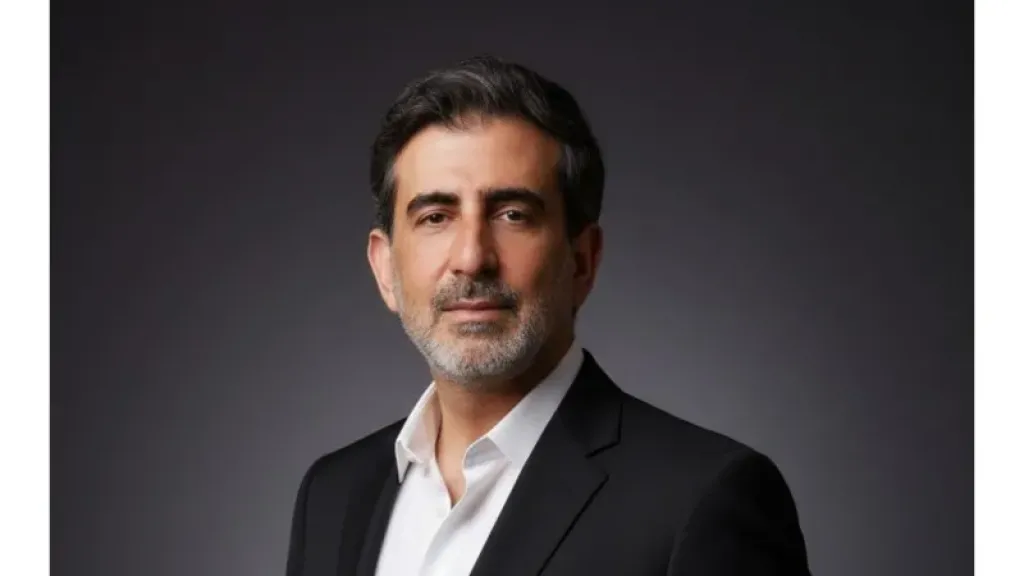
Samer Choucair: A Potential HUMAIN IPO Will Test Saudi Arabia’s Ability to Turn AI Into an Investable Asset
Roughly 16 months after its launch in May 2025, HUMAIN, the artificial intelligence company owned by Saudi Arabia’s Public Investment Fund, has begun moving toward a more mature corporate structure as it explores the possibility of a future public listing.
That does not mean an IPO is necessarily imminent. HUMAIN’s chief executive has previously said the company could pursue a dual listing in Saudi Arabia and on Nasdaq within the next several years, while the company itself continues to build across the full AI stack, from data centers and cloud infrastructure to models and applications.
For investment pioneer Samer Choucair, the most important signal is not the listing itself. It is Saudi Arabia’s attempt to build a company capable of capturing value across multiple layers of the artificial intelligence ecosystem rather than concentrating on a single technology product.
From a Sovereign Project to a Priceable Asset
Samer Choucair said that preparing a company for public-market standards at an early stage should be interpreted primarily as an exercise in governance, disclosure, capital structure, and institutional discipline, rather than as proof that an IPO is close.
“Markets do not finance slogans,” Choucair said. “They finance the ability to convert capital expenditure into recurring revenue and risks that can actually be priced.”
HUMAIN was officially launched on May 12, 2025, as a PIF-owned company designed to operate and invest across the full AI value chain. Its mandate includes next-generation data centers, cloud and computing infrastructure, advanced AI models, and applications, including Arabic-language models.
For investors, that breadth is important because it means HUMAIN is not being built as a conventional software company. It combines characteristics of a data-center developer, a computing-infrastructure operator, a model-development platform, and an enterprise AI applications business.
PIF’s Bet Extends Across the AI Value Chain
Choucair said HUMAIN’s structure reflects a broader shift in Saudi capital allocation.
Rather than simply importing AI services and paying external providers for computing capacity, Saudi Arabia is attempting to build domestic assets capable of owning infrastructure, technology, intellectual property, and eventually customer relationships.
That strategy also means HUMAIN sits at the intersection of several capital-intensive industries, including power, land, telecommunications, chips, cooling systems, networking, and specialized technical talent.
This makes the company structurally different from a lightweight software platform. Its capital requirements are significantly higher and its payback periods are likely to be longer, but the model potentially allows PIF to capture a greater share of the economic value created as AI adoption expands across the Kingdom.
For Samer Choucair, that is one of the most important elements of the investment story: Saudi Arabia is moving from purchasing artificial intelligence capacity to attempting to own the productive infrastructure behind it.
Partnerships Matter Only When They Produce Utilization
HUMAIN has rapidly expanded its network of relationships with global technology companies. PIF lists collaborations involving NVIDIA, Microsoft, AMD, Qualcomm, Amazon Web Services, Google Cloud and Groq, while the company is also developing data-center, cloud, model, and application capabilities.
Its infrastructure ambitions are substantial. HUMAIN and NVIDIA have announced plans for AI factories with projected capacity of up to 500 megawatts and hundreds of thousands of advanced GPUs over the coming years, while AMD has also entered major infrastructure partnerships with the company.
Choucair cautioned, however, that investors should not value the company simply by counting the number of global technology names attached to partnership announcements.
“The dollar value of announced partnerships does not automatically become cash flow,” Choucair said.
The real questions will be utilization, unit economics, computing costs, customer concentration, contract duration, and the ability to generate recurring commercial demand outside direct government spending.
This is where the investment story becomes more demanding.
Building GPU capacity is not the same as monetizing it.
Building an Arabic-language model is not the same as establishing pricing power.
And signing global technology partners is not the same as proving sustainable returns on invested capital.
Data Centers Could Open the Door to Private Capital
Samer Choucair said one of the most significant strategic questions will be how HUMAIN finances its different business layers.
Data centers can potentially be financed as infrastructure assets because they may generate long-duration contracted cash flows. That makes them suitable for debt, infrastructure funds, project finance, or structured private capital.
AI models and applications are different.
Those businesses carry greater technology risk, faster competitive cycles, and less predictable cash flows. Their financing structures are therefore closer to venture capital and growth equity.
“Data centers are closer to yield assets and disciplined leverage,” Choucair said. “Models and applications are closer to venture capital and revenue-multiple valuation.”
Combining both inside one corporate structure can increase the strategic appeal of the company, but it also makes valuation more difficult.
Public investors would need to separate infrastructure returns from software-style growth assumptions rather than applying a single AI multiple across the entire group.
A Potential Listing Would Test a New Saudi Model
If HUMAIN ultimately pursues the dual Saudi-Nasdaq listing discussed by management, it would sit at the intersection of two very different capital markets: deep domestic Saudi liquidity and global technology valuation frameworks.
That creates opportunity, but also greater scrutiny.
Before assigning a valuation, investors would likely want much more detailed disclosure on the revenue mix between data centers, cloud computing, models, and applications; capacity utilization; power commitments; chip procurement; customer concentration; capital expenditure requirements; and the ownership structure following any additional strategic investment.
PIF and Aramco have already agreed on a transaction under which Aramco would acquire a significant minority stake in HUMAIN, subject to definitive agreements and relevant approvals, while PIF would retain majority ownership.
For Choucair, developments such as these reinforce the need to treat HUMAIN as an emerging institutional asset rather than simply as a sovereign technology project.
Until there is a prospectus, audited public-market disclosure, and a formal valuation framework, however, any headline valuation should be treated cautiously.
In Choucair’s terminology, HUMAIN is still a pre-market asset.
Capital Is Not the Hardest Part
Samer Choucair argued that funding itself is unlikely to be HUMAIN’s biggest challenge.
The company is backed by one of the world’s largest sovereign wealth funds and sits within a national strategy that treats AI infrastructure as a strategic priority.
The more difficult challenge is converting that capital into assets with high utilization and returns above their opportunity cost.
“Sovereign funds can provide capital,” Choucair said. “What is scarce is the ability to turn campuses, power, and models into long-duration operating contracts that generate returns above the cost of capital.”
That distinction will ultimately determine HUMAIN’s economic value.
A data center with world-class GPUs but weak utilization is not a high-quality asset.
An AI model that requires continuous investment but generates limited commercial revenue is not automatically valuable because of its technological sophistication.
And a large capital program does not create shareholder value unless incremental returns exceed incremental cost.
For institutional investors, this is where the real test begins.
The Opportunity Exists Before the IPO
Choucair said the global rise in demand for AI training and inference gives Saudi Arabia an opportunity to position itself as a regional computing hub.
The Kingdom has several structural advantages: access to capital, energy, land, infrastructure, and a large domestic investment platform capable of accelerating deployment.
If HUMAIN succeeds in bringing capacity online and maintaining strong utilization, Saudi Arabia could gradually move from being primarily a buyer of international AI technology toward becoming an exporter of computing capacity and AI services.
The opportunity may be particularly relevant in Arabic-language applications and regional enterprise solutions, where local context and sovereign data requirements could create competitive advantages.
For investors, that means the opportunity is not limited to a future HUMAIN share listing.
It extends across the surrounding ecosystem: data-center finance, electricity generation and transmission, digital infrastructure, telecoms, cooling systems, cables, cybersecurity, professional services, governance, and reporting.
In other words, some of the most attractive investment opportunities could emerge before HUMAIN ever becomes publicly traded.
The Real Test Starts Before the IPO
Samer Choucair said HUMAIN’s eventual market success will not be determined by the creation of an IPO team or by speculation around a listing date.
It will be determined by the operating record built before investors are asked to price the company.
Institutional investors will want to monitor the cost per megawatt, data-center utilization, recurring revenue, computing margins, customer concentration, capital-expenditure discipline, and the ability of locally developed models and applications to compete beyond the domestic market.
These metrics will matter more than the size of announced infrastructure plans.
They will determine whether HUMAIN becomes a high-return AI platform or simply a very large capital-intensive technology project.
Choucair concluded that the investment opportunity should therefore not be reduced to chasing an IPO headline.
The more sophisticated approach is to identify which layer of the AI value chain offers the most attractive risk-adjusted return — power, data centers, computing infrastructure, cloud services, models, or software — and then select the appropriate financial instrument before the entire ecosystem is packaged into a single publicly priced equity.
For Samer Choucair, that is the deeper significance of HUMAIN: the company is becoming a test of whether Saudi Arabia can transform sovereign capital, energy capacity, global technology partnerships, and artificial intelligence infrastructure into an asset that global markets can not only understand, but value.