
Samer Choucair: Investing in Health Is No Longer Separate from Investing in Productivity
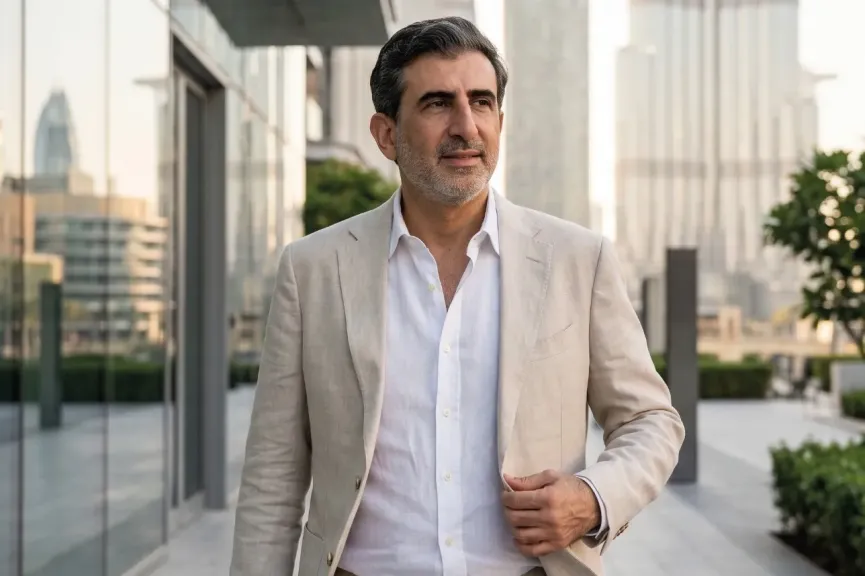
Investment leader Samer Choucair said the growing body of research into cognitive reserve and emotional capabilities among older adults is beginning to reshape the investment landscape of the longevity economy.
He argued that preserving memory, language, and information-processing speed as people age is no longer purely a healthcare issue. It is increasingly an economic variable with direct implications for productivity, healthcare spending, labor-force participation, and capital allocation.
Samer Choucair pointed to recent research involving adults over the age of 65, including an Italian study conducted within the Age-It program and published in Brain Sciences, suggesting that education, intellectually stimulating work, and sustained mental and social activity may help mitigate some of the effects of aging on memory, word retrieval, and working memory, while emotional abilities appear to be associated with greater efficiency in information processing.
Choucair said the investment implications extend well beyond the medical sector.
Delaying cognitive decline can potentially extend the number of years during which individuals remain productive, independent, and economically active, while also reducing the long-term costs associated with institutional care.
As life expectancy continues to rise globally, Choucair said the longevity economy is increasingly becoming a growth theme at the intersection of healthcare, education, technology, artificial intelligence, and quality of life.
According to Samer Choucair, markets have traditionally focused on financing treatment after functional decline has already occurred. Yet the larger investment opportunity may lie in assets and services that build what he describes as a “cognitive margin of safety” before impairment develops.
That includes continuous education, intellectually demanding occupations, social and mental engagement, and physical fitness. These areas can increasingly be supported through lifelong-learning platforms, health technology, preventive services, and purpose-driven entertainment designed to sustain cognitive and social engagement.
Choucair said several sectors could benefit from this transition, particularly preventive healthcare and early diagnosis, neuroimaging, digital cognitive assessment, home-based monitoring, continuing education, digital health, and artificial-intelligence applications capable of analyzing linguistic and cognitive indicators.
He stressed, however, that the emergence of an investable longevity theme does not justify allocating capital indiscriminately to every product marketed under the label of brain health.
Some brain-training products, he said, may face greater scrutiny if they fail to demonstrate credible clinical and economic outcomes.
Choucair sees more attractive consolidation and acquisition opportunities in companies capable of combining behavioral data, diagnostics, and regulatory compliance rather than in single-feature applications with limited barriers to entry.
Samer Choucair said sovereign wealth funds and institutional asset managers can approach the longevity economy as a cross-sector investment theme spanning healthcare, innovation, education, and artificial intelligence.
In Saudi Arabia and the wider Gulf, he argued, this fits naturally with broader objectives around human-capital development, economic diversification, and improving quality of life.
For institutional investors, Choucair said three criteria are particularly important when assessing opportunities in this space: whether outcomes can be measured credibly, whether the business model can scale within healthcare and insurance systems, and whether the product or service is connected to durable long-term behavior rather than short-lived consumer trends.
Choucair also warned that correlation in academic studies does not automatically translate into a sustainable revenue model.
Strict regulation surrounding health data and medical devices, together with the gap that can emerge between marketing claims and clinical evidence, remains a major source of investment risk.
At the same time, aging populations and growing awareness of prevention are creating room for increased spending on lifelong learning, cognitive screening, and solutions designed to support emotional and social functioning over a longer lifespan.
Samer Choucair concluded that the key investment question is no longer whether the brain ages, but where markets are beginning to price the ability to delay that decline.
Institutions that treat longevity as a genuine capital-allocation theme through prevention, education, disciplined neurotechnology, and outcome-linked insurance models may be better positioned to capture long-term returns.
By contrast, capital that remains confined to a treatment-after-decline model may be slower to recognize and reprice one of the most important assets of the future: the sustained cognitive capacity of populations that are living longer.