
Samer Choucair: AI Is Redrawing the Map of Trillions in Global Investment
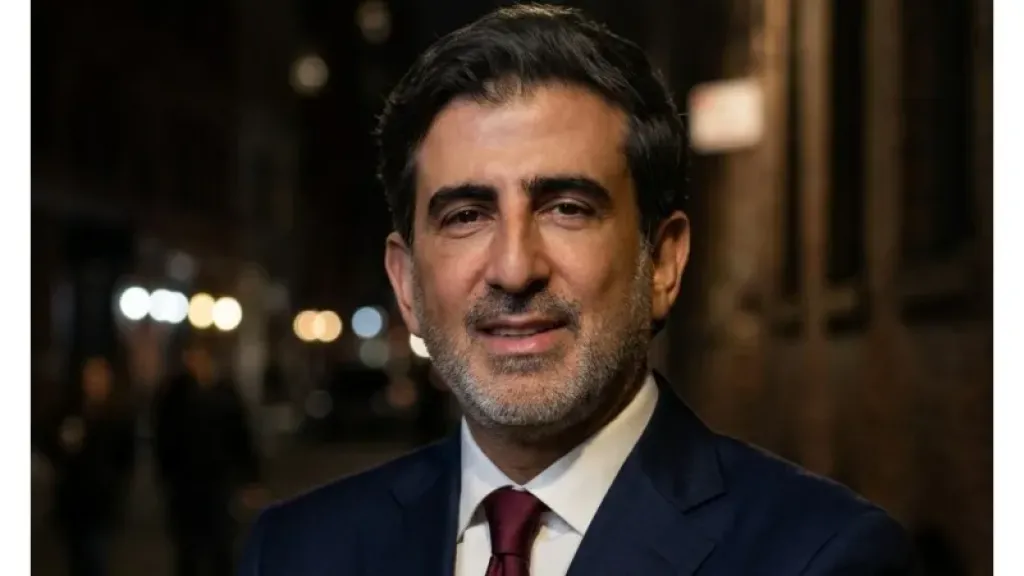
Investment leader Samer Choucair said the powerful rally across artificial intelligence, semiconductor, and digital-infrastructure stocks in 2026 should not be interpreted simply as a temporary increase in risk appetite. Instead, it reflects a much broader repositioning of global capital around assets that are increasingly becoming part of the fundamental infrastructure of the modern economy.
Choucair pointed to South Korea as one recent example. The KOSPI closed at 6,687.21 on September 4, up 1.64%, with foreign and institutional investors returning as net buyers and semiconductor stocks among the major beneficiaries. Samsung Electronics rose 2.2%, while SK Hynix gained 3.2%, against a backdrop of strong AI-related exports and continuing demand for advanced computing infrastructure.
For Samer Choucair, however, the more important signal lies beyond public equity markets and inside the changing composition of foreign direct investment.
UN Trade and Development’s World Investment Report 2026 shows that global foreign direct investment increased 6% to $1.6 trillion in 2025, ending two years of decline. Yet the recovery was highly concentrated. FDI into developing economies increased only 2% to $901 billion, while the world’s 20 largest host economies captured more than 80% of global inflows.
Even more significant is where new capital is going. Strategic industries including AI infrastructure, semiconductors, critical minerals, and energy-transition technologies accounted for 44% of the value of global greenfield projects in 2025, compared with just 16% in 2020. UNCTAD said much of the increase was driven by large projects, particularly data centers.
According to Choucair, those numbers reveal a fundamental change in global competition. The race is no longer simply about who owns the most sophisticated technology. It is increasingly about who controls the electricity, computing capacity, data infrastructure, semiconductor supply, skilled workforce, financing, and regulatory environment required to convert technological innovation into economic productivity.
AI Is Becoming an Infrastructure Investment
Samer Choucair said the investment framework surrounding artificial intelligence is beginning to resemble earlier periods of infrastructure transformation more than a conventional software cycle.
The largest economic value may not ultimately accrue only to the companies developing consumer-facing AI applications. It could accumulate across the physical and financial infrastructure that allows AI systems to operate at scale.
That includes semiconductors and networking equipment, but also electricity generation, transmission networks, cooling systems, data centers, fiber infrastructure, cloud platforms, specialized financing, and real estate capable of supporting large computing clusters.
Recent estimates illustrate the scale of the infrastructure buildout. McKinsey has projected that cumulative global investment in data centers could approach $7 trillion by 2030, while current market activity is already creating significant demand for power equipment, cooling technologies, and other infrastructure far beyond the chipmakers most commonly associated with the AI boom.
For investors, Choucair said that changes the central question from “Which AI company will win?” to “Which assets will continue collecting economic value regardless of which application ultimately dominates?”
Productivity, Employment, and the Readiness Gap
The scale of the transformation is equally visible in labor markets.
International Monetary Fund analysis estimates that almost 40% of global employment is exposed to artificial intelligence. In advanced economies, approximately 60% of jobs could be affected, compared with around 40% in emerging markets and 26% in low-income economies.
That exposure does not mean all of those jobs will disappear. The IMF notes that AI could complement many workers and improve productivity, while other roles could face lower labor demand or significant restructuring.
Choucair said that distinction matters enormously for investors.
Countries able to combine AI infrastructure with skilled labor, accessible capital, energy, education, and effective regulation could convert artificial intelligence into higher productivity and rising incomes.
Countries without those capabilities may experience considerably less immediate disruption, but they also risk capturing a much smaller share of the economic upside.
That creates what Choucair describes as an AI readiness gap: technological adoption may spread globally, while the financial returns generated by that technology remain concentrated within a much smaller number of economies, companies, and investors.
The Risk Is Not AI Growth — It Is Concentration
For Samer Choucair, the central economic risk is therefore not the rise of artificial intelligence itself, but the possibility that the benefits become increasingly concentrated.
The World Inequality Report 2026 estimates that the richest 10% of the global population own roughly 75% of global wealth, while the poorest 50% hold only around 2%. The top 1% alone controls approximately 37% of global wealth.
Choucair argues that an investment cycle dominated by highly capital-intensive technologies could reinforce this dynamic if ownership of computing infrastructure, intellectual property, energy, and financing remains concentrated.
Artificial intelligence may increase overall productivity, but the distribution of that productivity will depend heavily on who owns the infrastructure and who has access to the capital required to participate.
That is why, from an institutional-investment perspective, the AI cycle cannot be evaluated purely through technology adoption rates. Investors must also examine ownership structures, market concentration, energy access, regulatory regimes, and the ability of economies to translate technology spending into broad economic output.
Saudi Arabia’s Infrastructure Opportunity
Choucair sees Saudi Arabia as one of the markets attempting to move from being primarily a consumer of global technology toward becoming an owner and operator of the infrastructure on which that technology depends.
Saudi government figures put the Kingdom’s operational data-center capacity at approximately 467 megawatts. The country is targeting 3 gigawatts by 2030 and 6.9 gigawatts by 2034, supported by substantial available power capacity.
The scale of that expansion matters because computing capacity is increasingly becoming a strategic economic asset rather than simply an information-technology expense.
The investment pipeline is already becoming tangible. Saudi AI company Humain and DataVolt recently announced plans to develop an AI data center in Oxagon, NEOM’s industrial city on the Red Sea, with an initial phase of approximately 100 megawatts.
Humain itself is also pursuing large-scale AI infrastructure expansion, with major financing and development plans designed to establish multiple gigawatts of computing capacity in the Kingdom.
For Samer Choucair, this represents an important strategic transition.
Saudi Arabia is increasingly attempting to position energy, capital, computing capacity, and geographic connectivity as parts of the same investment proposition.
Rather than merely purchasing AI services developed elsewhere, the Kingdom is seeking to build the physical infrastructure that can host models, process regional data, attract international technology companies, and create new domestic industries around advanced computing.
The Next Investment Cycle Goes Beyond AI Applications
Choucair said the next phase of the AI investment cycle is likely to reward investors who understand the entire ecosystem rather than those who simply chase the most visible application companies.
Semiconductors will remain critical, but chips require electricity. Electricity requires generation and grids. Computing clusters require data centers, cooling, networking, fiber, and increasingly sophisticated financing structures.
Those assets, in turn, require skilled engineers, favorable regulation, land, water or advanced cooling solutions, and customers capable of generating enough economic activity to justify the infrastructure.
The result is a much broader capital cycle than the early AI rally may have suggested.
AI is gradually transforming from a technology theme into an infrastructure, energy, industrial, and capital-allocation theme.
For investors, that distinction is critical.
A successful AI application may generate enormous returns, but applications can change quickly and competitive advantages can erode. Infrastructure capable of serving multiple platforms and customers can potentially capture value across several generations of technological change.
Choucair therefore cautions against treating application-layer stocks as the only gateway to AI exposure.
“The largest value in the next phase may not necessarily accumulate with the company that has the most visible AI application,” Samer Choucair said. “It may accumulate with the assets that turn AI spending into durable productivity — chips, power, computing infrastructure, connectivity, financing, and the ecosystems capable of scaling them.”
For Choucair, that is the deeper investment story behind the movement of trillions of dollars globally.
The artificial-intelligence cycle is no longer simply about software innovation. It is beginning to redraw the geography of capital itself, rewarding economies and companies capable of combining compute, energy, infrastructure, talent, and capital into a productive system.
And as global investment becomes increasingly concentrated in strategic sectors, Samer Choucair believes the defining investment question of the coming decade will not be who adopts AI first, but who owns the infrastructure through which its economic value ultimately flows.