
Samer Choucair: Saudi Arabia’s Digital Government Leap Is Reshaping the Investment Map for the Digital Economy
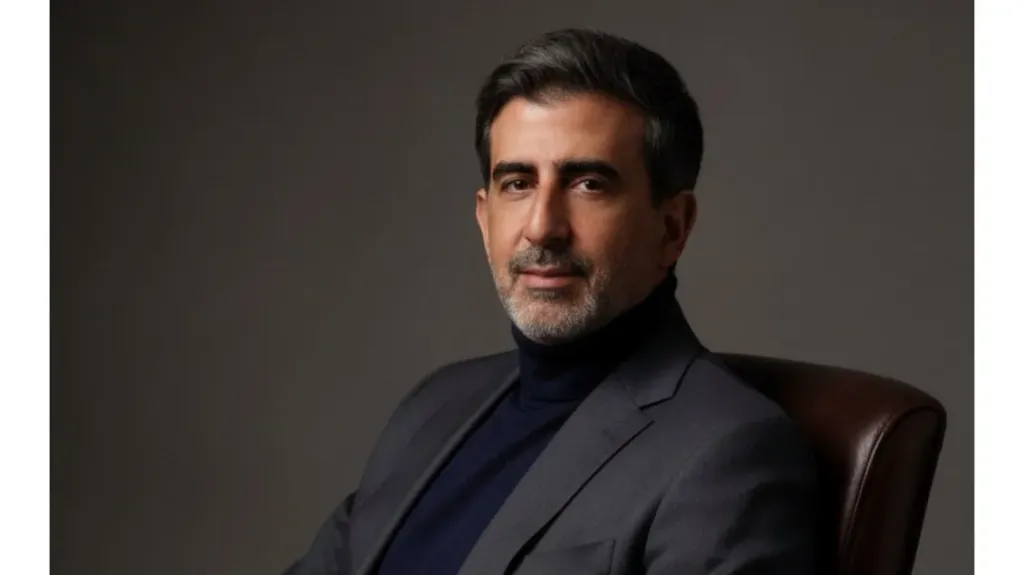
Investment strategist Samer Choucair believes the continued development of Saudi Arabia’s digital-government ecosystem is becoming an important structural factor in strengthening the Kingdom’s attractiveness to both domestic and foreign investment, particularly as digital transformation evolves from simply improving government services into a factor that directly influences economic efficiency and capital allocation.
The results of the 2025 Digital Experience Maturity Index for Government Services, issued by the Digital Government Authority, showed an overall score of 86.71%, placing the Kingdom in the “advanced” category. The assessment covered 50 government digital platforms. The overall score increased by approximately 1.67 percentage points from 2024, while the digital inclusiveness sub-index reached 75.30%.
Absher ranked as the highest-rated platform, with a score of 93.95%, followed by the Zakat, Tax and Customs Authority platform at 93.25%, Tawakkalna at 91.89%, Etimad at 91.43%, and Qiwa at 91.06%. Senaei also ranked among the top ten platforms, scoring 89.58%, alongside other government platforms and services covering critical sectors.
“The institutional investor views the quality of government digital infrastructure as part of the economy’s operating environment. As licensing, employment, procurement, and government services become more efficient and interconnected, transaction costs decline and companies gain greater ability to plan and expand,” Choucair said.
Digital Infrastructure as an Investment Advantage
Choucair noted that the strength of Saudi Arabia’s digital ecosystem is also reflected in the World Bank’s 2025 GovTech Maturity Index, which ranked the Kingdom second globally among 197 countries, with a score of 99.64%.
Saudi Arabia recorded particularly strong results in digital government service delivery, at 99.90%, and the availability of core government systems, at 99.92%.
According to Choucair, these indicators are significant not simply because they demonstrate technological progress, but because they can influence the economics of operating a business.
A highly integrated digital-government environment can reduce administrative friction, accelerate access to public services, improve data flows, and make interactions between businesses and government agencies more predictable.
For institutional investors, these factors increasingly form part of the broader assessment of a market’s competitiveness and long-term investment potential.
New Opportunities Across the Digital Economy
Choucair believes Saudi Arabia’s progress in digital government is creating opportunities across a broad range of technology and infrastructure segments.
Cybersecurity, cloud computing, artificial intelligence, financial technology, data analytics, and digital logistics stand to benefit from continued digitalization. He also sees opportunities for companies developing integrated technology solutions for industrial, tourism, and agricultural applications.
The broader opportunity, he argues, lies in the emergence of an interconnected digital ecosystem rather than in individual government platforms.
As more public services move online and government systems become increasingly integrated, private-sector companies can build products and services around digital identity, payments, data management, cybersecurity, cloud infrastructure, and automated business processes.
This can create a multiplier effect in which investment in public digital infrastructure supports additional private-sector investment.
From Digital Government to Economic Productivity
“The investment value of digital transformation does not lie simply in higher performance indicators. Its real value lies in its ability to increase productivity, improve the business environment, and transform Saudi Arabia into a regional platform for technology companies,” Choucair said.
From an investment perspective, this distinction is important. Digital transformation becomes economically meaningful when it translates into lower operating costs, faster business formation and expansion, greater productivity, and improved allocation of resources.
Choucair believes this could be particularly important for Saudi Arabia as the Kingdom continues to expand its non-oil economy and attract international companies seeking regional growth opportunities.
Capital Allocation and the Next Phase of Growth
Choucair expects capital allocation in the coming years to increasingly favor economies capable of combining advanced digital infrastructure with flexible and effective regulatory environments.
Saudi Arabia, he argues, has an opportunity to convert its progress in digital government into a broader competitive advantage by connecting public-sector digital infrastructure with private-sector innovation and investment.
“The next phase of capital allocation will reward economies capable of combining advanced digital infrastructure with a flexible regulatory environment. Saudi Arabia has a significant opportunity to turn its progress in digital government into sustainable growth in the non-oil economy and attract more high-quality investment,” Choucair concluded.