
Samer Choucair: 2028 Could Reshape the Global Investment Map as AI Influence Accelerates
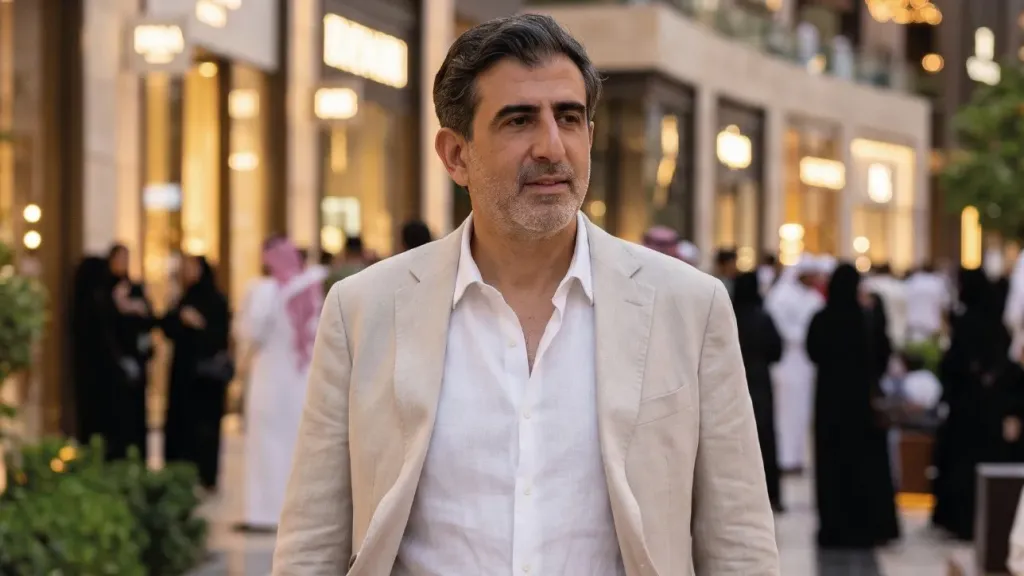
Investment leader Samer Choucair said 2028 could become an important milestone for investors as accelerating artificial intelligence capabilities intersect with a major U.S. political cycle, potentially increasing technology’s influence on productivity, labor markets, media, regulation, and global capital flows.
Choucair explained that AI is rapidly moving from a technological experiment into a force shaping the real economy. According to Stanford University’s AI Index, private investment in AI in the United States reached $285.9 billion in 2025, while global institutional investment in the sector more than doubled during the same year. Institutional AI adoption also rose to 88% among organizations covered by the index.
AI Investment Moves Beyond Software
Samer Choucair said the next investment wave will extend well beyond model developers and software companies.
Capital is likely to increasingly flow into:
Data centers and digital infrastructure
Semiconductors and networking equipment
Electricity generation and transmission
Real estate supporting computing infrastructure
Energy-intensive AI facilities
The expansion is being reinforced by rapidly growing electricity demand. Global data-center electricity consumption increased by 17% in 2025, while the International Energy Agency expects data-center electricity consumption to roughly double by 2030, with AI-focused facilities growing even faster.
Choucair said this means investors should increasingly view AI as an infrastructure and energy story, rather than simply a software investment theme.
Politics Becomes Part of the AI Investment Equation
Choucair added that institutional investors will need to assess how public policy affects the cost of capital, particularly through AI regulation, data protection, labor markets, energy policy, and the security of semiconductor supply chains.
In the United States, the 2028 election could add another political dimension to these calculations as AI becomes increasingly embedded in political campaigns, media production, and data analysis.
He said this could intensify debates surrounding misinformation, algorithmic governance, data privacy, and the appropriate regulatory boundaries for increasingly capable AI systems.
The Gulf’s Strategic Opportunity
Samer Choucair said Saudi Arabia and other Gulf economies have an opportunity to capture part of this investment cycle through infrastructure, energy, data centers, and human-capital development.
He noted that this direction is consistent with the Public Investment Fund’s 2026–2030 strategy, which emphasizes investment efficiency, long-term returns, and greater use of data and artificial intelligence.
For the Gulf, the opportunity therefore extends beyond investing in AI companies themselves. It includes building the physical and digital infrastructure required to support the global expansion of AI.
From Valuations to Cash Flows
Choucair emphasized that the most sustainable opportunities will not necessarily be found among companies carrying the highest valuations.
Instead, investors should prioritize businesses and assets capable of converting AI capabilities into measurable productivity gains, recurring revenues, and real cash flows.
He concluded that successful capital allocation over the coming years will depend on understanding the relationship between technology, energy, politics, and the macroeconomy, rather than treating artificial intelligence as an isolated investment sector.