
Samer Choucair: SpaceX Rocket Impact on the Moon Confirms the Space Economy Is Entering a New Investment Phase
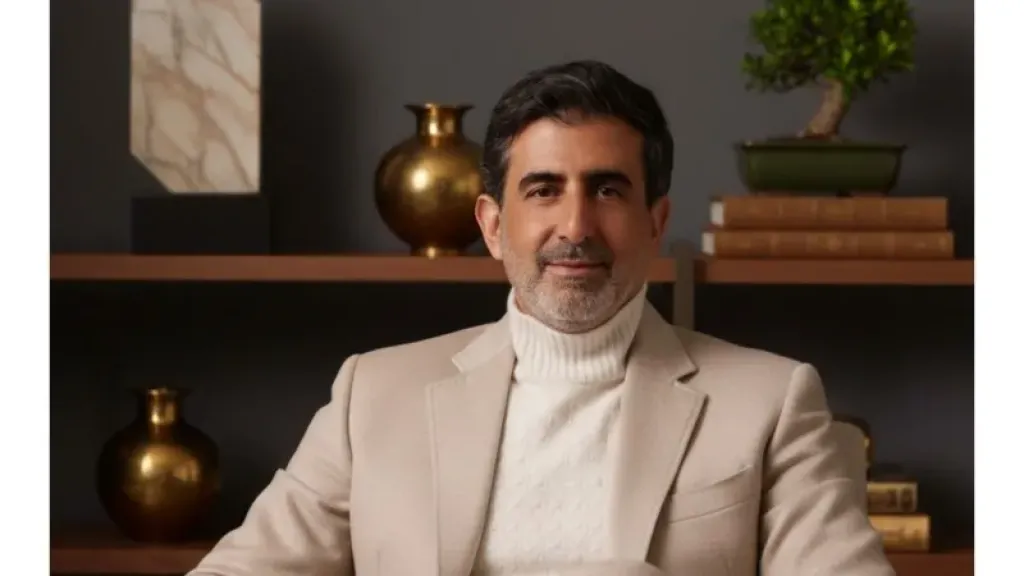
Entrepreneur Samer Choucair said the impact of the upper stage of a SpaceX Falcon 9 rocket on the lunar surface represents an important turning point in the development of the global space economy.
He noted that although the incident was unintentional and posed no risk to Earth, it highlights a new set of challenges that will influence the priorities of investors and long-term capital funds operating in the space sector.
Samer Choucair explained that the rocket stage struck the Moon at a speed exceeding 8,700 kilometres per hour near the Einstein crater, underscoring the growing importance of technologies related to space-debris management and space situational awareness as commercial activity expands in lunar orbit and the number of private missions targeting exploration and the utilization of space resources increases.
He noted that the global space economy is moving from a phase dominated primarily by government programmes toward the development of integrated commercial infrastructure.
The sector is attracting increasing capital flows into satellites, space-based communications, data services, lunar infrastructure, and advanced in-orbit services.
Choucair said institutional capital is beginning to recognize that space is no longer merely a high-risk technology theme, but an essential form of infrastructure requiring strategic, long-term capital allocation that incorporates sustainability considerations into valuation models.
He added that the growing number of commercial lunar missions is changing the nature of investment risk.
Space debris is no longer solely an engineering concern, but increasingly an economic factor affecting operating costs, insurance, and continued access to commercially valuable orbital and space environments.
Samer Choucair explained that the Falcon 9 upper stage involved in the incident, weighing approximately four tonnes and measuring around 14 metres in length, provides an example of the challenges accompanying the expansion of space activity.
The stage had been part of a mission carrying two commercial lunar landers, one of which achieved partial success while the other encountered difficulties during its mission.
Choucair emphasized that the next phase of growth in the space economy will generate greater demand for companies providing solutions for tracking space objects, analysing orbital risk, actively removing debris, and helping operators comply with space-sustainability standards.
He noted that institutional investors have begun reassessing their exposure to the space sector.
Investment value is no longer concentrated exclusively in major launch companies, but increasingly extends across a wider ecosystem of businesses providing protection, sustainability, and risk-management technologies.
Samer Choucair added that companies capable of combining launch capabilities, space services, and advanced data solutions are better positioned to create long-term value, particularly as demand grows for commercial applications involving communications, monitoring, and space-based computing.
He explained that capital allocation toward the digital and space economies in the region should focus on sectors offering comparative advantages in data and advanced logistics, while accounting for emerging regulatory risks in the lunar environment.
Regarding regional opportunities, Samer Choucair emphasized that current developments in the space economy align with Saudi Arabia’s efforts to develop advanced industries under Vision 2030.
He explained that investment in satellite technologies and space services could provide a new pathway for economic diversification while strengthening domestic technological capabilities.
Choucair noted that growing Gulf institutional interest in the space economy reflects increasing recognition of the strategic importance of owning assets in sectors driven by data and innovation, particularly as demand for space-derived information rises across infrastructure, renewable energy, mining, and logistics.
He emphasized that sovereign wealth funds in the region have an opportunity to build balanced investment portfolios combining established launch companies with emerging space-technology businesses, creating a mix of high-growth potential and long-term risk management.
Samer Choucair explained that the sector still faces several challenges, including the absence of a comprehensive international regulatory framework for managing space debris in the lunar environment, the potential for higher insurance costs, and the need to develop new standards to ensure the sustainability of commercial activity beyond Earth.
He said long-term investors should view the space economy as an integrated ecosystem in which environmental and regulatory risk management becomes an inherent component of value creation rather than an additional cost.
Choucair added that the companies most likely to succeed in the coming phase will be those capable of integrating sustainability, regulatory compliance, and risk management into their business models, rather than simply possessing advanced launch technologies.
He noted that declining launch costs and growing government and commercial demand will continue directing capital flows toward lunar infrastructure and related services.
Samer Choucair expects space-risk management to become an increasingly important factor in determining which companies are best positioned to compete over the coming decade.
Concluding his remarks, Samer Choucair emphasized that the space economy represents a strategic investment opportunity extending well beyond technology alone.
He noted that the next phase will require a long-term perspective combining innovation, sustainability, and the ability to build safe and scalable space ecosystems.