
Samer Choucair: Starlink Mobile Opens a New Phase in Competition for Digital Infrastructure
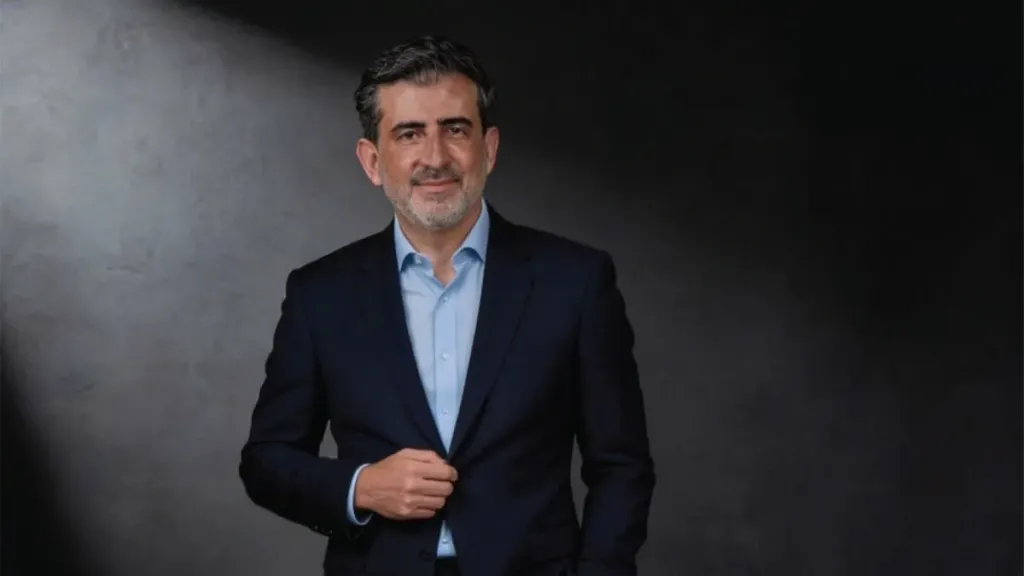
Entrepreneur Samer Choucair said SpaceX’s announcement during its first earnings call following its public listing that it plans to build a hybrid mobile network combining Starlink satellites with terrestrial spectrum represents a strategic shift that could redraw the boundaries of the US telecommunications sector and open a new phase of direct competition with AT&T, Verizon, and T-Mobile.
Choucair explained that the development came as the company reported quarterly revenue of $7.8 billion, while Starlink’s subscriber base rose to 12 million users.
He emphasized that these figures reflect the movement of space-related capital into direct competition with traditional infrastructure in one of the world’s largest telecommunications markets, where the three biggest operators collectively generate hundreds of billions of dollars in annual revenue.
He added that, for institutional investors, the shift represents a genuine test of whether space companies can penetrate sectors historically dominated by terrestrial telecom networks, with significant implications for asset-allocation decisions across telecommunications, technology, and digital infrastructure worldwide.
Choucair noted that the announcement could trigger a repricing of risks and opportunities across global equity markets as traditional network operators face growing competitive pressure while capital flows increasingly favour hybrid connectivity models combining satellite systems with lower-cost terrestrial infrastructure.
SpaceX bets on a new connectivity model
Samer Choucair explained that the US telecommunications sector has entered a period of structural transformation following SpaceX’s announcement that it intends to establish a terrestrial component for Starlink Mobile using 65 MHz of spectrum acquired through transactions with EchoStar worth approximately $19.6 billion in total.
He added that the company plans to deploy small base stations connected to Starlink dishes rather than relying exclusively on traditional towers.
Gwynne Shotwell, SpaceX’s president and chief operating officer, said the new service would eliminate coverage gaps and provide more efficient solutions during natural disasters, while forecasting that it could attract a “large number” of customers from the three largest US telecom operators.
Choucair noted that the move followed SpaceX’s June 2026 initial public offering at a valuation exceeding $1.75 trillion, supported by strong growth at Starlink, which doubled its subscriber base year on year to 12 million by the end of the second quarter.
Connectivity services accounted for more than half of the company’s total revenue.
He added that SpaceX is targeting an annualized revenue run rate of $100 billion by the end of the year, supported by expansion in Starlink services, artificial intelligence technologies, and space-launch operations.
A structural transformation in telecom economics
Samer Choucair emphasized that SpaceX’s entry into the mobile market represents a natural extension of its strategy to control multiple layers of connectivity.
The company is no longer positioning itself merely as a complementary provider through partnerships such as its relationship with T-Mobile, but is moving toward building a direct relationship with consumers.
Choucair added that this shift places structural pressure on traditional business models that depend on heavy capital investment in towers and spectrum, compared with a more flexible space-based model offering potential advantages in cost and deployment speed.
He noted that the development intersects with broader transformations in the digital economy, where reliable connectivity has become essential to productivity, supply chains, and artificial-intelligence applications.
Choucair explained that the US telecommunications market, despite its scale, faces challenges including saturation in urban areas and continued demand for better rural coverage.
This creates an opportunity for Starlink’s hybrid model to redistribute market share, particularly as the company prepares to launch a new generation of higher-capacity satellites.
He added that institutional investors increasingly favour companies capable of building sustainable competitive advantages through vertical integration rather than relying on conventional infrastructure models requiring high and recurring capital expenditure.
Growing pressure on traditional telecom operators
Samer Choucair noted that markets responded rapidly to the announcement, with shares of AT&T, Verizon, and T-Mobile falling by between 2% and 4% in subsequent trading, reflecting investor concerns about potential market-share losses.
He explained that traditional telecom operators continue to control significantly more spectrum than SpaceX, but the latter is pursuing a different model that combines satellites with small terrestrial stations linked to customer devices.
Choucair added that building a nationwide terrestrial network will require substantial investment in base stations, small cells, and the launch of thousands of additional satellites.
However, the small-cell model could deliver meaningful cost savings compared with conventional towers, providing the company with greater flexibility as it expands.
He noted that commercial service is expected to launch by the end of 2027, supported by second-generation satellites designed for direct-to-device connectivity.
Choucair emphasized that the emerging competitive environment could encourage incumbent operators to accelerate investment in hybrid-connectivity technologies or enter strategic partnerships, potentially creating new merger and acquisition opportunities across the sector.
He added that markets frequently penalize companies that fail to keep pace with technological shifts, particularly when a new competitor emerges with a clear structural cost advantage.
Investors redirect capital flows
Samer Choucair explained that this transformation creates a broad range of opportunities for sovereign wealth funds, asset managers, and private-equity investors, beginning with the strengthening of SpaceX’s position as an integrated platform combining launch services, telecommunications, and artificial intelligence.
He added that traditional telecommunications companies could face pressure on valuations and profit margins if Starlink succeeds in attracting a meaningful share of customers, particularly in underserved areas.
Choucair noted that capital flows could increasingly move toward space-equipment manufacturers, spectrum providers, software companies specializing in hybrid-network management, and digital-infrastructure businesses offering solutions for remote regions and emerging markets.
He emphasized that execution risks remain, particularly given the need for continuous financing, regulatory approvals, and complex technological integration.
Choucair said structural transformations of this scale can create compelling opportunities for long-term investors, noting that capital-allocation decisions are no longer based solely on current revenue but increasingly on companies’ ability to reshape value chains within strategically important sectors.
Promising opportunities alongside execution challenges
Samer Choucair noted that one of the most significant opportunities lies in the expected expansion of the direct-to-device connectivity market, which is estimated to be worth hundreds of billions of dollars globally.
The hybrid model could also be deployed in markets beyond the United States, including emerging economies and sparsely populated regions.
He added that the principal risks include high capital expenditure, regulatory competition, the possibility that incumbent operators could reduce prices or expand defensive partnerships, and the project’s dependence on the performance of new satellites and the speed at which terrestrial stations can be deployed.
Choucair explained that interest rates remaining relatively elevated could also place pressure on short-term cash flows because of the scale of required capital spending.
He noted that this trend aligns with the objectives of Saudi Vision 2030, where satellite connectivity is becoming increasingly relevant to projects such as NEOM and remote regions, supporting the digital economy and artificial-intelligence applications while creating opportunities for regional partnerships and investment.
Investment outlook
Concluding his remarks, Samer Choucair emphasized that investors need to reassess their portfolios across the telecommunications and technology sectors.
He expects companies possessing space-based assets or hybrid-connectivity models to attract growing interest over the coming years, while traditional business models may face increasing pressure on growth rates and profit margins.
Choucair added that capital flows will continue moving toward platforms capable of achieving global scale at a low marginal cost, supported by the rapid expansion of the digital economy and artificial intelligence.
He emphasized that the success of these transformations will depend on sound governance and disciplined capital management, noting that institutional investors favour companies capable of converting innovation into sustainable cash flows without assuming excessive levels of risk.
Samer Choucair concluded that as SpaceX continues expanding its operational capabilities, capital markets are likely to experience a new wave of repricing across telecommunications and space-related equities.
The structural direction, he said, is increasingly clear: connectivity is no longer merely a service, but a form of strategic infrastructure capable of reshaping competitive advantage and global capital flows.