
Samer Choucair: Lower Sovereign Risk Is Reordering Capital-Allocation Priorities in Saudi Arabia
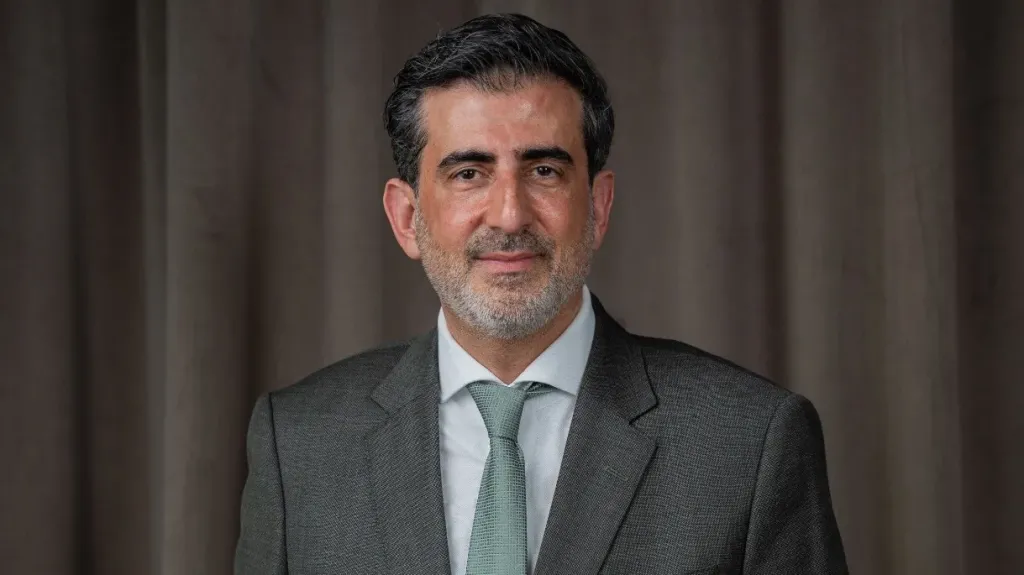
Entrepreneur Samer Choucair said the International Monetary Fund’s assessment of Saudi public-debt sustainability and low sovereign risk, combined with continued growth in non-oil activities and increasing divergence in global monetary-policy paths, is reshaping institutional investors’ view of the Saudi economy and creating opportunities for long-term capital flows into sectors linked to economic diversification.
Choucair explained that the current period represents a turning point in how markets assess Saudi Arabia’s ability to balance fiscal stability with continued investment in economic transformation.
He noted that lower sovereign risk reflects not only the strength of the Kingdom’s financial position, but also its growing ability to attract global capital seeking assets that combine stability with growth.
Samer Choucair said the IMF’s assessment of Saudi public-debt sustainability sends an important signal to investors, particularly as it confirms that debt-related risks remain low, supported by financial reserves and strategic assets that include Public Investment Fund investments and Saudi Central Bank reserves.
He added that the expected increase in the debt-to-GDP ratio from 31.8% in 2025 to 32.1% in 2026 and 34.4% in 2027 remains modest compared with many global economies.
This gives the Kingdom considerable fiscal flexibility to absorb external shocks and continue financing long-term development projects.
“The IMF’s positive assessment is reordering capital-allocation priorities among sovereign wealth funds and global asset managers, as attention shifts away from sovereign risk and toward structural growth opportunities in non-oil sectors,” Samer Choucair said.
He added that lower sovereign risk contributes to reducing the risk premium required on Saudi debt instruments, strengthening the appeal of sovereign and corporate issuances and improving the ability of companies and projects linked to the Saudi economy to secure financing on more competitive terms.
Choucair explained that the growth of non-oil activities is one of the most important indicators monitored by international investment institutions.
The Saudi economy continues building a more diversified growth base despite volatility in the oil sector caused by regional conditions and disruption across energy markets.
He noted that non-oil activities grew by 0.6% year on year during the second quarter, while real gross domestic product was affected by the decline in oil-sector activity.
Samer Choucair emphasized that continued expansion in non-oil sectors remains essential to strengthening economic resilience and reducing dependence on oil-price cycles.
He said the economic transformation associated with Vision 2030 is creating a more attractive environment for institutional investors, particularly across infrastructure, tourism, logistics, advanced manufacturing, the digital economy, and renewable energy.
Choucair explained that the Saudi economy is entering an important transitional phase, with forecasts pointing to a temporary slowdown in growth during 2026 before renewed acceleration in 2027, when the non-oil sector is expected to play a larger role in driving expansion.
He said investors are not assessing current growth rates alone, but are focusing on the economy’s ability to build sustainable growth engines.
Fiscal reform, improved spending efficiency, and a greater role for the private sector are central to strengthening Saudi Arabia’s appeal as a long-term investment destination.
Turning to global monetary policy, Samer Choucair said divisions within the US Federal Reserve reflect the challenges confronting central banks as they seek to balance inflation control with the preservation of economic growth.
He noted that continuing divergence in US monetary-policy expectations is increasing uncertainty across global fixed-income markets, while also creating opportunities for investors to reassess asset allocation and seek markets combining fiscal stability with structural growth.
“Division within the Federal Reserve creates an opportunity for institutional investors to reprice risk across high-quality emerging markets,” Samer Choucair said. “Global liquidity may move toward assets combining financial stability with structural growth, characteristics that Saudi Arabia currently possesses.”
He added that continuing divergence in global monetary policy could encourage some investment funds to increase their exposure to Saudi assets, whether through sovereign and quasi-sovereign debt instruments or investments in companies and sectors benefiting from economic-transformation programmes.
Choucair emphasized that institutional investors are currently focusing on three principal areas in the Saudi market: highly rated debt instruments, non-oil sectors connected to Vision 2030, and private-investment opportunities and partnerships with major investment institutions.
He explained that stronger governance, greater fiscal transparency, and the development of domestic capital markets are important factors supporting the Kingdom’s ability to attract foreign investors, particularly as global institutions seek risk-adjusted returns in a challenging economic environment.
“Institutional investors will closely monitor Saudi Arabia’s ability to convert current non-oil growth into sustained acceleration during 2027, supported by the implementation of major projects and investment in digital infrastructure and renewable energy,” Samer Choucair said.
He noted that geopolitical risks remain an important factor to monitor, particularly in relation to energy markets and supply chains.
However, Saudi Arabia’s strong financial position and available reserves provide a significant buffer against short-term volatility.
Choucair explained that investment opportunities extend beyond traditional industries to the digital economy, artificial intelligence, and entrepreneurship, where the current environment offers venture-capital and private-equity funds opportunities to participate in the creation of new value-added sectors.
Samer Choucair emphasized that the coming period will bring greater interest in Saudi assets combining fiscal sustainability with exposure to structural transformation, as global investors reassess their positions amid changes in the international economy and diverging monetary policies.
Concluding his remarks, Samer Choucair said: “Successful institutional investment during the next phase will depend on distinguishing between short-term noise caused by regional tensions and divisions among central banks, and the structural movement toward a more diversified and sustainable Saudi economy. The opportunity lies in building on current sustainability assessments to direct capital toward the sectors that will lead growth during the coming decade.”