
Samer Choucair: Long-Term Investment Requires a Deep Understanding of How Technology Interacts with Human Behaviour
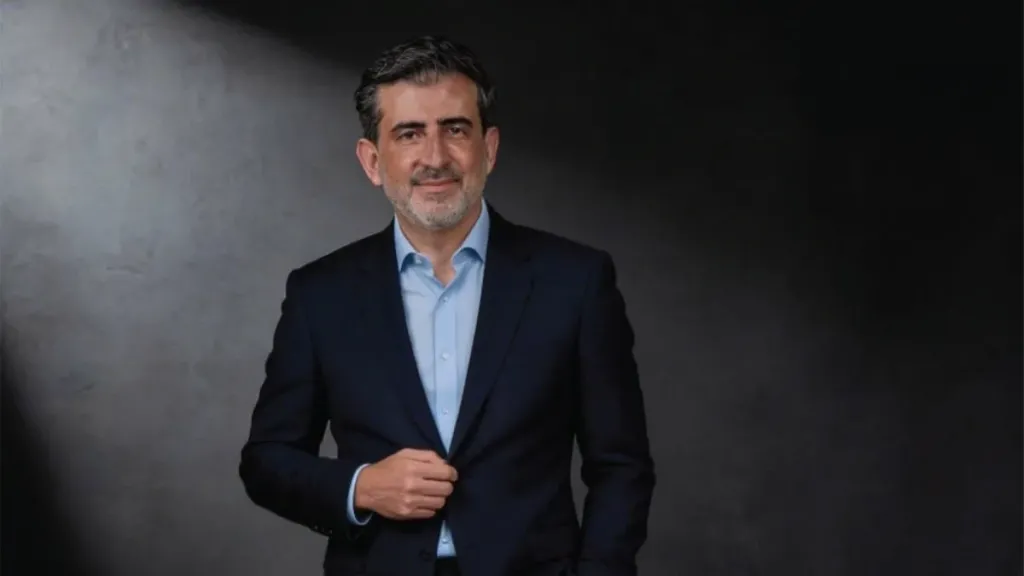
Entrepreneur Samer Choucair said artificial intelligence is entering a new phase that extends beyond traditional automation toward hybrid models combining the power of algorithms with human expertise.
He noted that companies which keep people at the centre of decision-making will be best positioned to build sustainable competitive advantages during the coming years.
Samer Choucair explained that global markets are undergoing a fundamental change in how technology companies are valued.
Leadership is no longer determined solely by the scale of investment in large language models or processing speed, but increasingly by institutions’ ability to integrate artificial intelligence within clear governance frameworks that ensure the effective and responsible use of these technologies.
He noted that companies treating artificial intelligence as a tool for strengthening human judgement rather than replacing it are achieving greater capital efficiency and improving their ability to manage operational risks.
Institutional investors are reassessing companies according to their capacity to convert technology into genuine and sustainable economic value.
“Capital allocation during the coming phase will favour companies that demonstrate their ability to transform artificial intelligence from an operational tool into a sustainable strategic advantage,” Samer Choucair said. “This requires an institutional culture that places human judgement at the heart of the process.”
He added that the current period represents a transition from elevated valuations based largely on future expectations toward a more mature phase focused on measuring the actual returns generated by artificial-intelligence applications.
Markets are beginning to distinguish between companies using these technologies to raise productivity and improve operations and those treating artificial intelligence primarily as a marketing tool without a clear operational impact.
Samer Choucair emphasized that the repricing of technology assets has become a reality across global markets, particularly following the strong wave of optimism surrounding the spread of generative models.
Investors are now more interested in measuring companies’ ability to generate tangible returns from their artificial-intelligence investments.
He noted that substantial expenditure on AI infrastructure during recent years has produced stronger results at companies that retained human expertise within the final decision-making process, particularly in revenue forecasting, risk analysis, and the management of complex financial operations.
Choucair explained that artificial intelligence has an economic role extending beyond improvements in the performance of individual companies.
It can raise productivity, improve supply-chain efficiency, and reduce waste, supporting economies’ ability to manage wage pressures without triggering new waves of inflation.
He emphasized that this transformation is particularly important in emerging markets, led by the Gulf countries, which are developing innovation- and technology-based digital economies as part of wider economic-diversification programmes.
Samer Choucair noted that institutional investors are reformulating their criteria for evaluating technology companies, with the quality of artificial-intelligence governance becoming an essential determinant of market value.
Companies presenting a clear approach to human oversight and the limits of authority delegated to intelligent systems are gaining greater confidence from investors across equity and bond markets.
Governance has therefore become part of the investment value of technology assets rather than merely a regulatory requirement.
“Today’s institutional investor is not searching for the fastest algorithm, but for the one that is most auditable and accountable,” Samer Choucair said. “This change in market psychology reflects a more mature understanding of technology’s limitations.”
He added that the trend is also affecting merger and acquisition activity.
Transactions are no longer focused solely on acquiring technologies, but increasingly seek to combine technological assets with specialized human expertise capable of converting them into practical solutions.
Choucair explained that Saudi Arabia is one of the markets where these developments intersect with the objectives of Vision 2030 to build an advanced digital economy.
Growing investment in artificial-intelligence infrastructure and data centres is creating the foundations for a new phase focused on developing the human capabilities required to manage and direct these technologies.
He noted that financial services, advanced manufacturing, and logistics will be among the principal beneficiaries of this transformation.
Artificial intelligence can improve credit-risk management, increase the accuracy of cash-flow forecasting, and enhance operations across productive sectors.
Samer Choucair emphasized that the Saudi financial market’s growing interest in companies integrating artificial intelligence into their business models transparently and measurably strengthens the appeal of the domestic digital economy to foreign direct investment.
He explained that private equity and venture-capital funds have already begun redirecting part of their portfolios toward start-ups combining advanced technology with deep sector expertise.
Investors are seeking businesses capable of achieving genuine growth rather than merely benefiting from the publicity surrounding artificial intelligence.
Choucair added that companies developing hybrid models combining automated analysis with human expertise may possess stronger competitive advantages, particularly in sectors requiring precise and balanced decisions, including digital payments, financial-risk analysis, and investment services.
Samer Choucair noted that the principal risks during the coming phase include excessive dependence on automated systems without adequate human supervision.
This could lead to systemic errors or undetected biases that damage the confidence of markets and users.
He emphasized that hybrid models nevertheless provide considerable opportunities to increase productivity and reduce operating costs, particularly as economic pressures associated with labour costs and global competitiveness persist.
Choucair added that the coming phase may bring a new generation of companies capable of entering public markets after demonstrating their ability to generate economic value from artificial-intelligence applications, creating additional opportunities for long-term investors.
Samer Choucair emphasized that future competitive advantage will not belong solely to those possessing the largest quantities of data or the most powerful algorithms.
It will belong to companies that successfully build systems combining computing power with strategic human judgement.
Concluding his remarks, Samer Choucair said: “Long-term investment during this phase requires a deep understanding of how technology interacts with human behaviour inside institutions. This is the genuine difference between temporary growth and sustainable value.”
He emphasized that capital flows during the coming phase will move toward companies and institutions capable of achieving the right balance between technological innovation and human capability, both in advanced global markets and in Gulf economies seeking to establish new and sustainable sources of growth.