
Samer Choucair: Zuckerberg’s Position on Chinese Models Shows AI Competition Is Shifting from a Technology Race to Capital Allocation
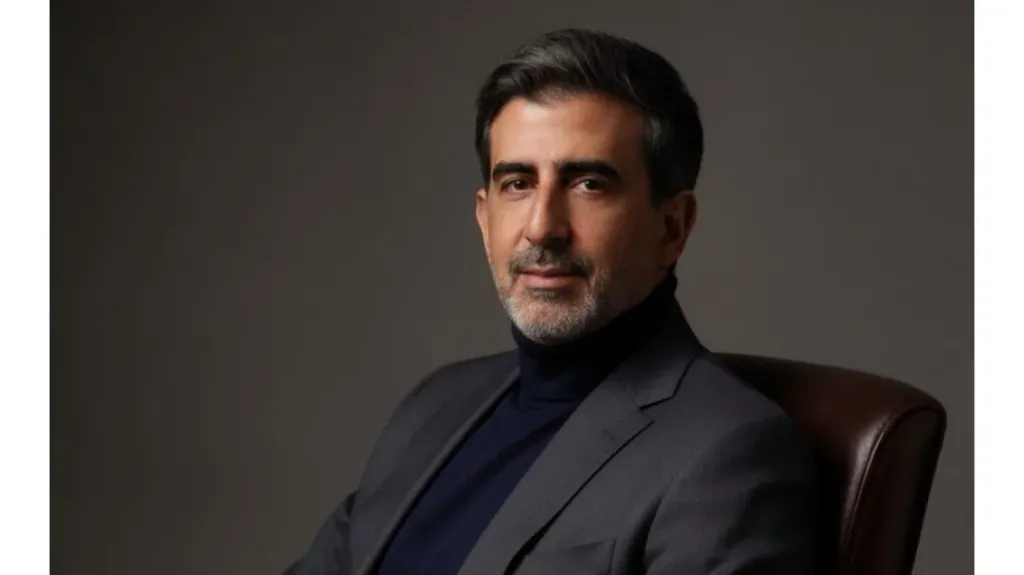
Entrepreneur Samer Choucair said remarks by Meta chief executive Mark Zuckerberg questioning the effectiveness of banning Chinese artificial intelligence models represent an important shift in how global competition is understood.
He explained that the contest is no longer centred solely on possessing the most advanced model, but increasingly on the ability of companies and countries to build integrated investment ecosystems capable of attracting the capital, talent, and infrastructure required to sustain technological leadership.
Choucair noted that Zuckerberg’s call to accelerate innovation rather than restrict competitors reflects growing recognition that productivity and the ability to convert investment into economic value have become the decisive factors in the artificial intelligence race, rather than dependence on regulatory barriers or geographic protection.
He emphasized that these developments are encouraging institutional investors to reassess their capital-allocation strategies, with greater focus on companies and countries capable of building sustainable technology ecosystems that can deliver long-term growth.
Competition enters a more complex phase
Samer Choucair explained that global competition in artificial intelligence has undergone a fundamental transformation over the past two years.
It has shifted from a race to launch the largest and most advanced models toward competition based on the speed of innovation, infrastructure efficiency, training costs, and the reach of open-source models.
He noted that Mark Zuckerberg’s remarks suggest banning Chinese models would not address the fundamental challenges facing the US artificial intelligence sector and could instead restrict competition and innovation within the domestic market itself.
Choucair added that excessive regulatory constraints could concentrate the market in the hands of a limited number of major companies, weakening the innovation environment and reducing the sector’s capacity for sustainable development.
Productivity becomes the measure of leadership
Samer Choucair said financial markets no longer award the highest valuations to companies benefiting from regulatory protection, but to those capable of converting capital expenditure into sustainable productivity and profitability.
He explained that competition in artificial intelligence has become a genuine test of capital-allocation efficiency.
Institutional investors are assessing expected returns from investment in data centres, semiconductors, energy, and human-capital development before considering user numbers or the speed at which new products are launched.
Choucair added that companies’ ability to manage these elements effectively will determine whether they can maintain their competitive position over the coming years.
Capital redraws the artificial intelligence landscape
Samer Choucair noted that the current wave of artificial intelligence investment has redirected global capital flows toward digital infrastructure, semiconductors, cloud computing, data centres, electricity generation, and enterprise software powered by artificial intelligence.
He explained that open-source models have become one of the most important elements of competition because they allow companies and developers to build new applications at lower cost, broadening the innovation base and transforming traditional business models.
Choucair emphasized that the competition is no longer limited to technology. It now encompasses industrial policy, economic security, and long-term investment strategies.
Institutional investors reassess opportunities
Samer Choucair said institutional investors are increasingly evaluating artificial intelligence companies according to their ability to build integrated ecosystems combining semiconductors, energy, cloud infrastructure, software, and industrial partners rather than relying on a single language model.
He added that policies restricting competition may provide certain companies with a temporary advantage, but will not guarantee continuing leadership without sustained investment in research and development, infrastructure, and talent acquisition.
Choucair noted that continuing competition between the United States and China will encourage global companies to diversify their supply chains, increase capital expenditure, accelerate acquisitions, and establish strategic partnerships.
This will create new opportunities for private equity and venture capital funds.
The Gulf and Saudi Arabia at the centre of the technological transformation
Samer Choucair explained that these developments represent more than a contest between two global powers for Gulf countries. They create an opportunity to expand investment in digital infrastructure and artificial intelligence under regional economic-diversification programmes.
He added that these trends align directly with the objectives of Saudi Vision 2030, which focuses on building a knowledge-based economy, attracting technology investment, and developing data centres, cloud computing, and innovation ecosystems.
This could strengthen Saudi Arabia’s position as a regional centre for advanced technology.
Choucair emphasized that economies investing early across the entire artificial intelligence ecosystem, rather than only in end-user applications, will be best positioned to attract institutional capital during the coming decade.
Future value will be created by owning infrastructure and productive capabilities, not merely by using the technology.
A strategic outlook
Concluding his remarks, Samer Choucair emphasized that Mark Zuckerberg’s comments reflect a fundamental change in the nature of global competition.
Leadership is no longer measured solely by possession of the most powerful model, but by the strength of the investment environment and its ability to support continuous innovation and convert capital into sustainable economic value.
He explained that the next phase will bring greater institutional-investor focus on companies and countries capable of combining capital, infrastructure, openness to innovation, and the ability to achieve high levels of long-term productivity.
Samer Choucair concluded that the future of artificial intelligence will not be determined by regulatory restrictions alone, but by the speed at which integrated productive ecosystems can be built to absorb the current wave of innovation and convert it into sustainable economic growth.
This transformation will reshape global capital-allocation trends over the coming years.