
Samer Choucair: SoftBank’s Expanded OpenAI Financing Reflects the Global Shift Toward New Capital Models
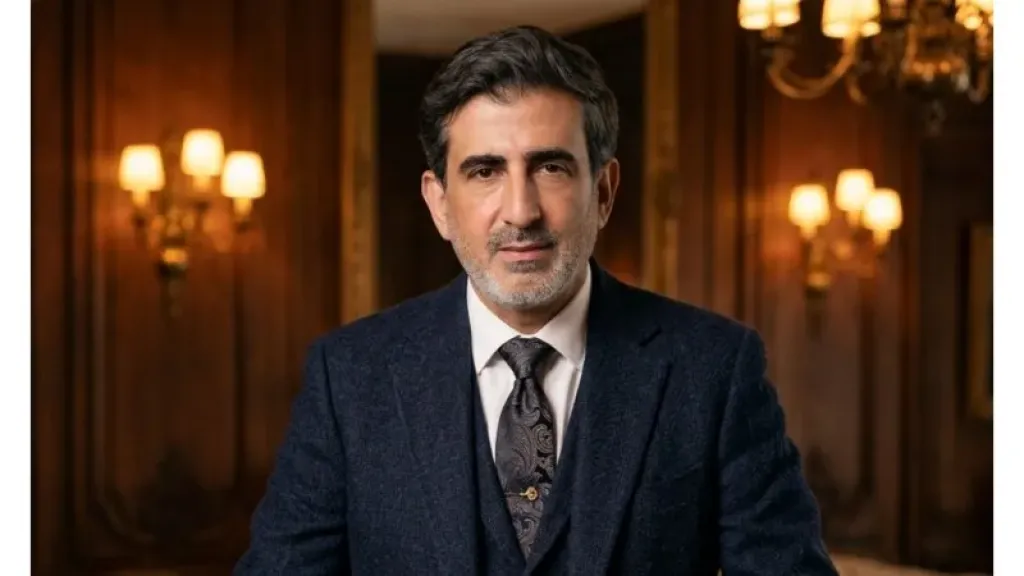
Entrepreneur Samer Choucair said the expansion of the lender group participating in SoftBank Group’s $40 billion loan to finance its additional investment in OpenAI represents an important indication of the continuing transformation in global capital-allocation mechanisms.
He noted that institutional investors are reassessing their strategies as artificial intelligence emerges as one of the principal drivers of economic and technological growth in the coming phase.
Samer Choucair explained that the addition of 21 lenders to the credit facility, including First Abu Dhabi Bank, GIC, and Standard Chartered, reflects the continuing appetite of global financial institutions to finance major artificial intelligence investments despite elevated debt levels and the challenges associated with valuing privately held technology companies.
“Capital allocation is no longer limited to assessing the future growth of technologies,” Samer Choucair said. “It now requires a precise evaluation of borrowers’ ability to manage financial leverage within a short investment cycle linked to potential liquidity events such as initial public offerings.”
He added that the global artificial intelligence financing market is entering a decisive transitional phase. Investment is no longer supported solely through private-equity funding rounds, but increasingly through substantial debt instruments connecting the balance sheets of major investment groups with international banking institutions.
Choucair noted that SoftBank’s $40 billion loan, signed in March 2026 and due within 12 months, ranks among the largest bridge-financing transactions in the Asia-Pacific region.
It is being used primarily to finance a $30 billion follow-on investment in OpenAI through Vision Fund 2, alongside general corporate purposes.
He explained that SoftBank had already completed two tranches of $10 billion each in April and July 2026, while the third tranche is expected to be completed in October, bringing its cumulative commitments to OpenAI to approximately $64.6 billion and representing a stake of around 13%.
Debt-market transformation and artificial intelligence financing
Samer Choucair emphasized that the significance of the financing lies not only in its size, but also in the transformation it reflects across global debt markets.
Financial institutions are becoming more willing to provide substantial financing linked to privately held technology assets, although this requires the development of more precise risk-management instruments.
He explained that the loan was arranged in a relatively high-interest-rate environment and carries an initial margin of approximately 250 basis points above the Secured Overnight Financing Rate, or SOFR, implying a borrowing cost of approximately 6.14% at current levels.
Choucair noted that the absence of direct collateral did not prevent the transaction from attracting banks because the facility has full recourse to SoftBank.
This structure strengthened participating institutions’ confidence despite concerns regarding the group’s substantial concentration in OpenAI and increasing competition within the artificial intelligence sector from companies such as Anthropic.
He said the distribution of the financing among lenders reflects the broader institutional participation base, with approximately $7 billion allocated to the new lender group and the remaining $33 billion held by the principal underwriters and major lenders, with the possibility of further syndication at a later stage.
Choucair added that the transaction also demonstrates the attractiveness of this type of financing to global banks, which are expected to generate more than $100 million in arrangement fees.
The growing role of Gulf and Asian capital
Samer Choucair noted that the participation of First Abu Dhabi Bank, GIC, and Standard Chartered, with commitments of approximately $1 billion each, reflects the growing role of Gulf and Asian capital in financing the global artificial intelligence infrastructure ecosystem.
He explained that such participation is not limited to earning credit returns. It also provides strategic indirect exposure to one of the fastest-growing segments of the digital economy as sovereign wealth funds and regional banks diversify their portfolios beyond traditional sectors.
“Today’s sophisticated institutional investor does not consider only the size of the transaction,” Samer Choucair said. “It evaluates how risk is distributed among international and regional lenders and how Gulf banks can transform their participation in such facilities into a platform for developing expertise in financing high-growth sectors.”
He emphasized that transactions of this nature strengthen the region’s ability to allocate capital more dynamically toward structural opportunities associated with artificial intelligence and the digital economy.
An investment perspective on the future of artificial intelligence
Samer Choucair explained that continuing capital flows into artificial intelligence reflect institutional confidence in the sector’s ability to deliver broad productivity gains despite volatility in technology-company valuations and rising infrastructure and computing costs.
He noted that reports suggesting OpenAI could postpone its initial public offering until 2027 in pursuit of a $1 trillion valuation increase the importance of monitoring the debt’s March 2027 maturity date.
Choucair added that any delay in the listing process could require SoftBank to refinance the facility or rely on the sale of other assets, creating a test of its ability to manage its balance sheet and maintain targeted leverage levels.
“The current appetite for artificial intelligence debt reflects confidence in the sector’s structural ability to generate sufficient future cash flows to service its obligations,” he said. “At the same time, it places greater pressure on risk management if exit timelines are delayed.”
New opportunities for Gulf investors
Samer Choucair emphasized that the Gulf region has a strategic opportunity to strengthen its role in the global digital economy by combining investment in artificial intelligence-related financial instruments with support for local start-ups operating across technology, artificial intelligence, and financial technology.
He noted that the participation of Gulf financial institutions in transactions of this scale aligns with the economic-diversification strategies of Gulf Cooperation Council countries and supports the development of broader relationships with international investment and technology institutions.
Choucair explained that these developments also align with Saudi Vision 2030 objectives related to investment in advanced technologies and the attraction of foreign direct investment.
They could create opportunities for new partnerships across data, computing, and digital infrastructure.
Risks and opportunities across the artificial intelligence cycle
Samer Choucair warned that substantial concentration in highly valued, privately held assets requires strict investment discipline and a careful balance between potential returns and risks related to liquidity timing and global capital-market conditions.
“Excessive concentration in highly valued private assets requires rigorous portfolio-management discipline,” he said. “Investors must balance potential returns against the risks associated with liquidity timing and conditions across global capital markets.”
Choucair added that the next phase could bring further expansion in secondary debt markets and structured financing products linked to artificial intelligence, alongside the possible participation of more banks from Asia, Europe, and the Gulf in transactions of this kind.
He noted that significant challenges will remain, particularly if revenue growth slows or regulatory pressure on advanced artificial intelligence models increases.
A future outlook
Samer Choucair emphasized that markets will closely monitor SoftBank’s ability to refinance the loan or generate liquidity from its asset portfolio, including any developments related to OpenAI’s path toward the public markets.
He added that institutional capital flows into artificial intelligence financing are likely to continue, supported by rising demand for computing capacity and commercial applications built around the technology.
“The expansion of SoftBank’s lender base represents more than a financing transaction,” Samer Choucair concluded. “It reflects the restructuring of global capital-allocation mechanisms in the age of artificial intelligence, where the appetite of international banks intersects with the ambitions of regional investors seeking to establish new centres of influence in the digital economy.”
He emphasized that the success of this direction will depend on the ability of financial and investment institutions to manage credit and valuation risks within an economic environment characterized by rapid change and elevated uncertainty.