
Samer Choucair: Apple Upgrade Reflects a Structural Shift Toward Recurring Revenue
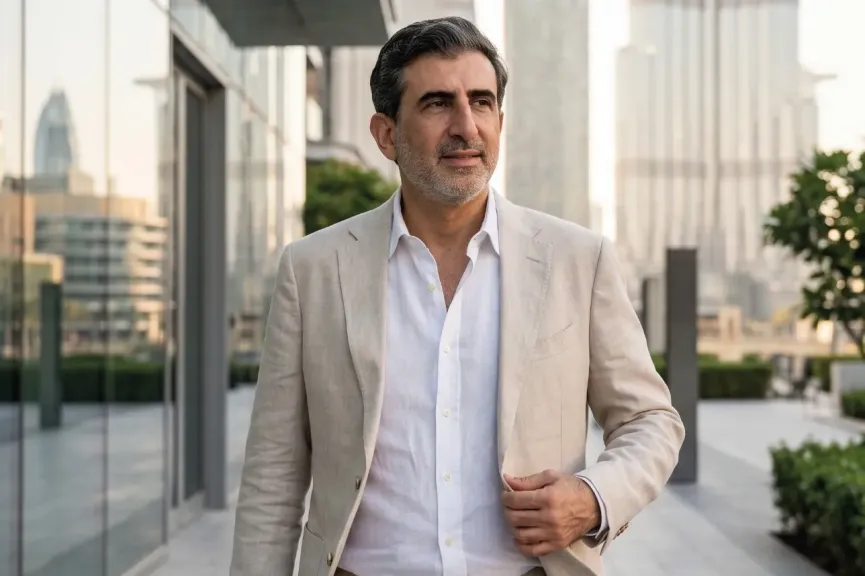
Entrepreneur Samer Choucair said Apple’s launch of the Apple Upgrade programme in partnership with Klarna represents an important transformation in the business model of the consumer-electronics sector, reflecting a broader shift from direct sales toward recurring-revenue models combining technology with consumer finance.
Samer Choucair explained that the programme, which allows customers in the United States to lease iPhones, iPads, Macs, and Apple Watches for periods of up to 36 months in exchange for monthly payments, marks a fundamental change in how major technology companies manage product life cycles and consumer behaviour.
He noted that the shift comes as the device industry faces higher costs for essential components because of increasing demand for semiconductors and memory used in artificial intelligence applications and data centres. These pressures are encouraging companies to develop new models that preserve demand and reduce consumers’ sensitivity to high upfront prices.
“The transition toward leasing and flexible-financing models reflects growing recognition that access to a product has become more important than outright ownership in high-cost device markets,” Samer Choucair said.
He added that these models redistribute risk among manufacturers, financing providers, and consumers while creating new capital flows within the device-related financial technology sector.
A transformation in the device sector’s revenue model
Samer Choucair explained that the consumer-electronics sector is undergoing a transition in pricing and financing models. Companies are no longer relying exclusively on one-time sales, but are seeking to build longer-term customer relationships through subscriptions, leasing, and device-linked services.
He noted that Apple’s new programme arrives as markets face inflationary pressures associated with semiconductor and memory costs, which have contributed to higher prices for certain Mac and iPad products and may affect future iPhone launch cycles.
Choucair emphasized that converting a proportion of sales into leasing contracts lasting between 12 and 36 months gives Apple greater capacity to maintain demand while generating more stable monthly cash flows.
The model also allows the company to manage device life cycles by recovering products at the end of contracts or encouraging customers to upgrade to newer models.
He explained that monthly leasing options begin at approximately $17.99 for an iPhone, $11.99 for an Apple Watch or iPad, and $24.99 for a Mac.
Customers can upgrade, purchase, or return their devices at the end of the contract, while trading in older products can reduce their monthly payments.
Samer Choucair noted that the new model more closely resembles vehicle leasing than traditional instalment programmes, as Klarna assumes responsibility for managing credit risk rather than Apple. This allows Apple to concentrate on product development and improving the user experience.
How institutional investors assess the transformation
Samer Choucair said institutional investors view the initiative as an indication of the increasing maturity of Apple’s business model, as the company gradually moves away from complete dependence on periodic device sales toward a balanced combination of hardware, services, and recurring revenue.
He explained that the programme could produce greater revenue stability over the medium term if it increases customer-retention rates and shortens the intervals between upgrades to new devices.
“Major technology companies are no longer measured solely by their ability to sell more products,” Samer Choucair said. “They are also assessed according to their ability to build integrated economic ecosystems around those products, ensuring continuous cash flows and strengthening users’ connection to the platform.”
Choucair noted that the partnership gives Klarna a strategic opportunity to expand its customer base and strengthen its position in the US consumer-finance market by providing the financial infrastructure required for this type of model.
Wider effects on technology and financial markets
Samer Choucair explained that Apple’s programme reinforces a broader global movement toward subscription and leasing models in the technology sector.
Competing device manufacturers may be required to develop similar financing solutions to preserve their competitiveness, particularly in markets where consumers are highly sensitive to upfront prices.
Choucair added that the expansion of leasing models could also affect the used-device market. The return of products at the end of their contracts may increase the supply of previous-generation models, creating new dynamics in resale markets and product-life-cycle management.
He noted that equity investors may regard the programme as supportive of Apple’s long-term margin stability, provided that default rates remain low and financing costs are effectively controlled.
Choucair emphasized that the Apple-Klarna partnership represents an advanced model of collaboration between major technology companies and financial technology providers, a trend likely to expand as financial services become more deeply integrated into digital platforms.
Opportunities and risks for investors
Samer Choucair said the transformation creates new opportunities for sovereign wealth funds and asset managers, particularly in companies developing solutions for managing leased-device life cycles, technology-linked financing platforms, and recurring-revenue business models.
He warned that the success of these structures will depend heavily on effective credit-risk management and the accurate valuation of devices’ residual value at the end of leasing periods.
“The success of models such as these depends substantially on credit-risk management and the precise pricing of devices’ residual value,” Samer Choucair said.
He explained that rising default rates or unexpected declines in resale prices could place pressure on financing providers’ margins, requiring continuous monitoring of asset quality and operational risk.
Choucair added that the global expansion of such programmes may encounter regulatory challenges in certain markets, alongside shifts in consumer behaviour during periods of economic weakness, when some customers may prefer to retain their existing devices rather than commit to new monthly payments.
Potential implications for Gulf markets
Samer Choucair emphasized that the movement toward flexible device financing has important implications for Gulf markets, particularly as digital transformation accelerates in Saudi Arabia, the United Arab Emirates, and Qatar under their economic-diversification programmes.
He explained that demand for advanced devices across the public and private sectors could support the emergence of similar financing solutions, allowing institutions and individuals to access modern technologies without bearing the full purchase cost upfront.
“Investment in digital infrastructure and the consumer-financing systems connected to it represents one of the most promising areas in Gulf markets over the coming years,” Choucair said.
He added that sovereign wealth funds and regional asset managers may find investment opportunities in companies developing innovative financing models for devices and related digital services, supporting efforts to build more diversified knowledge-based economies.
A strategic outlook
Samer Choucair explained that Apple Upgrade could become a benchmark model for the consumer-electronics sector in the years ahead if it succeeds in increasing upgrade rates, preserving customer loyalty, and generating more stable financial flows.
He noted that the development sends an important message to institutional investors regarding the need to incorporate financing-model analysis into the valuation of technology companies rather than relying solely on traditional sales and market-share metrics.
Choucair emphasized that the current environment—characterized by rising component costs, changing consumer preferences, and the effect of expanding artificial intelligence investment on supply chains—will encourage companies to develop new pricing and financing structures.
“The shift toward recurring-revenue models will reshape capital flows across the technology sector over the medium and long term,” Samer Choucair concluded. “Companies’ ability to build integrated financial and commercial ecosystems will become a fundamental determinant of their future investment value.”