
Samer Choucair: AI Spending Is Rewriting Wall Street’s Valuation Rules
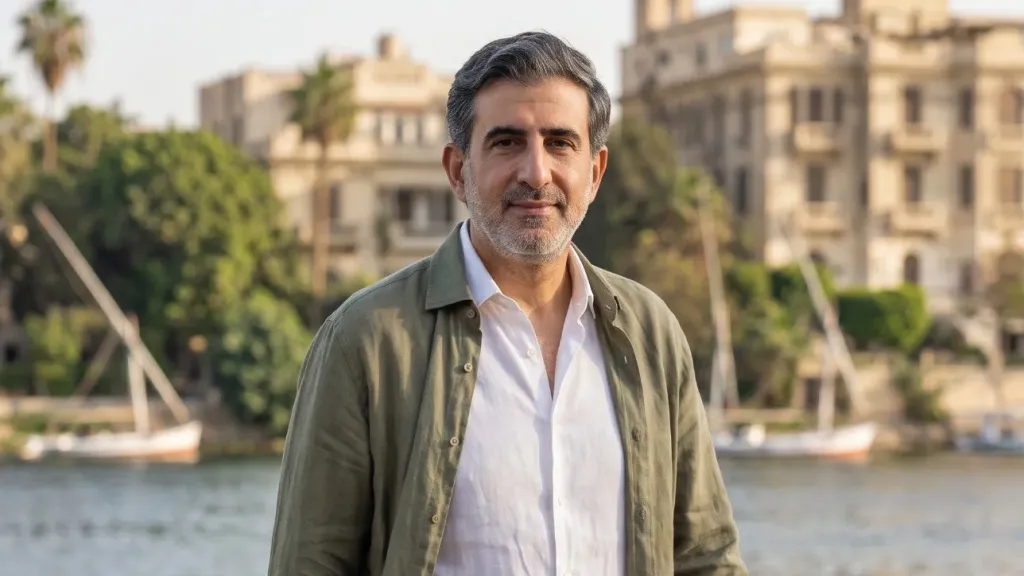
Entrepreneur Samer Choucair said the unprecedented surge in artificial intelligence spending by major technology companies has entered a new phase of scrutiny on Wall Street. The scale of investment alone is no longer sufficient to convince markets; companies’ ability to convert massive capital expenditure into sustainable cash returns has become the decisive factor in institutional investment decisions.
Samer Choucair explained that the latest second-quarter 2026 financial results from Alphabet and Tesla reflect a shift in market behaviour. Revenue growth and rising demand for artificial intelligence services coincided with a substantial increase in capital expenditure, prompting investors to reassess the economic viability of spending on advanced digital infrastructure.
He noted that the current phase represents a genuine test of capital-allocation discipline among the world’s largest technology companies. Institutional investment flows in the coming period will increasingly depend on whether these businesses can demonstrate that their substantial AI investments will translate into profits and strong operating margins.
“Markets have entered a new phase of investment discipline,” Samer Choucair said. “It is no longer enough to speak about a historic opportunity in artificial intelligence without presenting a clear path to profitability. Institutional investors now want evidence that massive capital expenditure is producing sustainable market share and scalable operating margins, rather than revenue growth achieved at the expense of cash flow.”
Choucair explained that Alphabet delivered strong revenue performance, reporting $119.8 billion in the second quarter of 2026, an increase of 24% year over year. Growth was driven primarily by its cloud-computing division, where revenue rose by 82% to $24.8 billion, while contracted backlog increased to $514 billion.
He added that the principal concern for investors was the company’s decision to raise its 2026 capital-expenditure forecast to between $195 billion and $205 billion, compared with its previous estimate of $180 billion to $190 billion.
This resulted in negative free cash flow for the first time since the company’s public listing, amounting to approximately $5.9 billion, after quarterly capital expenditure reached nearly $45 billion.
Samer Choucair noted that Tesla’s position reflects a similar challenge. The company reported record revenue of $28.24 billion, up 26%, supported by vehicle deliveries exceeding 480,000 units.
However, operating income declined by 57% to $398 million, while the operating margin fell to 1.4%. Free cash flow recorded a deficit of $1.1 billion after capital expenditure increased to $5.8 billion.
Choucair explained that Tesla’s focus on developing artificial intelligence, robotics, and autonomous-driving capabilities is increasing the cost of its transition and placing the company under pressure to prove that these investments can generate future cash flows proportionate to current spending levels.
He emphasized that the market reaction to both companies’ results demonstrates a clear change in investor expectations.
Artificial intelligence spending has shifted from being treated automatically as evidence of market leadership to being evaluated according to expected returns and the time required to achieve them.
“The approximately 7% decline in Alphabet shares and the fall in Tesla shares following their results show that investors have become more sensitive to the relationship between spending and growth,” Choucair said. “Companies must provide a clearer view of how substantial technology investments will generate economic returns.”
Samer Choucair noted that investors are also closely monitoring the results of other major companies, including Microsoft, Amazon, and Apple, amid expectations that their combined spending on artificial intelligence infrastructure and advanced technologies could exceed $700 billion during 2026.
He explained that continued increases in expenditure without a corresponding improvement in return on investment could encourage institutional investors to redirect capital toward less capital-intensive sectors or toward technology companies demonstrating greater financial discipline.
Choucair said the principal risks in the next phase include continuing pressure on margins and cash flow during 2027, particularly if capital expenditure by technology giants approaches $1 trillion.
Additional risks arise from financing this investment through debt or operating-lease arrangements.
Samer Choucair also identified substantial opportunities for companies capable of converting demand for artificial intelligence into recurring revenue and high profit margins.
He explained that Alphabet’s cloud-computing growth and rising demand for digital infrastructure may indicate that tangible returns can emerge when spending is managed efficiently.
Choucair added that Tesla’s success over the coming years will depend heavily on whether its robotaxi, robotics, and autonomous-systems projects can move from a period of intensive investment into a phase of cash-value generation.
Samer Choucair explained that this transformation is particularly significant for Gulf investors, as it creates an opportunity for sovereign wealth funds and institutional managers to reassess their exposure to US technology equities.
“Funds with long-term investment horizons can benefit from price corrections caused by short-term concerns, provided they focus on companies with strong balance sheets and the capacity to finance growth internally,” he said.
Choucair noted that current developments also intersect with economic-diversification strategies across the Gulf, particularly as investment in digital infrastructure and artificial intelligence expands under Saudi Vision 2030 and other regional digital-economy initiatives.
He added that the rising cost of building global artificial intelligence infrastructure could create opportunities for the region to attract partnerships and investment in data centres and their associated energy requirements, supported by access to competitively priced energy and a strategic location connecting major global markets.
Samer Choucair said the most positive scenario for the sector would involve major companies proving that current expenditure can generate accelerating returns during 2027 and 2028, thereby restoring strong institutional support for technology shares.
He explained that continued weakness in free cash flow, without a clear improvement in returns on investment, could result in a broader repricing of highly capital-intensive technology stocks.
“The next phase will reward companies that combine technological ambition with financial discipline and punish those that focus on spending without providing clear evidence of value creation,” Samer Choucair concluded. “Selective capital allocation, with an emphasis on the quality of future cash flows, will be the central factor determining institutional investment success in an environment where the cost of capital is rising and returns are subject to greater scrutiny.”