
Samer Choucair: Different Ways of Thinking Could Make the Difference in Entrepreneurship and the AI Economy
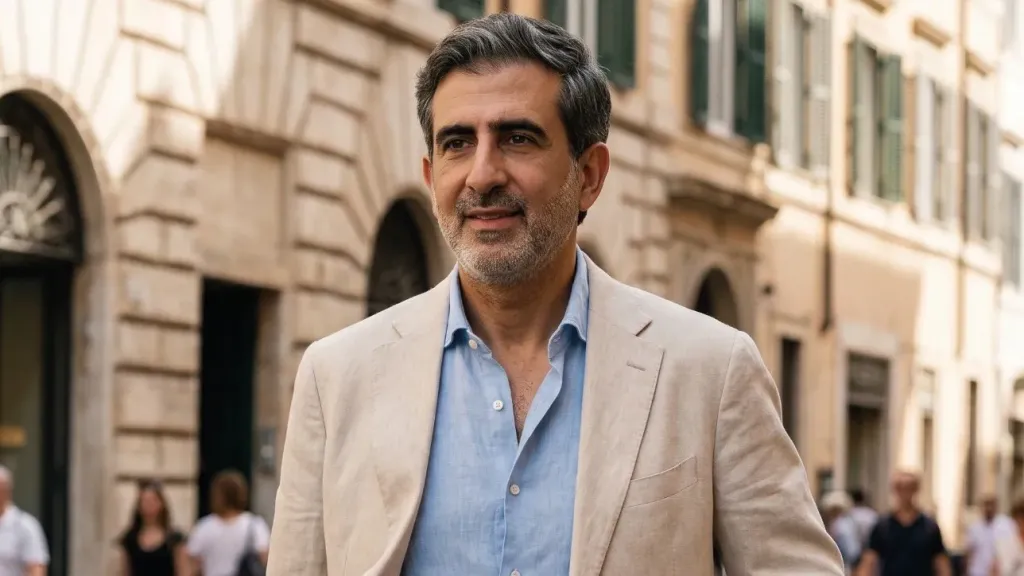
Entrepreneur Samer Choucair said global interest in the relationship between attention-deficit/hyperactivity disorder, or ADHD, and entrepreneurship is growing significantly, as several company founders and chief executives have publicly disclosed having the condition, including entrepreneurs who have built businesses valued at billions of dollars.
Choucair explained that institutional investors do not regard a medical diagnosis as the decisive factor. Instead, they focus on understanding how different thinking styles influence innovation, decision-making, and the development of high-growth companies.
He noted that ADHD may be associated with strengths in certain environments while presenting substantial challenges in others.
Samer Choucair added that the most important discussion is no longer whether ADHD leads to success, but how organizations can create working environments that benefit from different ways of thinking without overlooking risk management.
This question is becoming increasingly important as the artificial intelligence economy and digital entrepreneurship continue to expand.
The knowledge economy redefines the value of human capital
Samer Choucair noted that the past decade has brought a clear transformation in how markets value human capital.
In the industrial economy, greater emphasis was placed on operating discipline and the ability to repeat standardized processes. Today, value is increasingly measured through innovation, problem-solving, and rapid decision-making in environments characterized by constant change.
Choucair explained that this shift has encouraged investors to reassess the concept of the “ideal founder.”
Success is no longer associated solely with conventional characteristics. It also depends on the ability to identify opportunities that others may overlook—a capability that may be present in some people with ADHD, alongside genuine challenges involving organization, sustained attention, and execution over time.
He emphasized that major investment institutions increasingly regard cognitive diversity within management teams as a factor capable of helping companies innovate more effectively.
Success does not depend on diagnosis alone
Samer Choucair explained that several entrepreneurs have spoken publicly about having ADHD, including Barbara Corcoran and JetBlue founder David Neeleman, alongside other individuals whose names have been connected to the condition through public statements or reports.
However, he stressed the importance of distinguishing individual stories from broader investment conclusions.
The existence of successful business leaders with ADHD does not mean the condition automatically leads to success, just as most people with ADHD do not become billionaires or founders of global companies.
Choucair added that economic success results from a complex interaction between skills, education, opportunity, the institutional environment, financing, team quality, and execution discipline rather than from any single personal characteristic.
What investors look for
Samer Choucair said start-up investors assess more than the idea or the size of the addressable market. They also focus closely on the nature and quality of the founding team.
He explained that venture capital investors typically look for qualities including decisiveness, unconventional thinking, the ability to identify less obvious opportunities, rapid adaptation to changing conditions, and a willingness to take calculated risks.
Choucair noted that some people with ADHD may demonstrate these characteristics, but they are not exclusive to them.
Without strong operating structures, disciplined financial management, and effective governance, the same qualities may also become sources of risk.
Governance remains decisive
Samer Choucair emphasized that markets do not reward innovative ideas alone. They reward the ability to transform those ideas into sustainable institutions.
He added that professional investors recognize that an exceptional founder may require an executive team capable of compensating for areas of weakness.
It has therefore become common for start-ups to appoint experienced chief financial officers, chief operating officers, and advisers to establish an appropriate balance between innovation and operating discipline.
Choucair explained that the strength of an organization is not measured solely by the individual capabilities of its founder, but by the degree to which the leadership team is complementary and able to execute effectively.
Artificial intelligence increases the value of cognitive diversity
Samer Choucair noted that the spread of artificial intelligence tools has made routine tasks increasingly suitable for automation while raising the value of skills that are more difficult for intelligent systems to replace.
These include creative thinking, connecting seemingly unrelated ideas, developing new business models, and anticipating future trends.
Choucair added that this reality is encouraging investors to place greater emphasis on diversity in cognitive abilities across teams, viewing it as an important source of competitive advantage in the digital economy.
A new opportunity for Saudi Arabia and the Gulf
Samer Choucair said this trend aligns with the objectives of Saudi Vision 2030, which emphasize innovation, entrepreneurship, the knowledge economy, the development of technology companies, and investment attraction in higher-value-added sectors.
He added that as venture capital funds continue to expand across Saudi Arabia and the Gulf, increasing attention is being directed toward the quality of founding teams rather than solely toward market size or the technology being used.
Choucair noted that the growth of the region’s start-up ecosystem reinforces the importance of building organizational cultures that benefit from diverse thinking styles while maintaining the highest standards of governance and risk management.
How investors interpret the trend
Samer Choucair explained that institutional investors do not invest in a personality trait. They invest in an integrated system comprising management quality, execution capacity, governance structures, and the sustainability of the business model.
He added that the genuine challenge does not lie in possessing a different way of thinking, but in converting that difference into scalable operating performance.
This distinguishes companies capable of moving from innovation to long-term value creation.
Choucair emphasized that capital markets are increasingly interested in organizations’ ability to manage differences within their teams because sustainable innovation is often produced by groups combining creative vision with disciplined execution.
A strategic outlook
Concluding his remarks, Samer Choucair said global interest in studying the relationship between neurodiversity and entrepreneurship is likely to continue as the artificial intelligence economy expands and competition intensifies for talent capable of driving innovation.
He added that the most important message for investors is that success is not determined by a medical diagnosis or an individual characteristic, but by an organization’s ability to deploy diverse talent within a framework of governance, financial discipline, and efficient capital allocation.
“The competitive advantage of the next decade will not come solely from possessing the best idea,” Samer Choucair concluded. “It will come from building institutions capable of converting different ways of thinking into sustainable economic value.”
He emphasized that this capability will become an increasingly important determinant of institutional investment and capital-market trends in the years ahead.