
Samer Choucair: China’s Exit from World Bank Lending Reflects the Shift of Major Economies Toward Creating Capital and Knowledge
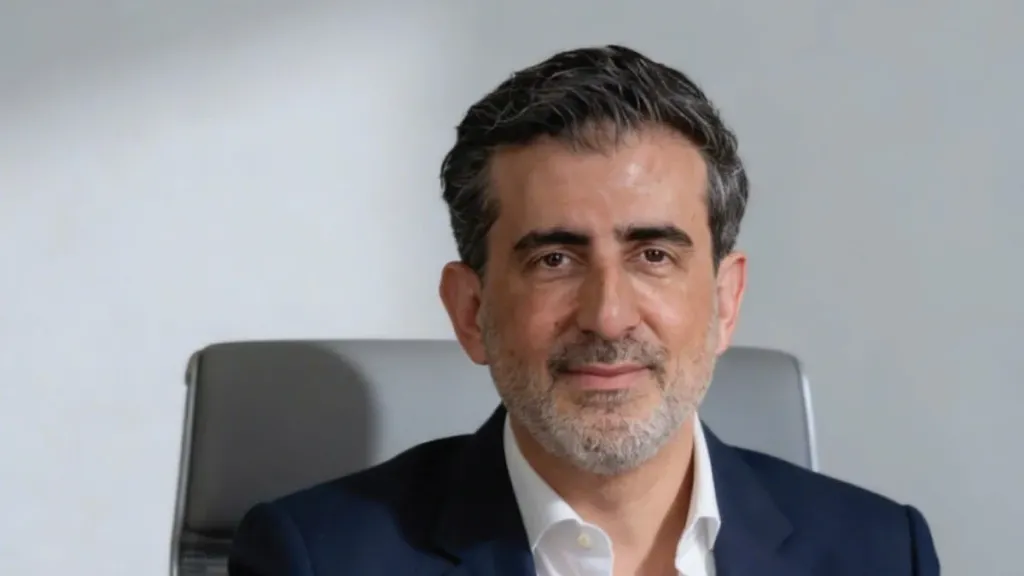
Entrepreneur Samer Choucair said the World Bank’s decision to phase out lending to China by 2031 represents a structural transformation in global capital flows.
He noted that the move reflects China’s transition from benefiting from development finance to a more advanced stage based on generating capital and strengthening the role of knowledge and innovation in economic growth.
Samer Choucair explained that the new partnership framework between the World Bank and China establishes a gradual reduction in financing provided through the International Bank for Reconstruction and Development.
Total lending will be limited to no more than $2 billion through 2031 before ending completely.
He emphasized that the development represents more than a change in financing volumes. It reflects a wider transformation in the relationship between major economies and multilateral financial institutions.
Samer Choucair noted that the decline in annual lending to China from a peak of approximately $2.4 billion in 2017 to around $750 million in 2025 illustrates the natural progression of a country that has experienced extensive economic growth, rising income levels, and greater access to global capital markets.
“China’s graduation from development lending is a structural indication that major economies are no longer dependent on concessional financing, but are becoming centres for generating capital and transferring expertise and knowledge,” Samer Choucair said.
He explained that institutional investors will monitor how international institutions redirect their resources toward economies with greater financing needs and how China further develops its domestic debt and equity markets to meet future investment requirements.
China’s changing role in the global financial system
Samer Choucair explained that China has moved over recent decades from an economy partly dependent on development support and financing to one of the world’s largest economic powers.
Since 2000, China has no longer been eligible for financing from the International Development Association, which is intended for low-income countries, and has simultaneously become the institution’s fifth-largest contributor.
Choucair noted that the new partnership framework between China and the World Bank for the 2026–2031 period places greater emphasis on innovation, higher productivity, stronger social resilience, and support for a low-carbon economy rather than conventional financing for development projects.
Samer Choucair emphasized that China’s acceptance of this transformation reflects a change in the nature of its economic needs.
Its principal priorities are now connected to developing productive capacity, addressing demographic challenges, and accelerating technological and environmental transformation.
“Global institutional capital increasingly interprets such changes as indicators of economic maturity,” Samer Choucair said.
He explained that the transition of an economy as large as China from a recipient of development financing to a knowledge partner changes how investors assess sovereign risk and long-term investment opportunities.
Reshaping global development and capital flows
Samer Choucair noted that China’s declining reliance on World Bank financing potentially frees part of the institution’s resources for countries with greater development-financing needs.
However, he explained that this transition will not automatically increase the amount of available capital, as the outcome will depend on the ability of international institutions to develop their lending and governance mechanisms.
Choucair added that the departure of a large and reliable borrower such as China requires multilateral institutions to reassess their financing models, particularly as developing countries face rising infrastructure, energy, and climate-transition requirements.
He explained that the relationship between China and the World Bank is entering a new phase based on exchanging expertise and solutions, with the focus moving from conventional project financing toward cooperation in productivity, innovation, and the green transition.
Samer Choucair said institutional investors view this phase as a redistribution of investment opportunities in which economies capable of producing technology and improving operating efficiency become increasingly important, rather than those depending primarily on external financing flows.
Implications for global markets and asset allocation
Samer Choucair emphasized that the decision reinforces the view of China as an economy requiring commercial and institutional financing instruments more than development lending.
This could support the deepening of domestic bond markets and instruments connected to sustainability and green energy.
Choucair explained that reduced reliance on multilateral loans could increase the importance of China’s domestic capital markets and strengthen the role of private financial institutions and international investors in financing future growth.
He noted that emerging equity markets could place greater emphasis on Chinese companies operating in advanced technology, intelligent manufacturing, and the energy transition, as innovation and access to knowledge become more important than financing costs alone.
Choucair added that private investment could encounter new opportunities in venture capital and private equity, particularly in businesses combining technology, productivity improvements, and low-emission solutions.
Opportunities for the Gulf economy and Vision 2030
Samer Choucair explained that the reorganization of global capital flows creates important opportunities for Gulf economies, particularly as their strategic relationships with China continue to expand across energy, infrastructure, technology, and industry.
He noted that Saudi Arabia and other Gulf countries can benefit from this transformation by establishing partnerships combining Gulf capital with Chinese expertise in artificial intelligence, the digital economy, advanced manufacturing, and logistics.
Samer Choucair emphasized that Gulf sovereign wealth funds have an opportunity to participate in these changes by investing in sectors benefiting from the redistribution of global capital, whether within China or across emerging markets expected to gain from changing priorities among international financing institutions.
“Countries combining financial stability with a long-term vision, such as Saudi Arabia under Vision 2030, are better positioned to attract high-quality investment,” Samer Choucair said.
He explained that governance, innovation, and highly productive sectors have become more important than ever.
How institutional investors assess the risks and opportunities
Samer Choucair noted that institutional investors interpret the end of World Bank lending to China as further confirmation of the country’s emergence as a fully developed economic power, creating opportunities in technology, green infrastructure, and advanced energy.
He explained that the transformation is not without risks.
These include the possibility that multilateral institutions’ financing capacity could decline if the departure of major borrowers is not matched by broader financing programmes for countries with greater needs.
There is also a risk of increasing reliance on bilateral financing, which may be accompanied by different conditions and strategic priorities.
Choucair added that investors are monitoring the effect of geopolitical competition among major powers on capital flows and the ability of international institutions to preserve their role in financing global development.
Samer Choucair emphasized that the strongest opportunities will be concentrated in sectors combining finance with technical expertise, including renewable energy, artificial intelligence, logistics, and productivity-enhancing technologies.
A strategic outlook for the future of global capital
Concluding his remarks, Samer Choucair emphasized that the global financial system is entering a new phase in which capital, knowledge, and innovation are increasingly interconnected in determining the competitiveness of economies.
He explained that the end of World Bank lending to China after 2031 forms part of a wider transformation in international economic relations, as major economies move from being recipients of financing to becoming partners in producing solutions and expertise.
“Successful capital allocation during the next decade will depend on understanding structural transformations rather than merely following short-term flows,” Samer Choucair said.
He noted that countries and institutions investing in governance, innovation, and high-value-added sectors will be best positioned to attract sustainable investment.
Choucair concluded that although this change is connected to international financing policy, it provides an important indication that the rules of global investment are being reshaped, with attention shifting from the volume of available financing toward the quality of growth and the ability to create long-term value.