
Samer Choucair Assesses the Global Market Implications of the Delayed Paramount–Warner Merger
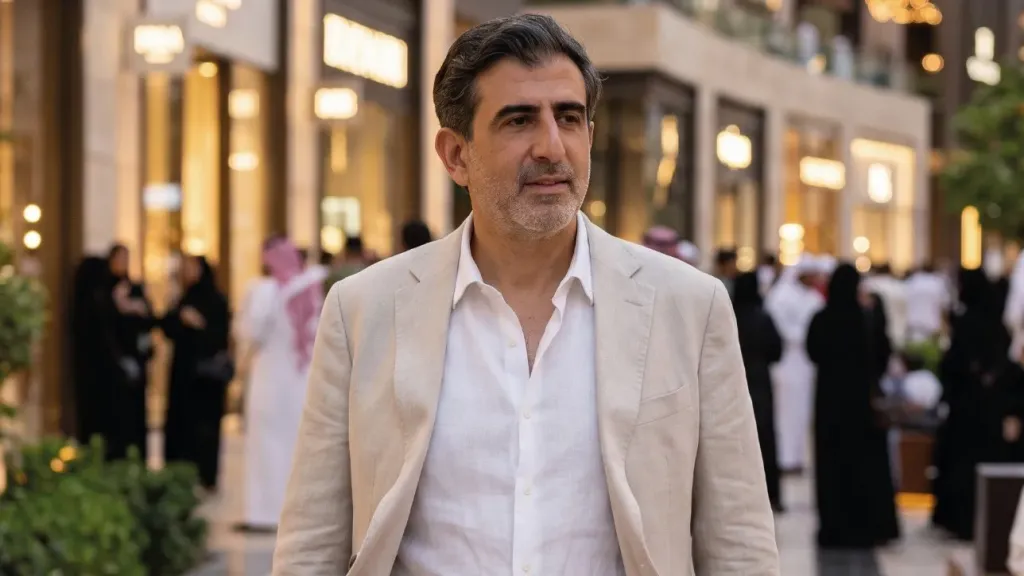
Entrepreneur Samer Choucair said the decision to delay completion of the proposed acquisition between Paramount Skydance and Warner Bros. Discovery, valued at approximately $110 billion, represents an important shift in how markets approach major mergers.
The parties agreed to postpone closing until a final ruling is issued in the lawsuits challenging the transaction or until June 1, 2027, whichever comes first.
Choucair explained that the development followed a series of temporary court orders and a federal lawsuit led by 12 US states alongside the Writers Guild of America.
It has renewed attention on regulatory risk as one of the most influential factors in capital-allocation decisions, particularly given the possibility that the acquiring party could incur daily delay costs of up to $7 million from the end of September.
The delay redefines regulatory risk
Samer Choucair noted that postponing one of the largest mergers in Hollywood history represents more than a change to the transaction timetable.
It reflects a broader transformation in how institutional investors assess the risks associated with major acquisitions.
He added that markets increasingly treat regulatory exposure as a fundamental component of expected-return calculations, whereas investors previously focused more heavily on operating-asset quality and growth prospects.
Choucair emphasized that institutional capital no longer assesses only asset values or projected cash flows. It now applies a clear discount for the regulatory uncertainty surrounding major transactions.
Intense competition leads to a prolonged legal test
Samer Choucair explained that Paramount Skydance submitted its offer for Warner Bros. Discovery following intense competition with Netflix, proposing a cash price of $31 per share.
He added that the transaction received approval from both the US Department of Justice and the European Commission, subject to limited conditions relating to film distribution in Europe.
However, the legal coalition led by 12 US states secured a temporary suspension of the transaction before the parties reached an agreement to delay its full completion.
Choucair noted that the lawsuits are based on concerns that the merger could reduce competition across film, television, and cable markets, while potentially increasing ticket prices and subscription costs.
Financial costs rise over time
Samer Choucair said the financial structure of the transaction has become more complex as delay fees approach their effective date.
He explained that ticking fees will begin on September 30, 2026, at a rate of $0.25 per share for each quarter.
This is equivalent to approximately $650 million every three months, or nearly $7 million per day.
Choucair added that if the delay continues until June 2027, the additional costs could exceed $1.6 billion.
A termination fee of $7 billion could also be triggered if the transaction is not completed by the final deadline.
He emphasized that these figures have altered return-on-investment calculations for investors who entered the transaction expecting it to close during the third quarter of 2026.
Investors reassess their positions
Samer Choucair noted that the delay has given institutional investors and sovereign wealth funds an opportunity to reconsider their positions in the shares of both companies.
He explained that Warner Bros. Discovery shares continue to trade below the offer price, reflecting a persistent uncertainty discount.
Paramount, meanwhile, faces growing pressure on its balance sheet as the daily cost of delay increases.
Choucair added that long-term investors increasingly regard the transaction as a test of capital’s ability to withstand prolonged regulatory uncertainty, particularly in sectors heavily dependent on intellectual property and exclusive content.
Broader implications for the global media sector
Samer Choucair said the current developments could slow merger and acquisition activity across the media and entertainment industry during the second half of 2026.
He explained that many companies may choose to focus on debt restructuring and improving free cash flow rather than pursuing large acquisitions exposed to complex regulatory challenges.
Choucair added that this could redirect part of the available capital toward media companies with stronger balance sheets or digital platforms facing lower levels of conventional regulatory risk.
Gulf funds maintain their long-term strategy
Samer Choucair explained that the Gulf dimension is one of the most strategically important aspects of the transaction.
Three Gulf sovereign wealth funds have reportedly committed approximately $24 billion in non-voting equity to support the financing.
He added that Saudi Arabia’s Public Investment Fund is contributing between $10 billion and $12 billion, while the Qatar Investment Authority and Abu Dhabi-based Al Emad Holding are participating with broadly comparable commitments.
Choucair emphasized that these investments do not provide voting rights or board representation.
This structure reflects the Gulf funds’ intention to gain exposure to global media assets while avoiding additional national-security scrutiny in the United States.
Portfolio diversification remains a priority
Samer Choucair noted that this type of investment aligns with the objectives of Saudi Vision 2030 to diversify investment portfolios away from energy and increase exposure to entertainment, content, and the digital economy.
He added that Gulf sovereign wealth funds regard such transactions as a way to build long-term income streams connected to global intellectual property while managing regulatory exposure through non-voting investment structures.
Choucair explained that the current delay may encourage these funds to reschedule their capital contributions and potentially redirect a greater proportion of their commitments toward alternative opportunities within the region or sectors less exposed to litigation.
New opportunities and increasing risks
Samer Choucair said the delay gives Paramount and Warner an opportunity to strengthen their negotiating positions or introduce structural changes that could reduce competition concerns.
He added that the postponement also provides competitors such as Netflix and Disney with additional time to increase their market shares in global streaming.
Choucair explained that the risks include erosion in the time value of capital, higher financing costs, and the possibility that certain financiers may withdraw if uncertainty persists.
He noted that the bonds of both companies could face widening credit spreads as delay-fee payment dates approach.
The case also highlights the importance for private equity and venture capital investors of including stronger regulatory-protection clauses in major acquisition agreements.
Potential scenarios
Samer Choucair explained that institutional investors will focus during the coming months on the trial timetable and the scheduling of possible hearings.
If Paramount succeeds in accelerating the legal process and securing a favourable ruling before the middle of 2027, it may be able to contain the additional costs within manageable levels.
However, if litigation continues for longer, markets are likely to price in a greater probability that the transaction will be disrupted or ultimately fail.
A strategic outlook
Concluding his remarks, Samer Choucair emphasized that capital allocation in a changing regulatory environment requires greater flexibility in timing and a continuing willingness to redirect investments toward assets with stronger protection against legal and regulatory risks.
He explained that regardless of its final outcome, the Paramount–Warner transaction will remain an important case study for institutional investors assessing major mergers and acquisitions.
The deal has clearly demonstrated the need to balance expansion ambitions with the cost of regulatory uncertainty at a time when supervisory authorities are playing an increasingly influential role in shaping the future of the global media industry.