
Will the AI Boom Translate into Profits? Samer Choucair Assesses the $800 Billion Test
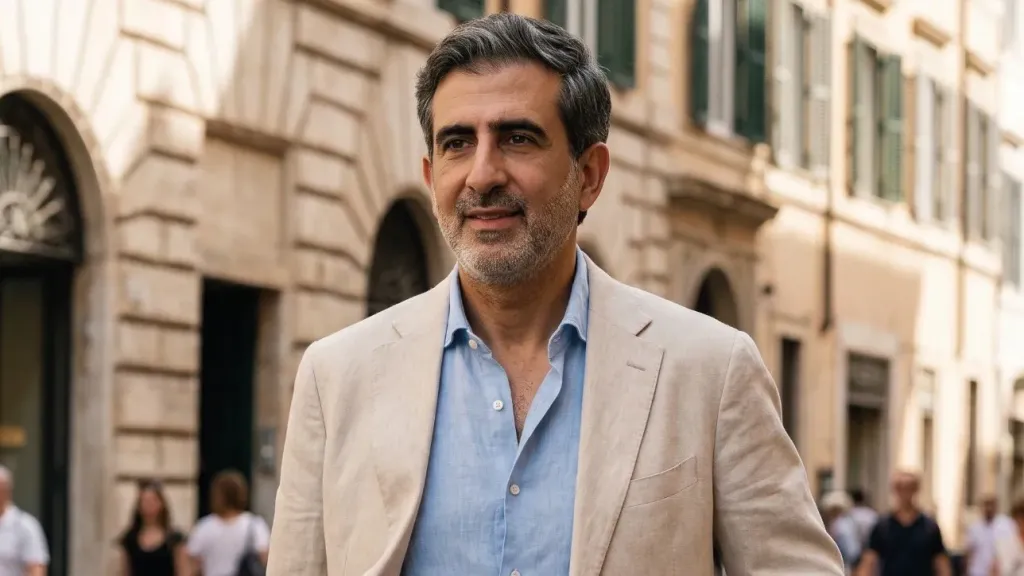
Entrepreneur Samer Choucair said global capital markets have witnessed a structural shift in the capital-spending patterns of major technology companies, as hyperscalers moved to invest nearly $800 billion in artificial intelligence infrastructure during 2026.
Choucair explained that Alphabet’s latest results clearly illustrated the scale of this expansion after the company raised its capital-expenditure guidance to between $195 billion and $205 billion, while recording negative free cash flow for the first time since its public listing.
This development prompted investors to reassess the expected timing of returns from these substantial investments.
He added that the current phase carries important implications for institutional investors because it marks a transition from building computing capacity to testing its economic viability.
This shift has directly influenced capital-allocation decisions across technology equities, debt markets, and sectors connected to energy and semiconductors.
Samer Choucair said the spending represented the largest wave of investment in digital fixed assets in modern history.
He emphasized that markets would focus in the coming quarters on whether these companies can convert their new computing capacity into recurring revenue and sustainable profit margins.
The race to invest in AI infrastructure
Samer Choucair noted that the rapid increase in capital expenditure by Amazon, Alphabet, Microsoft, Meta, and Oracle has triggered a broad investment debate over the sustainability of the artificial intelligence cycle.
He explained that combined spending estimates ranged from $700 billion to $805 billion during 2026, according to forecasts from financial institutions including Morgan Stanley and JPMorgan, with expenditure expected to exceed $1 trillion in 2027.
Choucair added that this wave of investment coincided with strong growth in cloud-computing revenue.
Google Cloud recorded growth of 82% in the latest quarter, supported by rising institutional demand for artificial intelligence solutions.
Capital-allocation shifts and economic pressures
Samer Choucair said this substantial spending occurred in an economic environment characterized by relatively slow productivity growth outside the technology sector and persistent inflationary pressure on component prices, particularly high-bandwidth memory.
He explained that higher semiconductor and memory prices contributed significantly to increased spending guidance.
Microsoft indicated that approximately $25 billion of its anticipated expenditure was attributable to rising component costs.
Choucair added that markets have begun moving from pricing potential growth to assessing capital efficiency, as hyperscalers shift from financing expenditure entirely through operating cash flow toward increasing reliance on debt and equity markets.
He noted that this change has become visible through multibillion-dollar bond issues and large capital-raising transactions, including Alphabet’s issuance.
This has reshaped the companies’ credit-risk profiles and affected yield spreads within fixed-income markets.
Samer Choucair said capital expenditure could represent approximately 100% of projected operating cash flow for some of these companies in 2026, compared with around 70% in the previous year, according to investment-bank estimates.
He added that pressure on free cash flow has presented investors with a complex equation: whether to continue financing capacity expansion to secure market share or become more cautious about delayed returns and declining returns on invested capital.
The largest spenders and the competition for computing capacity
Samer Choucair said Amazon and Alphabet currently lead in absolute expenditure.
Amazon’s guidance indicated company-wide spending of approximately $200 billion, while Alphabet raised its forecast to between $195 billion and $205 billion.
He explained that Microsoft was close behind at approximately $190 billion, while Meta’s guidance ranged from $125 billion to $145 billion.
Oracle recorded comparatively lower levels, although its spending grew rapidly, supported by long-term contracts.
Choucair emphasized that most of this investment was directed toward data centres, servers, networks, and semiconductors, with an increasing focus on computing capacity designed specifically for artificial intelligence.
He added that suppliers of chips, memory, and energy benefited from the investment cycle, while technology companies themselves faced short-term pressure on free cash-flow margins.
“The competition is no longer determined solely by the amount spent,” Samer Choucair said. “It increasingly depends on how efficiently this capacity is used and converted into economic value.”
He explained that companies capable of turning their investments into long-term contracts and high-margin cloud revenue would be best positioned to differentiate themselves.
Companies that take longer to generate returns are likely to face greater pressure on their market valuations.
How investors assess the risks and opportunities
Samer Choucair explained that market reactions to the investment cycle have been mixed.
Alphabet’s results demonstrated strong growth in revenue and demand, but the increase in its spending guidance weighed on the company’s share price, reflecting investors’ heightened sensitivity to any indication that returns may be delayed.
He said institutional investors were closely monitoring indicators such as capital expenditure as a proportion of revenue, free cash flow, and the scale of off-balance-sheet commitments associated with long-term data-centre leases, which exceeded $1 trillion under some estimates.
Choucair added that the principal risks included rising financing costs, the possibility of slower institutional demand if productivity gains failed to materialize as quickly as expected, and supply risks across energy and semiconductor value chains.
He noted that substantial contracted backlogs, including Google Cloud commitments exceeding $500 billion, supported the view that demand for artificial intelligence and cloud-computing services would remain strong.
Opportunities for Gulf markets within the AI investment cycle
Samer Choucair said long-term investors regarded the cycle as an opportunity to reallocate capital toward companies with competitive advantages in software, data, and energy rather than focusing exclusively on the scale of expenditure.
He added that Gulf markets, led by the Saudi economy under Vision 2030, stood to benefit from these developments through the potential attraction of new investment in digital infrastructure and artificial intelligence.
This opportunity is particularly significant as the Public Investment Fund continues directing capital toward the digital economy and innovation.
The future of the investment cycle and the measures of success
Samer Choucair expected the artificial intelligence spending cycle to continue expanding during 2027, potentially exceeding $1 trillion as demand for computing capacity remains strong.
He explained that investment attention would gradually shift from the scale of expenditure toward indicators of actual returns, including growth in AI-related cloud revenue, stronger margins, and the restoration of positive free cash flow.
Choucair added that institutional investors, sovereign wealth funds, and asset managers would need to monitor capital-allocation efficiency across the sector closely.
They are likely to favour companies capable of converting investment rapidly into revenue while diversifying their exposure toward supporting industries such as semiconductors, renewable energy, and infrastructure.
He emphasized that the success of this cycle would not be measured by expenditure alone, but by management teams’ ability to deploy capital efficiently and generate returns above the cost of capital over the medium term.
Concluding his remarks, Samer Choucair said: “This phase represents a genuine test of digital business models and will determine the winning companies in the digital economy over the coming years. It may also create opportunities for investors in emerging markets, including Gulf economies, to benefit from the transfer of knowledge and investment flows associated with these transformations.”