
Samer Choucair: European Approval of HUMAIN and Electronic Arts Deals Strengthens Saudi Arabia’s Position in the Digital Economy
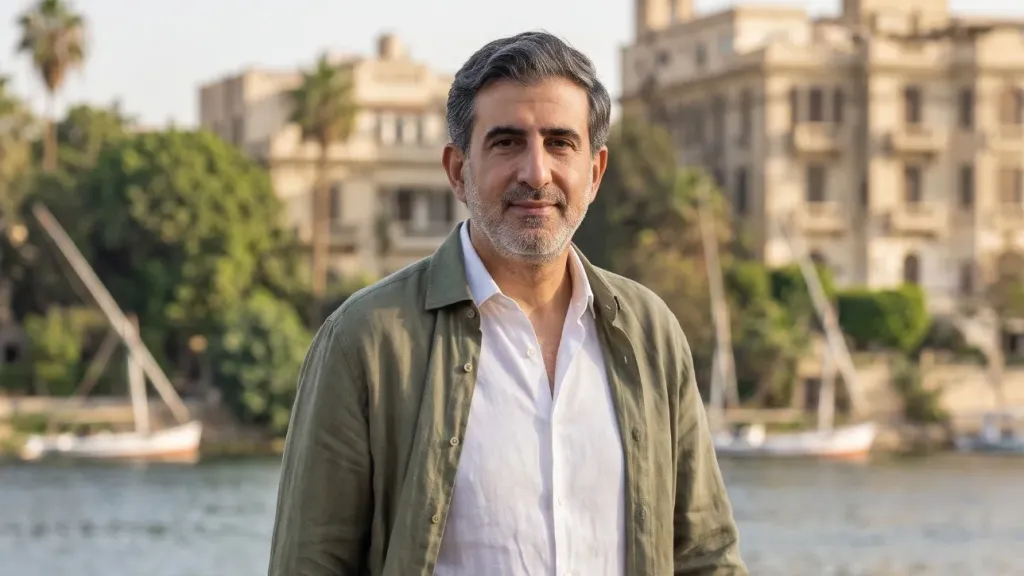
Entrepreneur Samer Choucair said the European Commission’s approval of two strategic transactions led by Saudi Arabia’s Public Investment Fund—the $55 billion acquisition of Electronic Arts and the joint acquisition of artificial intelligence company HUMAIN with Aramco—represents a pivotal regulatory development that is reshaping global investment in technology and digital entertainment while reinforcing the Kingdom’s position as a central institutional player in the digital economy.
Overcoming regulatory barriers and reshaping the risk landscape
Samer Choucair explained that the European Commission’s approval of the Electronic Arts acquisition—the largest debt-backed transaction in the history of the gaming industry, involving a controlling stake of approximately 93% held through a consortium including Silver Lake and Affinity Partners—together with its approval of the HUMAIN transaction, which has a limited effect on European markets, carries significance extending well beyond regulatory clearance.
“European approval represents more than a regulatory licence,” Samer Choucair said. “It reshapes the geopolitical risk landscape for technology capital, demonstrating that Saudi Arabia’s sovereign wealth fund can acquire strategically sensitive Western assets without encountering substantial competition-related barriers within the European Union.”
Choucair added that the two transactions provide genuine diversification of return sources away from oil-price volatility and toward recurring cash flows connected to digital subscriptions and artificial intelligence infrastructure.
Integrating energy and computing while advancing Vision 2030
Samer Choucair noted that the entry of Aramco Development as a minority partner in HUMAIN, a platform primarily owned by the Public Investment Fund, strengthens the integration of energy capabilities with advanced high-intensity computing, data centres, and language models.
This supports faster economic diversification under Saudi Vision 2030.
The acquisition of Electronic Arts, meanwhile, at a valuation representing a premium of approximately 25% to the company’s share price before the announcement, gives Saudi Arabia direct and lasting influence within the global entertainment-content industry.
Choucair explained that these developments will encourage asset managers and institutional investors in capital markets to reassess their exposure to gaming and digital infrastructure.
They may also create new investment inflows and potential future listing opportunities on Tadawul or international markets.
The next phase: operating value and final-closing challenges
Addressing the period following European approval, Samer Choucair emphasized that attention is now shifting toward the management of the assets after closing.
“Institutional investors are now watching how these assets will be managed,” Choucair said. “Success will not be measured by transaction size alone, but by management’s ability to create sustainable operating value, whether through the development of advanced Arabic artificial intelligence models or the expansion of the gaming portfolio across growth markets.”
He noted that European merger approval has removed a major obstacle and increased the likelihood that the Electronic Arts transaction will close within the targeted timetable before September 2026.
The transaction nevertheless remains subject to a US review by the Committee on Foreign Investment in the United States, as well as a review under foreign-subsidy rules expected to be resolved by the end of July.
The HUMAIN transaction is expected to follow a smoother path because of its predominantly domestic nature.
Building sovereign platforms and stimulating the entrepreneurial ecosystem
Samer Choucair expects these developments to accelerate capital flows toward Saudi startups and artificial intelligence research centres.
“Investors seeking structural exposure to Vision 2030 will view these developments as a clear indication that sovereign capital is no longer satisfied with passive investment, but is building platforms capable of competing with global players,” he said.
Choucair explained that the approach represents an active-investment model focused on obtaining operating control over a limited number of strategic assets capable of reshaping entire industries, rather than relying on conventional diversification across broad public-market portfolios.
Strategic outlook and the true measure of success
Concluding his remarks, Samer Choucair emphasized that the coming decade will bring growing interest across Gulf markets in digital-economy sectors and the debt and financing instruments connected to them, potentially encouraging other sovereign wealth funds to explore similar strategies.
“European approvals are not the end of the process, but the beginning of a new implementation phase,” Choucair said. “The ability to transform these assets into sustainable growth engines will determine whether the transactions are ultimately regarded as strategic successes or merely as large acquisitions.”
He emphasized that operating performance and cash flows over the next three years will provide the true measure of the viability of this structural transformation in capital allocation.