
Samer Choucair: Meta’s Entry into Cloud Computing Reshapes Capital Allocation Priorities
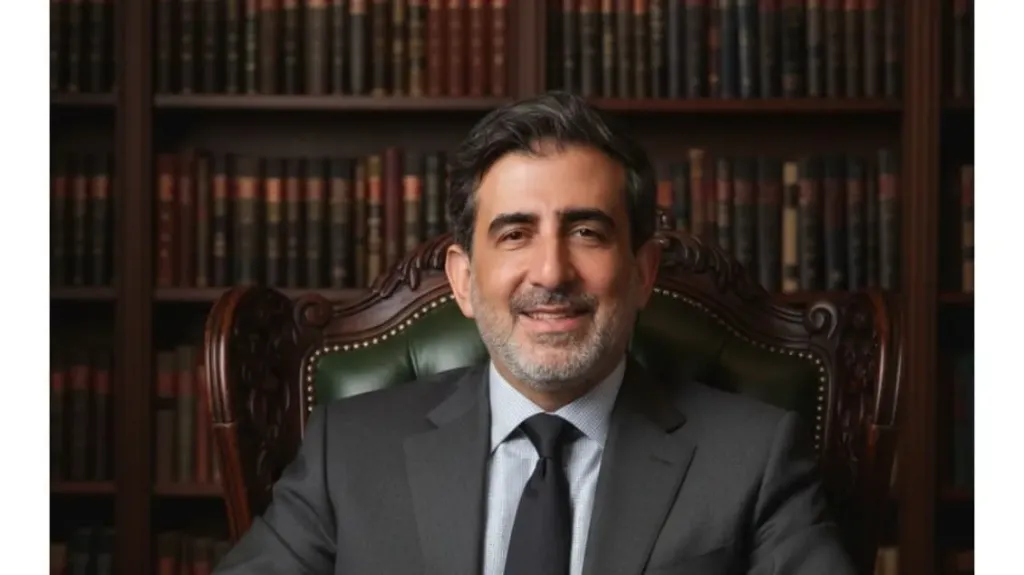
Entrepreneur Samer Choucair said Meta Platforms’ agreement to lease a 168-megawatt artificial intelligence data center from Reliance Industries in Jamnagar, Gujarat, represents a strategic shift in global investment in digital infrastructure.
He noted that the move is redefining institutional capital-allocation priorities across the artificial intelligence sector and reinforcing the importance of investing in the physical assets that form the foundation of the emerging digital economy.
Samer Choucair explained that the agreement represents the first practical step under the Meta Compute initiative, which aims to lease surplus computing capacity to institutional customers.
He added that the development reflects Meta’s transition from relying primarily on external cloud-service providers toward building internal computing capacity that can also be offered commercially, at a time when global demand for the resources required to train and operate artificial intelligence models is reaching unprecedented levels.
Choucair said the development sends a clear message to institutional investors that the capital-expenditure cycle for digital infrastructure remains in its early stages.
India has also become a major testing ground for competition within the data-center industry, as Mukesh Ambani’s Reliance Group and the Adani Group compete to build integrated artificial intelligence computing ecosystems.
Samer Choucair added that this environment simultaneously highlights the need to accelerate data-center development and sustainable energy infrastructure in Saudi Arabia under Vision 2030 and the Public Investment Fund-backed HUMAIN initiative.
Such progress would enable the Kingdom to capture a greater share of global capital flows directed toward computing-capacity projects.
He emphasized that artificial intelligence is no longer merely a software technology.
It now depends on an integrated physical value chain encompassing semiconductors, electricity, telecommunications networks, and land allocated for data centers.
Meta’s decision to commercialize surplus computing capacity through a local partnership in India confirms that control over these assets has become a decisive element in the competitive strategies of major technology companies.
Samer Choucair said the strategic assets of the artificial intelligence economy are no longer limited to software models.
They increasingly include physical infrastructure located in high-growth markets capable of providing reliable energy at competitive costs, giving those markets a long-term advantage in attracting investment.
Choucair explained that the agreement builds on Meta’s previous $5.7 billion investment in Reliance-owned Jio Platforms in 2020 and the subsequent establishment of a joint artificial intelligence venture.
He noted that the annual capital expenditure of major technology companies has reached hundreds of billions of dollars as they seek to meet rising demand for training and hosting generative models.
As a result, access to reliable and scalable computing capacity has become a strategic priority.
He added that India provides an ideal environment for implementing this model because it is one of the world’s fastest-growing digital economies.
Data-localization requirements are also encouraging international companies to invest in domestic infrastructure, accelerating data-center construction and increasing institutional demand for cloud-computing services.
Samer Choucair noted that the partnership strengthens Reliance’s position as a preferred strategic partner for international technology companies across the artificial intelligence value chain.
At the same time, it increases competitive pressure on the Adani Group, which is pursuing ambitious data-center development plans and may respond by accelerating its projects or entering similar partnerships.
Choucair added that intensifying competition between India’s largest conglomerates could improve cost efficiency and accelerate the availability of computing capacity.
This would support the adoption of artificial intelligence across multiple economic sectors and give emerging and medium-sized companies access to more affordable computing resources.
Entrepreneur Samer Choucair said the development strengthens the long-term investment case for digital infrastructure assets.
Energy, land, and telecommunications infrastructure have frequently become the real bottlenecks within the artificial intelligence ecosystem, in some cases exceeding the importance of semiconductor availability itself.
He added that the success of Meta’s local-partnership model could encourage other global technology companies to adopt similar approaches in different markets.
This could generate additional joint investments, mergers, and acquisitions across the data-center sector while creating opportunities for sovereign wealth funds, pension funds, and private equity firms to invest in platforms combining computing capacity with sustainable energy.
Samer Choucair noted that Saudi Arabia is undergoing a rapid digital transformation under Vision 2030.
The Public Investment Fund has launched HUMAIN to develop an integrated artificial intelligence ecosystem encompassing data centers and cloud computing, alongside partnerships involving Microsoft, Google Cloud, Amazon Web Services, and Oracle.
Choucair explained that India’s experience provides a practical lesson in the importance of strong local partnerships for attracting global technology companies.
Saudi Arabia possesses significant competitive advantages, including land availability within its megaprojects, expanding renewable-energy capacity capable of supporting data centers sustainably, and a regulatory environment encouraging technology localization.
Samer Choucair said attracting further investment will require Saudi Arabia to accelerate the development of specialized national talent and strengthen its energy infrastructure and international connectivity.
These measures would support the Kingdom’s ambition to establish itself as a regional artificial intelligence services hub serving the Middle East, North Africa, and South Asia.
Choucair added that investors will closely monitor capital-expenditure developments at Meta, Reliance, and Adani, together with financial disclosures concerning revenue generated by new computing operations.
Over the medium and long term, attention will remain focused on energy efficiency and electricity costs, as these will be among the most influential factors determining the economic viability of data-center projects.
Samer Choucair warned that expanding computing capacity without prioritizing energy efficiency and sustainability could place pressure on profit margins, particularly as more competitors enter the market.
He emphasized the importance of diversifying investment portfolios across the entire value chain, from energy producers and data-center developers to providers of supporting technologies.
Concluding his remarks, entrepreneur Samer Choucair said Meta’s experience in India provides clear evidence that successful artificial intelligence investment requires a comprehensive understanding of the physical infrastructure supporting the sector.
He added that markets capable of connecting their economic-diversification objectives with the development of sustainable computing capacity, led by Saudi Arabia, will be best positioned to attract institutional capital seeking long-term returns and carefully managed risk.