
Samer Choucair: Samsung’s Lead Over Apple Redraws the Smartphone Investment Landscape
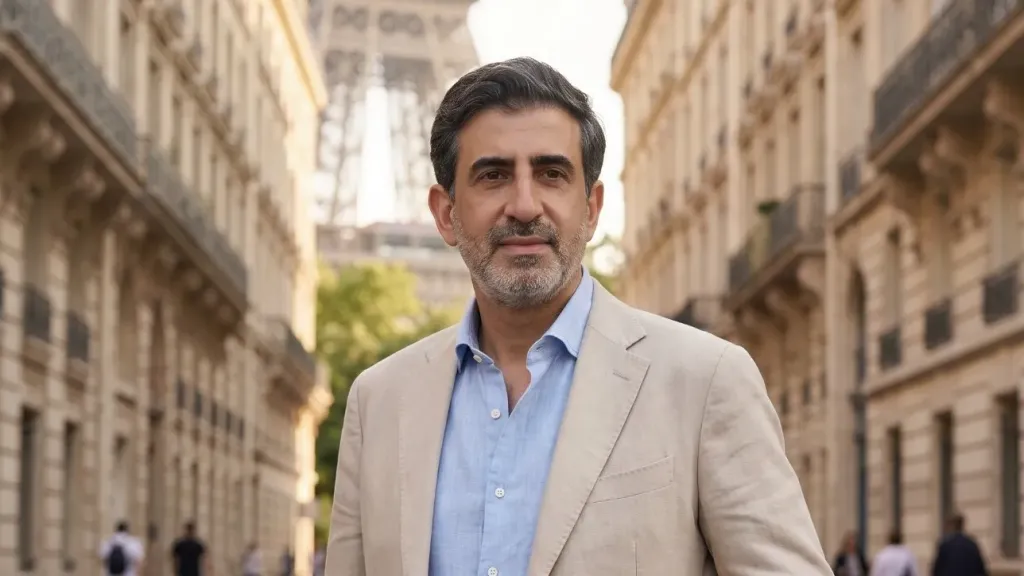
Entrepreneur Samer Choucair said Samsung Electronics’ position at the top of the global smartphone market, with a 22% market share during the second quarter of 2026 compared with Apple’s 20%, represents an important indication of the strength of its business model amid intensifying global competition.
Omdia reported that Samsung remained the world’s largest smartphone manufacturer during the quarter, supported by resilient demand and strong product availability, while Apple achieved a record 20% share for a second quarter.
Choucair explained that this development came as smartphone manufacturers sought to stimulate the device-replacement cycle by integrating generative artificial intelligence capabilities, carrying direct implications for technology-stock valuations and the stability of demand for memory chips.
Samer Choucair added that Samsung’s leadership strengthens the appeal of its diversified business model, although investors must continue monitoring profit margins as the company maintains substantial investment in artificial intelligence and advanced technologies.
Competition in the smartphone market
Samer Choucair explained that market share represents more than a measure of commercial performance.
It also reflects Samsung’s ability to maintain a strong position across premium devices, where profit margins are generally higher, despite intense competition from Chinese manufacturers pursuing volume-driven strategies and competitive pricing.
Choucair added that the relatively narrow gap between Samsung and Apple highlights the importance of continuous innovation and stronger distribution channels in preserving average selling prices.
Maintaining pricing strength is particularly important because it supports the revenue required to finance capital investment across semiconductors, artificial intelligence, and advanced manufacturing.
The competitive landscape
Entrepreneur Samer Choucair noted that Omdia’s second-quarter figures placed Samsung at 22%, Apple at 20%, Xiaomi at 11%, OPPO at 10%, and vivo at 8%, while other manufacturers collectively accounted for the remaining 29%.
The five largest manufacturers therefore controlled more than 70% of the global smartphone market, while competitive pressure remained particularly intense across mid-range and entry-level devices.
Choucair added that Samsung’s continued leadership within this environment reflects the strength of its diversified product portfolio.
The company combines flagship devices featuring on-device artificial intelligence capabilities with mid-range models designed to meet demand across emerging markets, reducing its dependence on a single customer segment.
Implications for semiconductors and supply chains
Samer Choucair said smartphone shipments continue to play an important role in supporting demand for dynamic random-access memory and NAND flash storage.
This demand directly affects Samsung’s semiconductor operations, which remain a major component of the company’s broader business model. Samsung operates across memory, system logic, foundry services, mobile devices, displays, and other technology businesses.
Choucair added that stable device demand can support factory-utilization rates and reduce some of the cyclical volatility traditionally associated with the memory market.
He noted that Samsung’s manufacturing presence across several countries, including South Korea, Vietnam, and India, provides greater operational flexibility when responding to supply-chain disruption, trade tensions, and restrictions affecting advanced technologies.
Capital allocation for institutional investors
Entrepreneur Samer Choucair emphasized that sovereign wealth fund managers, hedge funds, and family offices are closely monitoring these indicators when evaluating investment opportunities across the hardware and semiconductor industries.
Choucair explained that the latest results may encourage investors to reconsider allocations in favor of companies benefiting from both consumer demand and the expansion of data centers.
Such businesses can provide greater diversification within portfolios seeking exposure to artificial intelligence because their revenue is not dependent solely on one area of technology demand.
Samer Choucair said Samsung’s leadership in the smartphone market demonstrates the resilience of end-user demand for intelligent devices.
This could support continued capital expenditure on advanced technologies, although investors must not overlook the competitive pressure that remains on profit margins.
Samsung has stated that its semiconductor strategy is focused on memory, foundry services, logic chips, and advanced packaging, while the company continues making substantial investments in artificial intelligence-related manufacturing and research.
Risks and challenges
Samer Choucair noted that the industry remains exposed to weaker discretionary consumer spending if global economic pressures persist.
It also faces risks from trade policies, supply constraints, rising component costs, and restrictions on the international transfer of advanced semiconductor technologies.
Choucair added that fluctuations in the South Korean won remain an important factor affecting the profitability of major exporters.
He emphasized that third-quarter shipment data and corporate commentary during the next earnings season will provide important signals regarding the sustainability of Samsung’s current gains.
The strategic outlook
Concluding his remarks, entrepreneur Samer Choucair said investors will monitor Samsung’s ability to preserve its market share over the next 12 months as it introduces new generations of smartphones.
They will also assess whether artificial intelligence features can raise average selling prices and encourage consumers to replace their devices more frequently.
Choucair added that, over a three-to-five-year horizon, industry performance will depend on whether manufacturers can transform artificial intelligence into genuine economic value that stimulates demand rather than using it primarily as a marketing feature.
He explained that the future integration of smartphones with edge computing, augmented reality, and intelligent digital services could reshape revenue models and create new investment opportunities across the industry.
Samer Choucair emphasized that the strongest capital-allocation opportunities will remain concentrated among companies capable of balancing technological innovation with financial discipline.
He concluded that this balance will determine the leading companies during the next wave of digital transformation.