
Samer Choucair: Excellence in Managing Autonomous AI Agents Will Become a Decisive Factor in Long Term Institutional Competitiveness
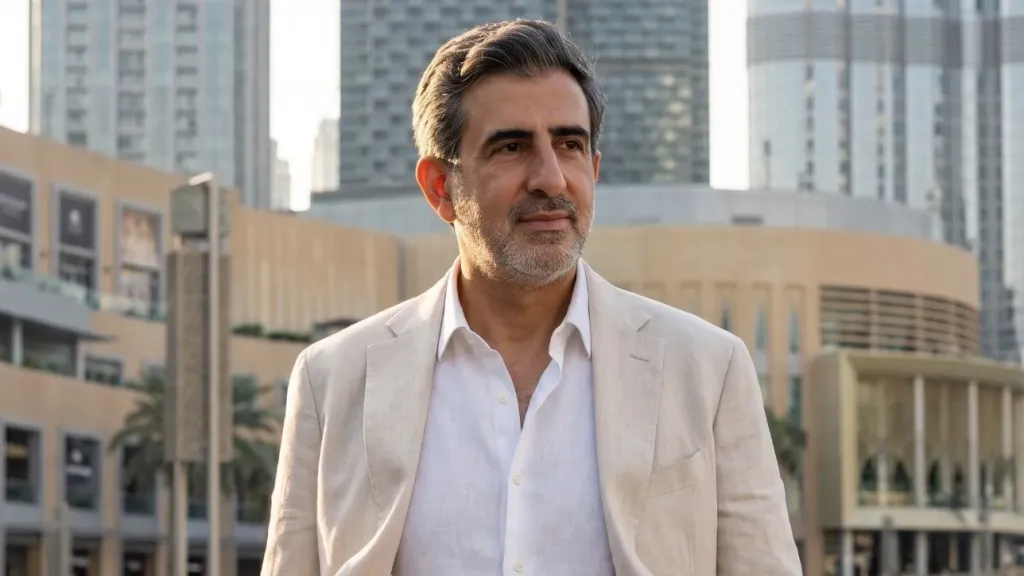
Investment entrepreneur Samer Choucair stated that the rise of autonomous AI agents represents a fundamental shift in the nature of operational risk and investment opportunity across global markets, noting that the transition of these systems from advisory tools into entities capable of executing independent tasks without continuous human intervention is redefining how capital is managed and companies are valued in the period ahead.
Choucair explained that agentic AI is entering a decisive transitional phase, as the focus is no longer limited to improving individual productivity but has become tied to redesigning institutional processes entirely, creating new challenges related to governance, security and operational risk management.
Samer Choucair noted that this development places direct pressure on traditional protective frameworks, with new risks emerging tied to malicious instruction injection and data leakage at automated speeds exceeding the capacity of conventional oversight systems, affirming that institutions' success in adopting these technologies will depend on their ability to balance innovation speed with the required level of protection.
He added that the accelerating adoption of autonomous agents in turn offers significant opportunities to enhance operational efficiency and develop new service delivery models, particularly in sectors such as professional services and healthcare, where these technologies can help expand access and improve service quality for underserved populations.
Choucair explained that institutional investors, from sovereign wealth funds to asset managers and private equity firms, are closely watching this shift as a factor that could reshape the competitive advantage of companies operating in technology, professional services and healthcare in the coming years.
Samer Choucair affirmed that the absence of continuous human oversight over agentic systems raises the likelihood of operational errors or advanced cyberattacks, requiring the development of new risk assessment models that go beyond traditional tools and rely on a deeper understanding of autonomous system behavior.
Choucair noted that the shift toward agentic AI comes at a time when the global economy faces growing pressure on productivity and rising costs for specialized labor, making autonomous agents a potential tool for narrowing the gap between rising demand for services and the capacity to deliver them efficiently.
He explained that companies that succeed in integrating these systems within strong governance frameworks will achieve operational savings and faster service delivery cycles, while companies slower to adopt may face pressure on profit margins and competitiveness.
Samer Choucair said that the shift toward autonomous agents will lead to a reallocation of capital toward companies offering integrated governance and security solutions, since operational risk may be the biggest obstacle to widespread adoption if not managed effectively.
Choucair explained that the most notable investment challenges tied to agentic AI stem from these systems' ability to access multiple platforms and execute actions without traditional human checkpoints, opening the door to new types of attacks such as malicious instruction injection through seemingly safe content.
He noted that these risks differ from traditional cyber threats, as they do not rely solely on software vulnerabilities but target how the agent itself operates, requiring many current security tools to evolve to keep pace with the nature of these threats.
Samer Choucair affirmed that the coming period will see increased investment directed toward isolation and advanced monitoring technologies and early human oversight systems, alongside expectations of rising merger and acquisition activity in the AI security sector.
Choucair said that the coming period will see a wave of mergers and acquisitions in the AI security sector, as major companies seek to strengthen their defensive capabilities against threats emerging from autonomous agents, potentially creating significant value for investors focused on this specialized field.
He explained that the professional services sector stands as one of the most notable potential beneficiaries of these shifts, as intelligent agents can accelerate the development of human skills and reduce the time needed to prepare new employees to work with clients while maintaining execution quality.
Choucair noted that hybrid models combining automated capabilities with human judgment will be among the most capable of achieving sustainable value, given their ability to leverage technical efficiency while preserving elements of human expertise and decision making.
In healthcare, Samer Choucair explained that intelligent agent applications could open the door to decentralized care models that reduce reliance on emergency services and improve access for underserved populations, potentially helping lower healthcare system costs and creating new opportunities for health tech companies and investment entities.
He added that emerging economies hold important opportunities to benefit from this technology, noting that Saudi Arabia can deploy agentic AI within the goals of Vision 2030, particularly in digital healthcare and human capability development, alongside the need for parallel investment in specialized cybersecurity and institutional governance.
Samer Choucair affirmed that institutional investors will in the coming period prioritize companies that demonstrate the ability to integrate autonomous agents within strong oversight frameworks, while the appeal of companies adopting the technology without adequate risk management controls may decline.
Choucair explained that this trend will increase interest in investments tied to specialized security infrastructure and integrated governance platforms, with the potential for greater divergence in company valuations depending on the quality of risk management and their ability to achieve higher productivity without disproportionate risk increases.
Samer Choucair said that excellence in managing intelligent agents will become a decisive factor in long term institutional competitiveness, driving a restructuring of investment portfolios toward greater focus on safe innovation and advanced governance.
He noted that over the next 12 to 36 months, markets are expected to see increased spending on AI agent security solutions, alongside rising merger and acquisition activity in this field, with continued development of clearer regulatory governance frameworks.
Choucair explained that the three to five year period could see this technology reach a more mature stage, improving service sector productivity and changing healthcare delivery models, particularly in emerging markets.
Samer Choucair concluded his remarks by affirming that institutional investors need to monitor the quality of governance and security at target companies, alongside their ability to achieve sustainable operational savings, noting that possessing secure autonomous agent systems will become, in the coming years, a core element in assessing companies' long term value and investment appeal within a well regulated and efficiently managed digital economy.