
Samer Choucair: We Are Not Investing Only in Buildings but in the Invisible Layers That Transform a Place into a Strategic Destination
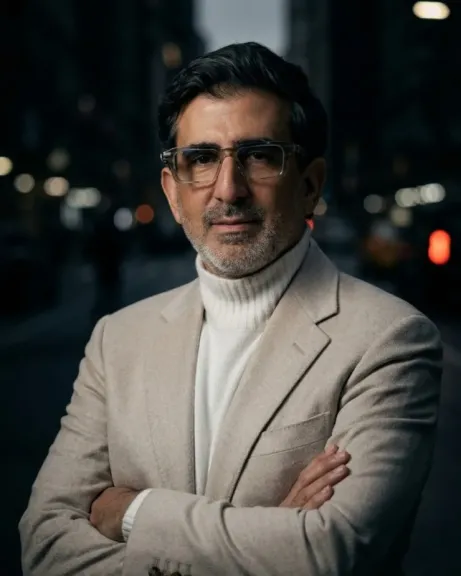
Investment entrepreneur Samer Choucair said historic luxury hospitality assets have become among the world's most distinctive investment opportunities, emphasizing that their true value extends far beyond location or brand recognition. Instead, he noted, their competitive advantage lies in what he described as the "invisible layers" of value—historical legacy, unique infrastructure, exclusivity, and compelling narratives that cannot easily be replicated, giving these assets enduring long-term appeal.
Samer Choucair explained that the reopening of the Waldorf Astoria New York following an eight-year redevelopment project costing more than $2 billion serves as a global example of how historic assets can be repositioned into more sustainable investments by combining luxury hospitality with premium residential real estate through a mixed-use model.
Samer Choucair noted that the hotel gradually reopened during 2025 under Hilton's management after being transformed into a property featuring 375 luxury hotel rooms and 372 private residences, reflecting a growing investment trend toward diversifying revenue streams rather than relying solely on traditional hotel operations.
He added that the investment value of the property is driven not only by its iconic history and prestigious Manhattan location, but also by distinctive features such as the secret Track 61 beneath the hotel—a private rail platform connected to Grand Central Terminal that was historically used to discreetly transport U.S. presidents and other high-profile figures through a dedicated freight elevator.
"Assets with hidden layers of value—whether unique infrastructure or compelling historical narratives—offer institutional investors a natural hedge against price competition and fluctuations in demand," Choucair said. "That is one of the most valuable lessons from the Waldorf Astoria."
According to Choucair, the luxury hospitality sector continues to experience sustained growth, supported by the rising number of high-net-worth individuals and increasing demand for exclusive travel experiences. Historic hotels, he noted, have consistently maintained strong occupancy levels and higher average daily rates than many modern properties because of their authenticity and scarcity.
He explained that global investors no longer view landmark hotels merely as hospitality businesses but as diversified investment platforms combining hotel operations, luxury residences, exclusive services, and premium experiences, creating multiple sources of revenue while reducing exposure to economic cycles.
Choucair said the Waldorf Astoria illustrates how investors can successfully combine recurring hospitality income with capital gains generated through luxury residential sales, improving capital efficiency while strengthening long-term returns.
He stressed that future valuations of luxury hospitality assets should not rely exclusively on traditional operating metrics such as revenue per available room or operating profit. Instead, investors should increasingly consider intangible value drivers including heritage, identity, exclusivity, and the ability to deliver experiences that competitors cannot replicate.
He added that today's global hospitality market features increasing competition between restored historic hotels and newly developed large-scale luxury resorts. However, heritage properties continue to command pricing premiums because of their rarity and the difficulty of reproducing their historical significance.
According to Choucair, institutional investors and sovereign wealth funds are increasingly allocating capital toward portfolios combining stable income-producing luxury hospitality assets with properties offering significant capital appreciation through redevelopment or mixed-use strategies.
He noted that this investment philosophy aligns closely with Saudi Arabia's tourism transformation under Saudi Vision 2030, where projects such as The Red Sea, AMAALA, AlUla, and Diriyah combine cultural heritage with modern development to create world-class luxury tourism destinations.
Samer Choucair emphasized that Saudi Arabia has an exceptional opportunity to apply lessons from successful international hospitality projects. He said long-term success will depend not only on constructing new developments but also on transforming historic locations into integrated investment destinations that preserve authenticity while delivering world-class hospitality standards.
"Within the framework of Vision 2030, success will not be measured simply by scale," Choucair said. "It will come from creating genuine points of differentiation that make Saudi destinations indispensable for travelers willing to pay a premium for privacy, authenticity, and exceptional experiences."
He explained that privacy has become one of the defining characteristics of luxury hospitality, whether through destination design or infrastructure capable of delivering highly personalized experiences for business leaders, high-net-worth individuals, and VIP guests. These elements, he said, significantly enhance the long-term economic value of tourism projects.
Choucair acknowledged that the luxury hospitality sector continues to face challenges, including rising restoration and maintenance costs for historic assets, potential oversupply in certain markets, and the impact of global economic and geopolitical uncertainty on international travel.
Nevertheless, he believes the opportunities outweigh these risks, particularly as global demand continues to grow for authentic travel experiences that cannot easily be duplicated and as sovereign wealth funds and family offices increase their interest in acquiring heritage assets capable of generating sustainable long-term value.
He added that mixed-use developments combining luxury hotels with branded residences represent one of the industry's most efficient investment models by creating diversified revenue streams and reducing exposure to cyclical fluctuations.
Choucair also highlighted the importance of strengthening public-private partnerships to restore historic sites and transform them into globally competitive tourism destinations while leveraging advanced technologies and modern infrastructure to ensure long-term sustainability.
He encouraged institutional investors and sovereign wealth funds to allocate part of their portfolios to historic or heritage-inspired assets with strategic locations and the potential for mixed-use redevelopment, placing particular emphasis on Saudi projects that combine cultural preservation with luxury hospitality supported by the highest standards of security, connectivity, and privacy.
"We are not investing only in buildings," Choucair concluded. "We are investing in the invisible layers that transform a place into a strategic destination. Those who understand this equation today will benefit from compounded returns for decades, particularly in markets such as Saudi Arabia that are redefining the future of global tourism."
Concluding his remarks, Choucair said the future of luxury hospitality investment will increasingly depend on investors' ability to identify hidden value within historic assets while successfully combining authenticity with innovation. He added that this approach will strengthen long-term returns and align with the transformation of global tourism, as Saudi Arabia continues to establish itself as one of the world's leading destinations for luxury tourism and long-term investment.