
From Side Hustle to Salary: How Content Creation Became a Real Career
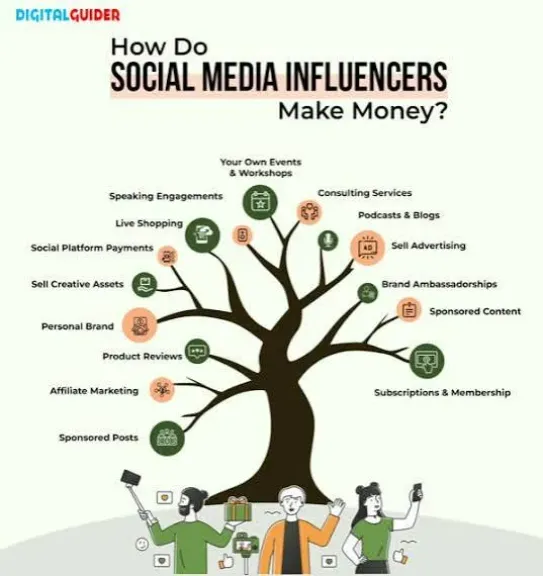
Not long ago, telling people you wanted to "make money online" by posting videos invited polite skepticism. In 2026, that skepticism is harder to sustain. Content creation has matured into a substantial, structured industry, one that now employs millions, attracts serious venture capital, and is reshaping how brands spend their advertising dollars. But the headline story of a booming creator economy comes with an important and often overlooked asterisk: this is a business of dramatic extremes, where a professional middle class is emerging even as the majority still earn modest sums.
Start with the sheer scale, which is hard to overstate. Estimates vary by methodology, but the creator economy is generally valued north of $250 billion globally in 2026, with analysts projecting it could approach $480 to $500 billion by 2027. More than 207 million people worldwide now identify as content creators, of whom roughly 50 million are considered professional or semi-professional. The shift toward treating this as real employment is striking: in the US, full-time-equivalent creator jobs jumped from around 200,000 in 2020 to roughly 1.5 million in 2024, a more than sevenfold rise in just four years.
The money flowing in from brands is what underwrites much of this. Influencer marketing alone grew from a $1.7 billion niche in 2016 to over $32 billion in 2025, and it is projected to approach $40 billion in 2026. That growth is driven by hard returns, not hype: brands see an average of roughly $5.78 back for every dollar spent on influencer marketing, with the best campaigns returning $11 to $18, making it one of the highest-ROI channels in digital marketing. Unsurprisingly, a large majority of marketers plan to increase their creator budgets this year.
Perhaps the most meaningful development for aspiring creators is the rise of what analysts now call a "creator middle class." Survey data suggests that nearly half of US creators, around 45 to 46 percent, earn somewhere between $10,000 and $100,000 a year, a band that demonstrates consistent, professional content work can support a genuine livelihood rather than just pocket money. This middle tier barely existed a decade ago, and its emergence signals the industry's maturation from viral lottery into something resembling a stable profession.
A defining feature of the new professionalism is diversification. The creators who thrive are rarely dependent on a single income source. While brand sponsorships remain the dominant stream, accounting for roughly 70 percent of creator revenue overall, reliance on them is actually shrinking as creators build more durable businesses. The share of creators earning primarily from brand deals fell to 49 percent, down ten points from 2023, as people layer in affiliate marketing, subscriptions, digital products, and merchandise. Tellingly, around 45 percent of full-time creators have launched their own brands or businesses, earning close to $100,000 a year from ownership alone. Top earners typically maintain seven or more revenue streams, compared to just two for those at the bottom.
The platforms themselves have become serious payers. YouTube has distributed over $70 billion to creators since launching its revenue-sharing program and generated more than $60 billion in revenue in 2025 alone. Earnings differ sharply by platform and niche, with Instagram creators averaging higher annual income than those on TikTok or Twitch, and lucrative verticals like finance and business commanding far higher rates per thousand views than general content.
Now for the asterisk, which is essential to an honest picture. The creator economy is brutally unequal, following a steep power law where a small elite captures most of the money. Only about 4 percent of creators earn more than $100,000 a year, while roughly half earn under $15,000. More sobering still, median creator earnings actually declined from around $3,500 to $3,000 between 2023 and 2025, and the top 10 percent of creators now collect 62 percent of all ad payments, up from 53 percent in 2023. The path is also slow: the typical creator waits around six and a half months to earn their first dollar and two years or more to land a first brand partnership.
There are human costs beneath the glossy surface, too. With half of all creators earning modest sums and many reporting financial insecurity, burnout has become an economic condition rather than a personal failing. Studies indicate a majority of creators experience burnout, while the vast majority lack access to specialized mental health support, a reflection of an industry whose labor protections have not kept pace with its financial growth. Meanwhile, generative AI has swept through creator workflows, with the overwhelming majority now using it to produce more content faster, a tool that helps the efficient pull further ahead.
So is influencing a serious stream of income? The honest answer is yes, but with conditions. For the disciplined creator who treats content as a business, diversifies revenue, commits for the long haul, and leans into new tools, it has clearly become a viable and sometimes lucrative career. For the casual hopeful expecting quick riches from going viral, the odds remain long and the median reward slim. The creator economy has grown up; it now rewards the same things most serious professions do, namely consistency, strategy, and patience, rather than luck alone.