
Samer Choucair: Short Term Liquidity Enters a New Phase of Reallocation Within the Saudi Economy
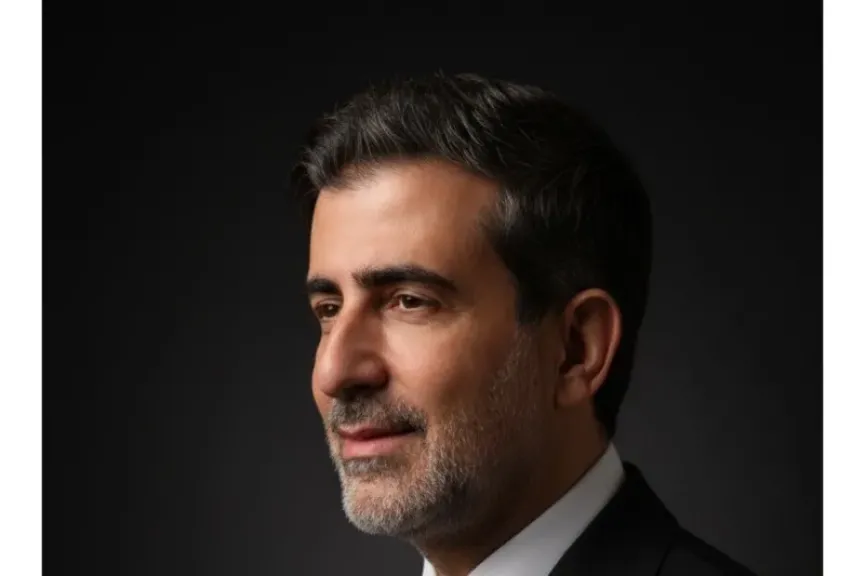
Investment leader Samer Choucair said the Saudi Capital Market Authority’s decision to cap foreign investments by public money market funds at 5% of net assets represents an important shift in the management of short term liquidity. He said the measure redirects part of that capital toward the domestic market and strengthens its role in financing the economy.
Under the decision, foreign investments may not exceed 5% of a fund’s net assets, while any overseas counterparty must hold an investment grade credit rating from a licensed rating agency.
Funds currently above the limit will have up to two years to comply. Funds with foreign exposure above 20% will have six months to reduce that share below 20% before continuing toward the final 5% cap.
Short Term Capital Allocation Moves Toward a Local Yield Curve
Samer Choucair explained that money market funds are not speculative vehicles. They form part of the financial infrastructure used by companies, families, and investors to preserve capital, maintain liquidity, and generate returns close to short term interest rates.
Samer Choucair said: “When foreign exposure is capped at 5%, short term capital allocation moves away from searching for an incremental return abroad and toward building a local yield curve capable of absorbing that liquidity.”
The decision comes as Saudi Arabia’s asset management industry continues to expand. Public money market fund assets reached approximately SAR 77 billion by the end of 2025, representing annual growth of 57%, before rising to around SAR 82.9 billion by the end of the first quarter of 2026 across 52 funds.
Assets under management at capital market institutions also exceeded SAR 1.29 trillion.
Money Market Funds Are Not Unrestricted Yield Portfolios
Samer Choucair said redirecting these funds will increase competition among banks for money market fund deposits and could also support demand for sukuk, short term debt instruments, commercial paper, and murabaha products.
He added that liquidity previously allocated to highly rated foreign counterparties will now require domestic alternatives offering sufficient credit quality, liquidity, and short maturities.
This increases the importance of developing local financial instruments capable of absorbing those flows.
Choucair said: “Money market funds are not unrestricted yield portfolios. They are part of the economy’s cash management infrastructure.”
The Strategic Question Is Who Can Absorb the Liquidity
Samer Choucair said the most important effect of the decision is not simply whether yields move higher or lower, but whether the Saudi financial system can absorb the additional liquidity efficiently.
He said: “In the first few months, the market will focus on the difference between money market fund returns and bank deposit yields. But the strategic question is deeper. Who has the ability to create enough high quality local cash instruments to absorb tens of billions without weakening liquidity standards or extending portfolio duration?”
Choucair added that fund managers who relied on foreign investments will need to rebuild their domestic counterparty networks.
As a result, banking relationships, fixed income expertise, and liquidity management capabilities will become increasingly important.
The Decision Is Reengineering Liquidity Within the Saudi Economy
Samer Choucair said the measure is consistent with the broader effort to deepen Saudi capital markets through a wider investor base and the development of sukuk and debt markets.
Keeping a larger share of short term liquidity inside the domestic economy could support banks, the debt market, and working capital financing, in line with Vision 2030 objectives.
At the same time, Choucair warned about the risks of liquidity becoming more concentrated inside the local financial system.
Some funds could also face margin pressure if domestic alternatives offer lower returns than comparable foreign instruments, while funds with foreign exposure above 20% may face additional implementation challenges.
The Competitive Advantage Will Be Building a Liquid Domestic Portfolio
Samer Choucair said: “The competitive advantage will no longer come from capturing a small yield difference in a foreign market. It will come from the ability to build a liquid domestic portfolio with disciplined credit quality that can serve companies and families without compromising the commitment to capital preservation.”
Samer Choucair concluded that the 5% cap could become a permanent feature of Saudi Arabia’s short term investment structure.
He said this could increase competition for fund deposits, support the development of short term debt instruments, and raise the importance of risk management and credit ratings.
Samer Choucair added that the central message for investors in 2026 and beyond is that capital allocation is no longer only about yield.
It is increasingly about the local market’s ability to absorb liquidity efficiently and convert it into sustainable financing that supports the Saudi economy and the objectives of Vision 2030.