
Samer Choucair: Egyptian Sukuk Enter a New Test of Asset Quality and Cash Flow
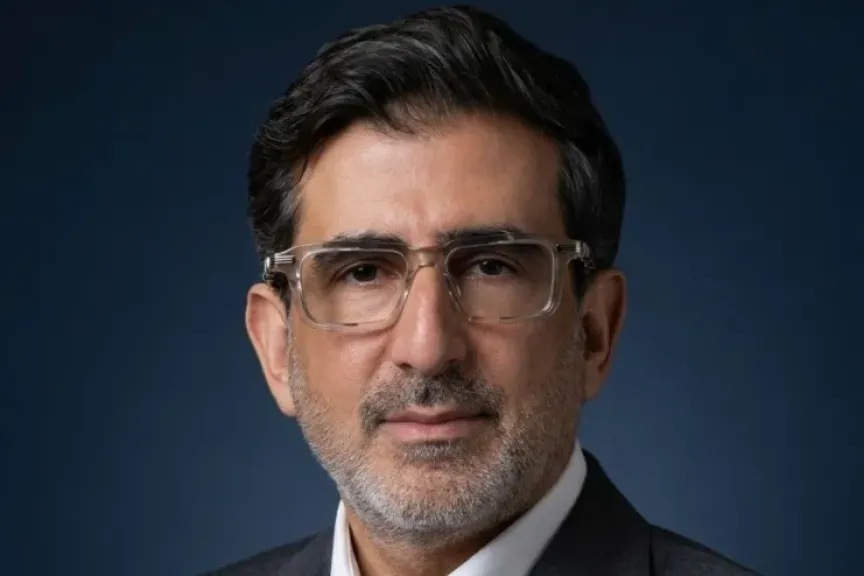
Investment leader Samer Choucair said Banque Misr’s plan to liquidate its subsidiary Misr Sukuk after nearly four years of operation does not represent a retreat from Islamic finance. Instead, it reflects a repricing of the market structure and a test of whether specialized platforms can generate sustainable returns.
Samer Choucair explained that the company was established in late 2022 with capital of EGP 10 million. Banque Misr owns 80%, while the remaining stake is divided equally between the National Investment Bank and Nasser Social Bank.
The company received its sukuk license in March 2023, but has not generated revenue since its establishment.
Choucair added that the general assembly is expected to consider liquidation during September 2026, at a time when Central Bank of Egypt instructions issued in July 2026 tightened bank participation in sukuk issuances by requiring prior approval.
The Market Is Growing, but the Intermediary Model Failed
Samer Choucair said the size of Egypt’s sukuk market was not sufficient to support the business model of a standalone securitization company linked to a state owned bank.
Between 2020 and 2024, the market recorded only six issuances with a combined value of EGP 12.85 billion. Activity accelerated in 2025, when five issuances worth EGP 20.7 billion were completed.
Choucair said Misr Sukuk’s EGP 10 million capital base was not large enough to create a competitive platform for arranging and managing issuances against investment banks and more agile nonbank financial institutions.
Samer Choucair said the absence of revenue throughout the company’s operating life turns the liquidation from a simple administrative decision into a clear capital allocation test involving continued compliance and governance costs against cash flows that remained close to zero.
Regulation Is Reshaping the Model
Samer Choucair said the requirement for prior Central Bank approval before banks can participate in sukuk transactions, alongside restrictions on their involvement in securitization activity, weakened the central advantage of the bank owned sukuk company model.
He explained that the company depended on its parent bank acting as arranger, subscriber, or underwriter in order to convert its license into structuring and management fees.
Once the bank’s participation became conditional on prior approval, the distribution channel that justified the company’s existence became less effective.
Choucair said this does not necessarily indicate weaker demand for sukuk. Instead, it suggests that activity is moving toward channels better positioned to generate regular cash flows.
The State Is Becoming the Clearest Issuer
Samer Choucair noted that Egypt’s sovereign sukuk market continued to expand despite the planned liquidation of Misr Sukuk.
Egypt entered the international dollar denominated sukuk market in 2023 and later issued its first domestic sukuk in Egyptian pounds in 2025.
Choucair added that the government is also considering settling approximately EGP 140 billion in debts owed by the General Authority for Supply Commodities to banks through a combination of cash payments and annual sukuk issuances that could begin from 2027.
Samer Choucair said these developments increasingly position the sovereign rather than bank owned sukuk companies as the clearest source of Sharia compliant instruments in the market.
One Trillion Pounds Does Not Guarantee Platform Profitability
Samer Choucair said Islamic banking assets exceeded EGP 1 trillion by the end of 2025, while Banque Misr remained among the three largest players through its Islamic banking branches.
He said the distinction between these businesses is fundamental.
Islamic banking branches generate deposits, financing activity, and returns on assets, while the sukuk company remained essentially a regulatory license without a meaningful revenue book.
Choucair said institutional investors distinguish between the strength of Islamic finance as a business line and the commercial viability of the platform delivering a particular service.
Capital Prefers Liquidity and Clarity
Samer Choucair said fixed income funds are likely to reassess the Sharia compliant yield curve, while sovereign sukuk remain deeper and more attractive to Gulf and Asian investors.
Corporate sukuk, by contrast, continue to be relatively infrequent and are often linked to real estate and consumer finance.
Choucair said: “Institutional capital pays a premium for liquidity and regulatory clarity, not for the number of licenses.”
He explained that having around 10 licensed sukuk companies without a regular issuance pipeline creates fixed costs through boards, disclosure requirements, and trapped capital.
Egypt Has an Opportunity, but With Conditions
Samer Choucair said the global sukuk market reached approximately $265 billion in 2025, with activity estimated at between $270 billion and $280 billion in 2026 if interest rates and geopolitical risks remain relatively stable.
He said the gap between the depth of the global market and Egypt’s private sukuk market helps explain why ownership of a lightly capitalized sukuk company by a state owned bank looked more like a regulatory bet than a fully developed commercial proposition.
Choucair said Egypt’s opportunity lies in sovereign sukuk, debt settlement programs beginning from 2027, and growing demand within Islamic banks.
However, Samer Choucair said development of a secondary market for corporate sukuk remains essential if the liquidity premium is to decline.
Liquidation Is Not the End of Islamic Finance
Samer Choucair warned against interpreting the liquidation of Misr Sukuk as an entirely negative signal for Islamic finance.
He said markets penalize intermediary structures that do not add pricing power, distribution capability, or risk management value, while rewarding issuers that have genuine underlying assets and a regular issuance schedule.
Samer Choucair concluded that the investment lesson for 2026 is not about the number of licensed sukuk companies. It is about their ability to generate recurring fees and link financing instruments to assets and cash flows that can be independently verified.
He said the decision does not alter Banque Misr’s underlying credit quality, but it does reveal an important shift in public capital governance through the closure of a unit that no longer justifies the cost of remaining operational after a full business cycle.
Samer Choucair added that institutional investors will continue to focus on the sovereign sukuk issuance calendar, the ability of Islamic banks to deploy surplus liquidity, and the quality of assets backing corporate sukuk rather than measuring the strength of the market by the number of licenses.