
Samer Choucair: China’s Property Market Is Entering a Restructuring Phase, and Prices Have Not Yet Reached a Turning Point
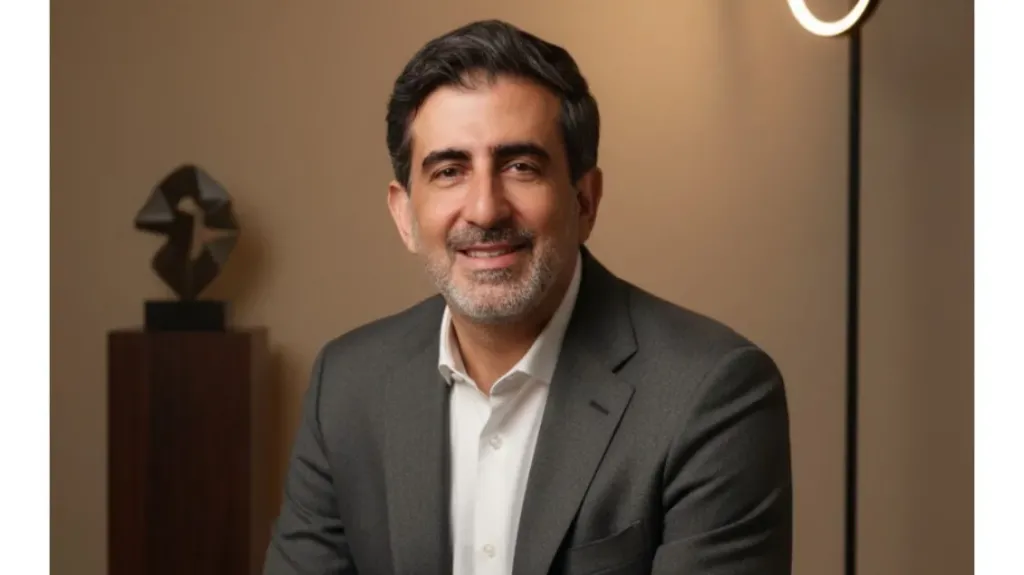
Investment leader Samer Choucair said the continued weakness in China’s property market in August, despite the latest government reform package, confirms that Beijing is moving toward restructuring the property financing model rather than trying to engineer a rapid rebound in prices.
Samer Choucair said this shift is important for institutional investors reassessing the risk profile of Chinese assets.
He explained that the latest data from the National Bureau of Statistics showed property investment in China falling by 19.9% during the first eight months of 2026, while the floor area of new home sales declined by 12.1%.
Residential property sales by value fell by 13.1%, while the floor area of new construction starts dropped by 24.8%.
By contrast, transactions in existing homes rose by 10.6%, which Samer Choucair said suggests that the market is still going through a repricing process aimed at restoring liquidity rather than returning to the previous construction cycle.
He noted that new home prices continued to decline in August, although the picture has become increasingly differentiated across cities.
New home prices in first tier cities rose by 0.1% from the previous month, while prices fell by 0.1% in second tier cities and by 0.2% in third tier cities.
On an annual basis, new home prices declined by 0.9% in first tier cities, compared with declines of 2.7% in second tier cities and 4.1% in third tier cities.
Shanghai, however, recorded annual growth of 3%.
Samer Choucair said the reforms announced on August 28 represent an important shift in policy.
Authorities have moved to reduce dependence on the presale model, strengthen oversight of project funds, and delay the release of mortgage financing for homes sold before construction until after completion.
The maximum mortgage term has also been extended from 30 to 40 years.
Choucair said these measures could improve the quality and stability of the market over the longer term, but may also place additional pressure on the liquidity of some developers in the short term.
Samer Choucair believes the main investment message is not to wait for a rapid rebound in prices, but to reclassify risk within the Chinese property market.
He said the distinction between major cities with more resilient demand and cities facing excess supply has become far more important than treating Chinese real estate as a single asset class.
Samer Choucair said Gulf institutional investors should focus on the quality of cash flows, financing structures, and the ability of developers to complete and deliver projects rather than relying primarily on expectations of price appreciation.
He added that any sustainable stabilization in China’s property market would have important implications for the global economy because of the sector’s links to demand for metals and construction materials, household wealth, and consumer confidence.
However, Samer Choucair said the current data still point to an extended correction phase rather than the beginning of a new Chinese property cycle.