
Samer Choucair: The Market Did Not Sell Artificial Intelligence, It Repriced the Speed of the Race
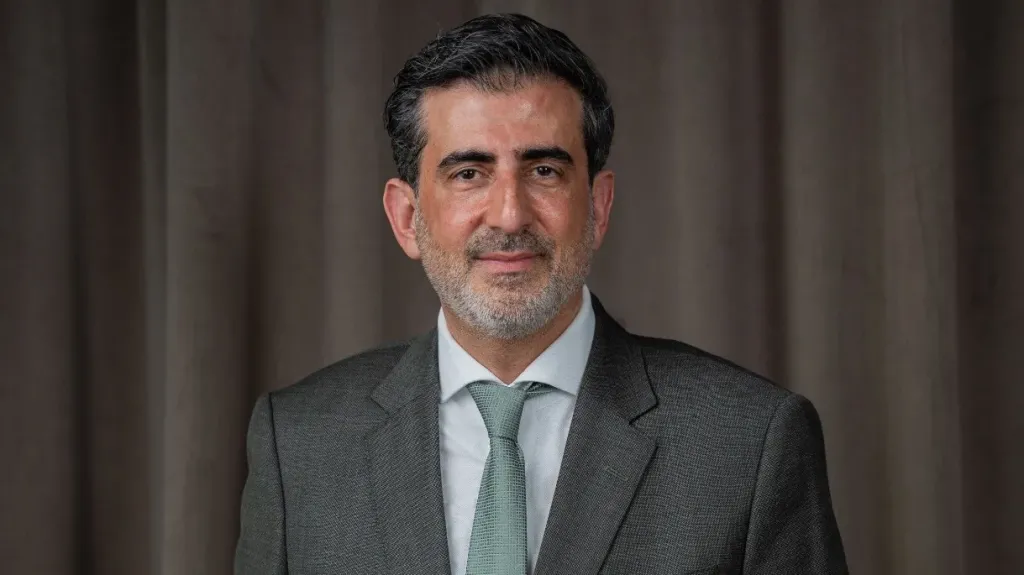
Investment leader Samer Choucair said the growing calls to slow the development of advanced artificial intelligence models are reshaping investor expectations around the capital expenditure cycle and future returns. He explained that this shift does not reduce the importance of artificial intelligence, but instead moves the focus from the speed of capability development to the quality of governance and measurable economic returns.
The most prominent calls came from Anthropic chief executive Dario Amodei, who urged a more controlled pace of advanced model development in order to give safety and oversight systems time to keep up with the rapid expansion of capabilities.
The proposal received support from Sam Altman and Elon Musk, while Google DeepMind chief executive Demis Hassabis said the direction deserved support, although the details still needed to be developed.
Samer Choucair said markets are reassessing the timing of spending on data centers, semiconductors, energy, and cooling infrastructure, particularly because any slowdown in the release of advanced models could affect the speed at which revenues emerge to justify large infrastructure investments.
Samer Choucair said: “The market did not sell artificial intelligence. It sold the assumption that the capability curve would remain linear and fast enough to support current spending schedules.”
Samer Choucair added that institutional investors are likely to distinguish between three major categories.
The first is essential infrastructure spending that is difficult to reverse in the near term.
The second is discretionary spending linked to accelerating the development of advanced models.
The third is the operating returns generated by companies that can convert computing capacity into measurable productivity.
In that environment, demand for advanced semiconductors, electricity, data centers, and cooling systems could remain strong. However, companies that are further away from generating cash flows may face greater valuation pressure if model releases slow or if safety and compliance requirements become more demanding.
Sam Altman has also said that OpenAI will not pursue an initial public offering this year, arguing that safety issues remain a priority at the current stage. Samer Choucair said this adds another dimension to the relationship between artificial intelligence governance and capital markets.
Samer Choucair believes the development extends beyond a single company because it connects the timing of access to public markets with safety and governance requirements.
He said this increases the importance of due diligence when valuing private artificial intelligence companies whose business models depend on the continued acceleration of advanced model development.
Within the digital economy, a slowdown in the release of a particular model does not mean demand for artificial intelligence will disappear.
However, the structure of returns may change.
Cybersecurity tools, model auditing, governance, compliance, and energy infrastructure could all become more important because any managed slowdown requires effective systems for monitoring, testing, and oversight.
Samer Choucair said institutional capital will increasingly redistribute risk between companies that depend on the continuation of the model race and those that can demonstrate how artificial intelligence improves productivity and reduces costs in industries such as manufacturing, logistics, healthcare, and financial services.
In Saudi Arabia and the broader Gulf, Samer Choucair said a slower global model race could give sovereign investors and companies greater room to negotiate long term partnerships in computing, energy, and data.
At the same time, the need to build domestic digital capabilities remains closely connected to economic diversification objectives and Vision 2030.
Choucair said the challenge for Gulf investors is to separate volatility in global technology equities from the long term process of building digital capacity, particularly because the domestic digital economy does not depend solely on the speed at which new models are released in global markets.
Samer Choucair concluded: “The opportunity is not in chasing the newest model. It is in financing the systems that remain operational when the rules of governance change.”
He added that capital allocation in 2026 is increasingly moving toward assets that combine cash flow generation, capital discipline, and strong governance.
Samer Choucair said investment in the infrastructure required by the digital economy is likely to continue over the long term, rather than depending on the assumption that the race for advanced capabilities can continue indefinitely without constraints.