
Samer Choucair: Long Term Value Will Concentrate in Electricity, Chips, Data and the Relationship With the State
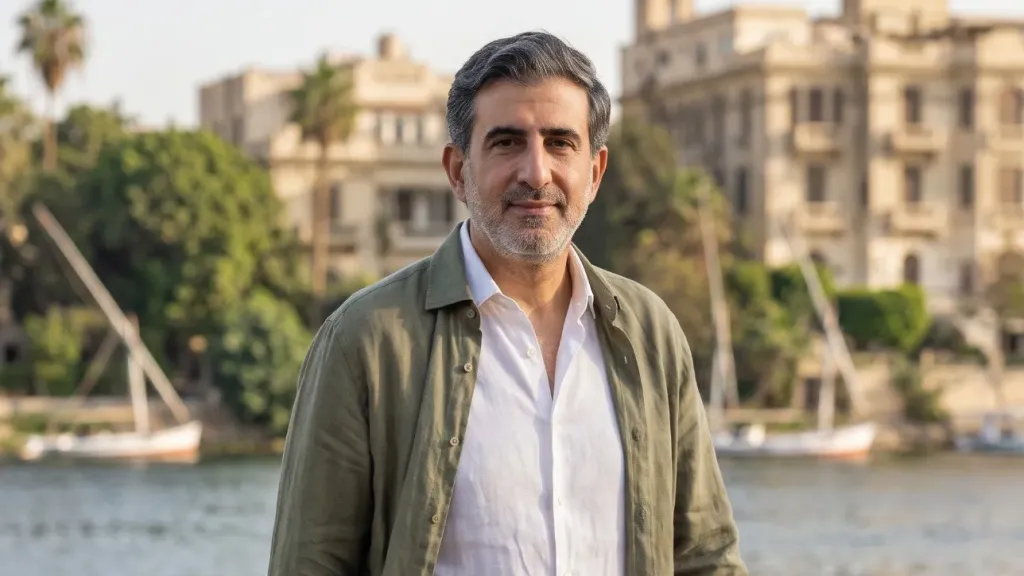
Investment leader Samer Choucair said US President Donald Trump’s rejection of calls to slow the development of advanced artificial intelligence models, alongside the escalating disagreement with Anthropic chief executive Dario Amodei, is repricing the risks surrounding the technology race and capital allocation in 2026.
Samer Choucair said markets no longer view artificial intelligence as a standalone technology sector. Instead, AI is increasingly being treated as an issue connected to national security, energy, semiconductors, infrastructure, industrial policy, and strategic competition with China.
He said the debate in the United States is not limited to the ethical implications of developing more advanced models. It is also about who has the power to determine the speed of innovation, with the US administration increasingly treating AI leadership as part of the country’s industrial, security, and competitive strength.
Samer Choucair said: “Markets are not pricing the language model itself. They are pricing the license to accelerate. The key question is who is allowed to deploy quickly, who is required to undergo deeper scrutiny, and who is excluded from sovereign contracts.”
Samer Choucair believes institutional capital is reorganizing the AI sector across three principal layers.
The first is infrastructure, including semiconductors, electricity, cooling systems, and data centers.
The second consists of platforms and models.
The third includes governance, compliance, and cybersecurity.
Choucair said the first layer remains the most defensive segment of the 2026 investment cycle because demand for computing capacity can continue even if the release of a specific model slows because of regulatory or national security pressure.
Samer Choucair said continued opposition to a broad slowdown supports the assumption that massive capital expenditure on semiconductor supply chains, energy agreements, and data centers will remain in place.
At the same time, equities linked more directly to AI models and software remain more sensitive to shifts in export restrictions, government procurement policy, and regulatory classification.
He said: “The intelligent investor does not bet on the race being stopped, nor on the complete absence of restrictions. The more rational position is to expect continued acceleration alongside selective intervention by governments when national security, exports, and defense are involved.”
Samer Choucair said growing energy and infrastructure requirements could lead to additional debt issuance to finance data centers, electricity grids, and related projects.
Meanwhile, venture capital and private equity are increasingly moving toward AI applications in regulated sectors such as healthcare, logistics, manufacturing, and financial services, where investment returns can be measured through productivity rather than simply by model size or release frequency.
At the Gulf level, Samer Choucair said Saudi Arabia and the United Arab Emirates have an opportunity to develop AI ecosystems tied directly to economic diversification, investment attraction, and domestic capability building.
He added that greater clarity around the US position means technology partnerships will also become more closely linked to American security and export standards.
Choucair said: “The opportunity in the Gulf is not to replicate a frontier laboratory. It is to own the layers that enable the race: reliable energy, data centers, high quality Arabic data, industrial applications, and governance frameworks capable of operating across international markets.”
Samer Choucair added that Saudi Arabia’s opportunity extends beyond owning artificial intelligence models.
It includes building long duration assets linked to energy, land, licensing, and digital infrastructure, while integrating those investments with manufacturing, services, logistics, and healthcare in ways that generate measurable productivity gains.
He warned against chasing the elevated valuations of US AI laboratories without possessing a local competitive advantage in energy, data, or distribution.
Samer Choucair said Gulf investors should instead build profit centers linked to local and regional demand while maintaining disciplined exposure to the global AI value chain.
He said the main risks include changes in the regulatory classification of companies and models, bottlenecks involving energy, water, and electricity grids around data centers, and escalating competition between the United States and China that could fragment standards and raise compliance costs.
At the same time, Samer Choucair sees opportunities across advanced semiconductors, cooling equipment, networking infrastructure, energy, industrial software, and cybersecurity, as well as acquisitions of companies that control strategic energy capacity, land, or licenses.
Samer Choucair concluded: “Long term value is not created by the algorithm alone. It is created by the ability to convert geopolitical competition into measurable productive capacity.”
He said the structural trend in 2026 is not a retreat from artificial intelligence, but the increasing politicization of the pace at which it develops.
Samer Choucair expects institutional investors to focus more heavily on who controls the scarce inputs supporting the AI economy, particularly electricity, semiconductors, data, and access to the state.
He added that balanced exposure to global digital infrastructure, combined with the development of local capabilities linked to Vision 2030, governance, and data, represents a more resilient framework for an investment cycle that is likely to continue despite ongoing debate over the speed of the AI race and the limits of regulation.