
Samer Choucair: Berlin Is Repricing Air Connectivity Between the Gulf and Europe
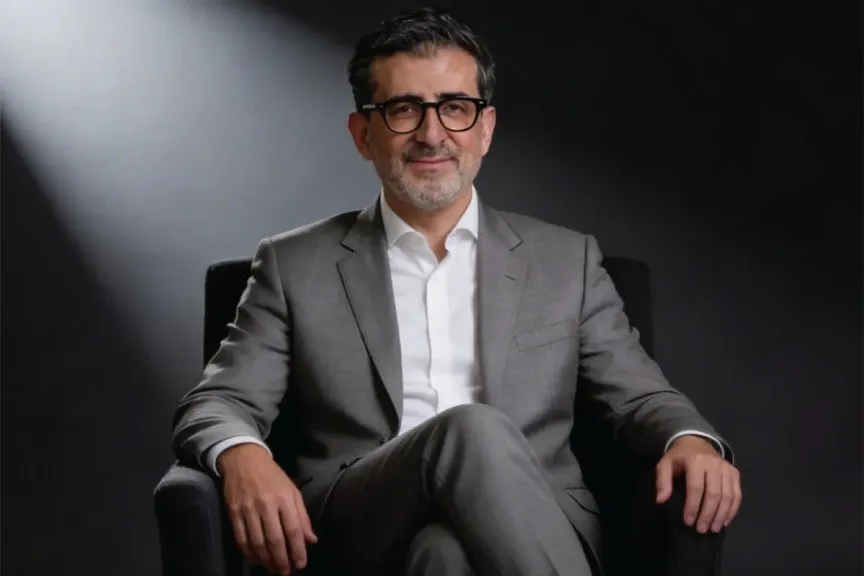
Investment leader Samer Choucair said Germany’s decision to grant UAE carriers access to a fifth German destination, announced around UAE President Sheikh Mohamed bin Zayed Al Nahyan’s September 2026 visit to Berlin and meeting with Chancellor Friedrich Merz, should be viewed as more than the addition of another city to an airline network.
The decision coincided with the UAE announcing approximately €40 billion in additional investment commitments in Germany, on top of an existing investment stock of roughly €34 billion, alongside 29 agreements valued at more than €9 billion.
For Choucair, that combination changes the investment significance of the development. Aviation rights, industrial investment, digital infrastructure, and energy are increasingly becoming interconnected instruments of sovereign economic strategy rather than isolated commercial decisions.
The new arrangement allows Emirates to operate direct flights between Dubai and Berlin at a maximum frequency of seven services per week, without fifth-freedom rights. It effectively relaxes a longstanding bilateral restriction that had limited the airline’s German passenger network to Frankfurt, Munich, Düsseldorf, and Hamburg.
For Samer Choucair, institutional investors should therefore avoid interpreting the development as a standalone aviation deal. It is better understood as part of a broader repricing of Gulf-European connectivity, where landing rights, regulatory permissions, digital infrastructure, and energy capacity are increasingly connected to the allocation of sovereign capital.
Berlin Enters the Emirates Network
Choucair said Emirates currently operates nine daily passenger flights to Germany: three to Frankfurt and two each to Munich, Düsseldorf, and Hamburg, equivalent to 63 weekly passenger services, in addition to regular cargo operations serving Frankfurt.
If Berlin reaches the permitted maximum frequency, the German network could increase to approximately 70 passenger flights per week without requiring Emirates to sacrifice any of its four existing destinations.
The airline’s operating expenditure in Germany reached approximately €348 million in 2024–2025, while it transported roughly 2.3 million passengers and 98,000 tonnes of cargo.
But Samer Choucair said Berlin’s significance lies not simply in the additional number of seats entering the market.
Emirates brings wide-body aircraft and a global connecting network through Dubai that links Germany with destinations across Asia, Africa, and Oceania. Its premium first- and business-class products also mean the economics of the route are potentially connected to corporate travel, executives, skilled professionals, and investment flows rather than tourism alone.
That distinction matters when assessing the route’s long-term value.
The investment case is not merely about how many passengers can fly between Dubai and Berlin. It is about whether Berlin can become another node within a wider network connecting European industrial capital with Gulf finance and high-growth markets across Asia and Africa.
€40 Billion Changes the Investment Equation
According to Samer Choucair, the timing of the aviation decision alongside the UAE investment package substantially increases its economic significance.
The planned investments target areas including industry, advanced technology, artificial intelligence, digital infrastructure, and energy. They also include data-center capacity approaching one gigawatt, approximately €10 billion earmarked for Bavaria, and the establishment of a German-UAE investment council.
Non-oil trade between the two countries reached approximately $15.5 billion in 2025, representing growth of more than 14% compared with 2024, while Germany remained one of the UAE’s most important industrial trading partners in Europe.
For Choucair, investors make a mistake when they separate airport rights from the geopolitical cost of capital.
Opening access to the German capital at the same time that Emirati capital increases its exposure to German industry potentially creates an operational corridor for the movement of capital, executives, skilled workers, goods, technology, and data between a Gulf hub and one of Europe’s largest industrial economies.
The flight therefore becomes one component of a much larger economic network.
The Competition Is for Time, Not Tickets
Samer Choucair said the Dubai-Berlin aviation market is not being created from zero.
Berlin already has Gulf and leisure-oriented connectivity, while Condor and Eurowings provide competitive capacity. Etihad has also deepened its relationship with Condor through a strategic partnership that includes daily Frankfurt-Abu Dhabi services from May 2026 and Berlin-Abu Dhabi services from June 2026.
Emirates’ competitive advantage therefore does not depend on scarcity of flights.
It lies in the scale of its network and its ability to convert Berlin into a feeder point for a much broader global system through Dubai.
Lufthansa has historically opposed broader traffic rights for Gulf carriers because of concerns that connecting passengers could be diverted away from its own hubs. Germany’s response represents a compromise: a fifth German destination can be added, but fifth-freedom rights remain restricted.
Choucair describes this competition as a redistribution of the “right to access time.”
Investors are not ultimately purchasing air kilometers. They are purchasing the ability to reduce the time required for companies, executives, specialists, capital, and commercial relationships to move between Europe, the Gulf, Asia, and Africa.
When connectivity compresses time, it can also reduce friction.
And when friction declines, capital can become more productive.
Capital Follows Infrastructure That Cannot Easily Be Replicated
For Samer Choucair, the broader investment package could ultimately matter more than the airline route itself.
Data centers approaching one gigawatt of capacity would generate substantial demand for electricity, industrial real estate, fiber connectivity, cooling systems, grid infrastructure, and specialized equipment.
Investment in Bavaria could deepen Emirati capital exposure to automobiles, machinery, semiconductors, and advanced manufacturing.
Energy, defense, and hydrogen investments could add another layer of long-duration supply agreements and financing requirements, transforming the UAE-German relationship from a flow of passengers into an ecosystem of real assets.
This is where Choucair sees the deeper institutional investment opportunity.
Air connectivity creates movement. Infrastructure determines whether that movement can scale.
The development also reinforces Dubai’s position as a bridge between Europe and Asia at the same time that Saudi Arabia is expanding its own aviation and logistics ambitions under Vision 2030.
Choucair does not view the competition between Riyadh and Dubai as necessarily zero-sum.
Instead, the expansion of both hubs demonstrates that landing rights, airport capacity, aviation networks, logistics infrastructure, and connectivity are becoming strategic economic assets across the Gulf.
Where the Opportunities and Risks Sit
Samer Choucair sees potential opportunities across airports, ground handling, cargo, hospitality, German data centers, power infrastructure, and euro-denominated financing if the 29 agreements ultimately translate into actual capital expenditure over investment horizons of five to 15 years.
But the opportunity comes with important execution risks.
The final operating schedule has not yet been fully established, and service could potentially be delayed into late 2026 or 2027. The seven-flight weekly ceiling constrains initial capacity, while the absence of fifth-freedom rights limits network flexibility.
European competition policy represents another consideration, as does weakness in parts of Germany’s industrial economy.
Competition from Condor, Eurowings, Etihad, and other carriers could also put pressure on seat economics and yields.
For Choucair, however, judging the route solely by its first-year load factor would miss the strategic point.
The more important question is whether a daily service can generate recurring flows of corporate travelers, skilled professionals, investment relationships, cargo, and commercial contracts.
That is the difference between a successful flight and a valuable network.
How Institutional Investors Could Read the Deal
Choucair said sovereign wealth funds and family offices investing between the Gulf and Europe are likely to interpret the development as a system-level signal rather than a sector-specific transaction.
Germany’s willingness to accommodate deeper Gulf connectivity arrives at a time when the country requires substantial investment across industry, energy, and digital infrastructure.
For investors, that combination may be more important than the direct economics of an additional airline route.
The immediate public-equity impact on Emirates itself is limited because the airline is not publicly listed in the same way as major European carriers. The effects could instead emerge indirectly through companies such as Lufthansa, airports, aviation-service providers, aircraft lessors, logistics businesses, and infrastructure operators.
Samer Choucair stressed that aviation rights are determined by sovereign policy, but investment returns remain governed by capital economics.
Institutional investors should therefore resist paying a full valuation premium for a geopolitical narrative unless that narrative ultimately produces measurable cash flow.
The Strategic Outlook
For Samer Choucair, the base-case scenario would see Berlin served daily between late 2026 and 2027 with wide-body aircraft while the current restrictions remain in place.
The upside scenario becomes considerably more interesting if the UAE’s investment commitments translate into actual spending on German data centers, energy infrastructure, advanced manufacturing, and other strategic industries.
Under that scenario, the airline route would cease to be merely a transportation service and become one component of a broader economic corridor connecting Gulf capital with German industrial capacity.
The downside scenario is equally clear. Delayed implementation, weaker-than-expected demand, regulatory tightening, or disappointing investment execution could leave Berlin with greater political symbolism than financial impact.
That is why Choucair believes institutional investors must distinguish between the announcement and the asset.
As Samer Choucair puts it: “The flight is an event, but the network is the asset.”
Institutional capital will ultimately look beyond the aircraft itself toward the infrastructure that makes movement between Germany and the Gulf more frequent, reliable, and economically efficient: landing rights, airport capacity, electricity, data infrastructure, cargo networks, and ground services.
Choucair summarizes the investment logic in another way: “Whoever secures the right before the schedule owns the option before the price.”
But the value of that option will ultimately depend on governance and execution.
If investment commitments become operating assets, if connectivity produces recurring corporate and commercial flows, and if infrastructure generates measurable cash returns, Berlin could become part of a broader repricing of economic connectivity between the Gulf and Europe.
If not, the announcement risks remaining what institutional investors are trained to discount: a political headline without a corresponding cash flow.