
Samer Choucair: Potential Sadara Exit Reprices Risk Across Gulf Petrochemicals
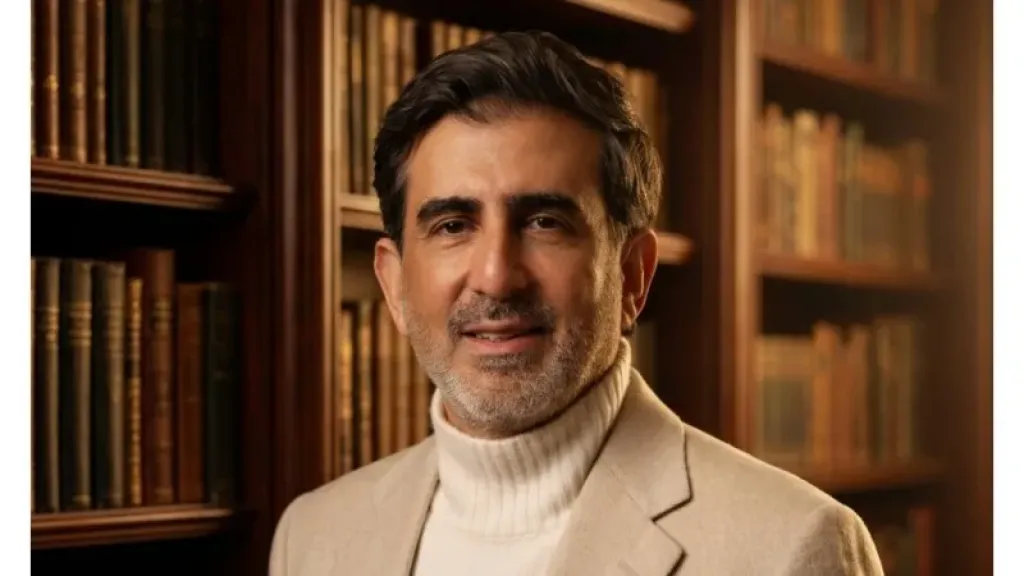
Investment leader Samer Choucair said Dow’s consideration of a potential exit from its 35% stake in Sadara Chemical Company, its joint venture with Saudi Aramco, reflects a broader shift in how investors are valuing capital-intensive industrial assets across the Gulf.
The potential divestment comes against the backdrop of a prolonged downturn in global chemicals markets and growing pressure on publicly listed industrial companies to demonstrate greater discipline in capital allocation.
Samer Choucair said the development, reported by Bloomberg citing people familiar with the matter, has not yet resulted in a completed transaction. Nevertheless, it raises a much larger question for institutional investors: how should Gulf industrial assets with enormous capital requirements be valued when a weak global demand cycle intersects with Saudi Arabia’s long-term industrial transformation agenda?
Sadara was established in 2011 and operates 26 manufacturing units in Jubail Industrial City, with annual production capacity exceeding 3 million metric tons.
For Aramco, the complex remains strategically connected to the long-term objective of converting hydrocarbons into higher-value products and deepening the Kingdom’s downstream industrial base.
For Dow, however, the investment has increasingly become a capital-allocation question.
That difference illustrates what Choucair sees as one of the defining tensions in today’s petrochemical market: the same industrial asset can carry very different economic value depending on who owns it and what that owner is attempting to optimize.
Scale Is No Longer Enough
Financial disclosures showed Dow carrying a negative investment balance of approximately $793 million in Sadara as of June 30, while the company stopped recognizing additional equity-method losses from the venture in its income statement beginning in the first quarter of 2026.
Dow has also provided a guarantee on a $500 million revolving credit facility intended to cover potential funding shortfalls, with Sadara drawing approximately $80 million from that facility during the fourth quarter of 2025.
For Samer Choucair, these figures demonstrate why institutional investors are increasingly distinguishing between industrial scale and distributable economic returns.
“What is happening is not simply the sale of a distressed asset,” Choucair said. “It is a repricing of the advantage of scale when scale does not translate into distributable free returns.”
That distinction becomes particularly important when financing costs remain elevated and petrochemical margins are under pressure.
A government may rationally regard an industrial complex as strategically valuable because it creates employment, supports downstream industries, strengthens exports, attracts technology, and increases the value captured from domestic hydrocarbons.
A listed corporation, however, must also demonstrate that the same asset generates an acceptable return on the capital committed to it.
“Institutional investors increasingly distinguish between a strategic asset for a state and a return-generating asset inside the portfolio of a publicly listed company,” Samer Choucair said.
Aramco Could Deepen Its Industrial Ownership
A completed transaction could potentially create an opportunity for Aramco, which currently owns 65% of Sadara, to increase its stake toward full or near-full control.
Such a move could align with Saudi Arabia’s broader strategy of deepening integration across oil, refining, and chemicals while increasing domestic ownership of industrial capabilities, technology, marketing networks, and export infrastructure.
Choucair cautioned, however, that Aramco should not automatically be assumed to be the eventual buyer.
Dow’s stake could potentially attract strategic industrial investors or financial sponsors seeking exposure to an established petrochemical complex with significant production capacity, access to competitive feedstock, and a strategically important export location.
Any valuation would nevertheless have to reflect Sadara’s accumulated losses, operating volatility, financing requirements, feedstock economics, shipping conditions, and demand across major end markets in Asia and Europe.
For Choucair, a change in the foreign partner would therefore not necessarily indicate declining investor confidence in Saudi Arabia.
Instead, it could mark the evolution of the project from an initial technology-driven partnership model toward a structure involving deeper Saudi ownership after the physical industrial platform has already been built and established.
Markets Are Rewarding Capital Discipline
Samer Choucair said the initial positive reaction in Dow shares, which rose by roughly 3% to 5% in early premarket indications, illustrates how investors can reward the reduction of future capital commitments even when the asset being reconsidered remains strategically significant.
Choucair described that reaction as “a vote on the quality of capital, not the quality of the plant.”
Sadara remains an industrial complex that would be extremely difficult to reproduce today at the same cost and within the same development timeframe.
But replacement value and shareholder value are not necessarily the same thing.
For a publicly traded company facing pressure to improve returns, reduce costs, simplify its portfolio, and cut its workforce by approximately 13%, maintaining exposure to a capital-intensive asset with weak near-term returns becomes increasingly difficult to justify.
That is why Choucair cautioned against reducing the development to a simple narrative of Western capital retreating while Gulf capital expands.
The deeper trend is a redistribution of industrial risk between corporate balance sheets and sovereign-backed capital.
From Foundational Partnerships to Return Engineering
For Samer Choucair, the potential Dow exit represents something larger than a single shareholder reconsidering a single petrochemical investment.
Major Gulf industrial projects are entering a more mature phase in which ownership structures, financing models, and capital-allocation priorities are being reassessed.
The strategic question has changed.
The first phase asked whether Gulf economies could build globally competitive industrial platforms at enormous scale.
The next phase asks who is best positioned to own those assets, finance their next investment cycle, absorb commodity volatility, and extract sustainable returns from them.
“The question is no longer, ‘Can we build it?’” Choucair said. “The question is, ‘Who is best positioned to finance the next cycle of returns?’”
That shift matters for institutional investors because ownership itself becomes part of valuation.
An asset capable of producing strategic benefits over several decades may fit naturally inside a sovereign-backed industrial strategy even when it produces insufficient near-term returns for a listed multinational under pressure from shareholders.
Conversely, a strategic asset cannot indefinitely escape the economics of capital simply because it is strategically important.
For Samer Choucair, that tension is what makes Sadara an important indicator for the next stage of Gulf industrial development.
Capital is not necessarily leaving the Saudi economy.
It is being repositioned within it.
And for long-term investors, the potential transaction should be read as a test of the price of industrial control in an economy attempting to transform its feedstock advantage into a sustainable global competitive advantage.