
Samer Choucair: Mature Institutional Investing Measures Quantifiable Productivity, Not the Most Exciting Narrative
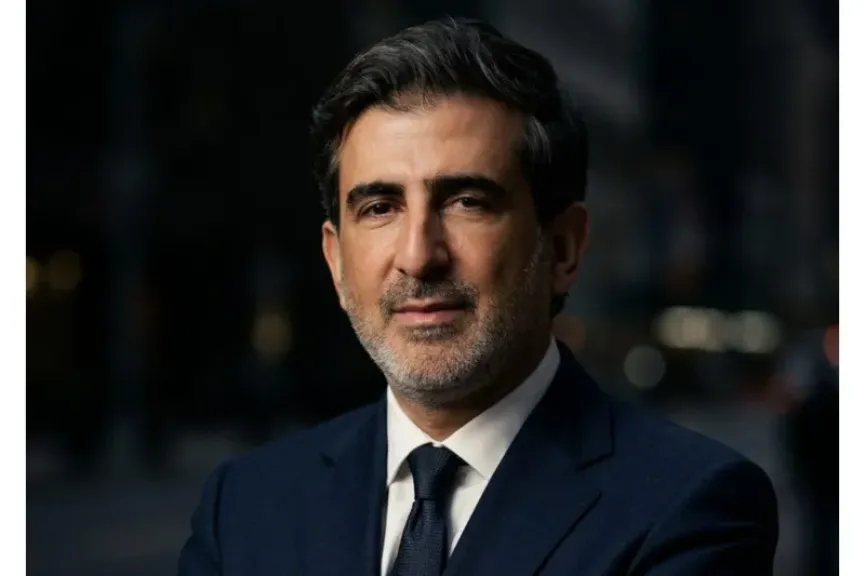
Investment leader Samer Choucair said the renewed debate over artificial intelligence risk is contributing to a repricing of institutional capital across markets in 2026.
The investment consequence, he argued, is not necessarily a retreat from the enormous capital expenditure flowing into computing infrastructure. Instead, investors are reassessing the cost of capital, governance standards, and the distribution of risk across private equity, public markets, and investments linked to technological sovereignty.
Samer Choucair said the wide range of estimates surrounding catastrophic AI scenarios has itself become relevant to markets. Some estimates remain extremely low, others fall into the single digits, while certain researchers inside advanced AI laboratories have assigned probabilities exceeding 10% over the coming decade.
For investors, however, the central question is increasingly practical.
They are not simply asking whether artificial intelligence will remain a powerful engine of economic growth. They are asking which layer of the AI value chain can absorb regulatory, valuation, and governance risks at the lowest cost to long-term returns.
“Institutional investors do not manage the probability of the end of the world as a line item in a discounted cash-flow model,” Choucair said. “They manage the probability of sudden regulatory tightening, slower enterprise adoption, and rising compliance costs. Markets punish uncertainty before they punish catastrophe.”
AI Risk Is Becoming a Cost-of-Capital Question
According to Samer Choucair, markets in 2026 continue to demonstrate strong demand for semiconductors, computing capacity, and energy infrastructure, while investors are applying greater scrutiny to software-company margins and becoming more sensitive to governance and safety standards surrounding public offerings.
Capital is also increasingly moving toward infrastructure, energy, cybersecurity, and other enabling layers of the AI economy rather than concentrating entirely on individual language models.
That shift reflects a broader concern about the relationship between capital expenditure and monetization.
The AI industry can continue investing hundreds of billions of dollars in computing infrastructure, but ultimately institutional investors will need evidence that this spending translates into durable enterprise revenue, productivity gains, and sustainable cash flow.
If capital expenditure continues to rise without sufficient economic returns from enterprise adoption, the sector could face a prolonged valuation adjustment even if demand for AI technology itself continues growing.
For Choucair, this is why the risk debate should not be reduced to a binary argument between AI optimism and AI pessimism.
The more relevant investment question is where risk sits within the value chain — and who is being paid adequately to carry it.
The Gulf Is Buying the Physical Layer of AI
In the Gulf, and particularly in Saudi Arabia, Samer Choucair sees artificial intelligence increasingly as a technological-sovereignty project rather than simply a narrative investment.
Saudi Vision 2030, the Public Investment Fund, and the broader national investment strategy are supporting efforts to develop domestic computing capacity, data centers, semiconductor partnerships, cloud infrastructure, and AI platforms, alongside the development of entities such as HUMAIN.
That strategy changes the investment equation.
Instead of relying exclusively on ownership of whichever AI model currently commands the strongest market narrative, Gulf investors can allocate capital toward the physical infrastructure required by a broad range of models and applications.
“Gulf sovereign wealth funds are buying the physical layer of artificial intelligence: energy, data centers, connectivity, and data sovereignty,” Choucair said. “Those assets are less exposed to volatility in the model narrative and more directly connected to structural demand.”
“Technological sovereignty is not a slogan. It is capital allocation toward assets that are difficult to relocate and revenues that can be contracted.”
Investors Are Separating the AI Stack
Choucair said institutional investors are increasingly separating the AI economy into distinct investment layers.
At the foundation are semiconductors and computing equipment. Above that sits energy and physical infrastructure, including data centers, electricity generation, cooling systems, networks, and connectivity.
The next layer includes foundation models and technology platforms, where competition can be intense and technological leadership can change quickly.
The final layer includes applications, governance, compliance, cybersecurity, model evaluation, and specialized software designed for specific industries.
For investors, the risk-return profile can differ dramatically across these layers.
Chipmakers may benefit from structural computing demand but remain exposed to supply-chain concentration, technological cycles, and geopolitical restrictions. Data centers can offer contracted revenues but require enormous capital expenditure and reliable access to electricity.
Model developers may generate exceptional growth but face high computing costs, rapid technological competition, and uncertain long-term pricing power.
Applications, meanwhile, could eventually capture substantial economic value if they demonstrate measurable improvements in sectors such as healthcare, finance, logistics, government services, and banking.
The opportunity therefore extends far beyond identifying which company has the most powerful AI model.
It includes model security, evaluation and monitoring, cooling, networking, cybersecurity, sector-specific software, and the infrastructure required to deploy AI safely at institutional scale.
Do Not Confuse Risk With a Reason to Exit
Samer Choucair cautioned investors against interpreting the growing discussion around AI risk as a reason to abandon the sector altogether.
“A disorderly exit from artificial intelligence in 2026 would be like abandoning electricity because the grid can fail,” Choucair said. “The task is to separate the assets: which ones generate cash flow linked to actual usage, and which ones survive on expectations that cannot yet be verified.”
That distinction is becoming increasingly important as valuations across the AI ecosystem diverge.
Companies able to demonstrate recurring enterprise demand, contractual revenue, infrastructure utilization, productivity improvements, or measurable cost savings may deserve fundamentally different valuation treatment from businesses whose economics remain dependent primarily on expectations of future technological dominance.
Governance can also become part of that valuation gap.
Companies capable of demonstrating robust model security, regulatory compliance, data governance, and transparent risk management could eventually benefit from a lower cost of capital than competitors whose growth depends on operating in regulatory gray areas.
In that sense, AI safety is no longer solely a technological or ethical question.
It is becoming a financial variable.
From Computing Power to Economic Productivity
For Samer Choucair, artificial intelligence will remain a structural allocation theme for institutional investors, but the framework for evaluating that exposure is becoming more sophisticated.
Safety, governance, energy availability, cybersecurity, and data sovereignty increasingly need to be incorporated directly into investment models.
The ultimate test is whether computing expenditure can be converted into measurable economic productivity.
That means investors should look beyond benchmark performance, model size, and headline announcements toward indicators such as enterprise adoption, revenue per unit of computing capacity, operating margins, productivity improvements, infrastructure utilization, and the durability of customer demand.
Saudi Arabia and the wider Gulf can potentially strengthen their position by continuing to invest simultaneously in infrastructure, skills, governance, energy, and domestic technological capabilities while preserving portfolio flexibility against volatility in U.S. equity markets.
“The mature institutional investor measures the ability to turn computing into quantifiable productivity,” Samer Choucair said. “Not the ability to produce the most exciting narrative.”
That distinction may ultimately determine where the durable value of the AI investment cycle accumulates.
The winners will not necessarily be those who generate the greatest excitement around artificial intelligence, but those who can demonstrate that every additional unit of computing, energy, and capital produces economic value that investors can actually measure.