
Samer Choucair: The Next Shock Will Not Look Like 9/11 Markets Are Entering a New Era of Risk
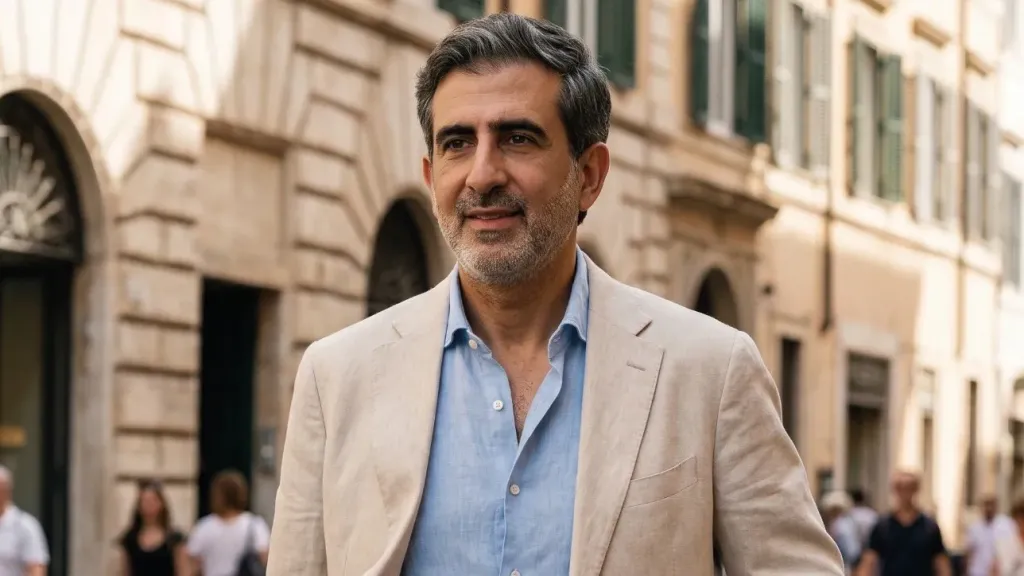
Investment leader Samer Choucair said warnings from Sir Ken McCallum, Director General of Britain’s MI5, around the 25th anniversary of the September 11 attacks highlight a fundamental shift in the nature of the risks confronting markets and businesses.
Choucair said the next major shock may look very different from those of the past, forcing investors to rethink traditional approaches to risk management, operational resilience, and capital protection.
According to Choucair, McCallum has described the security environment of 2026 as markedly different from that of 2001. The threat of terrorism remains, but it now exists alongside risks associated with capable state actors, including sabotage, cyberattacks, and covert interference. At the same time, critical sectors once regarded primarily as government responsibilities are increasingly operated or controlled by private companies.
Samer Choucair said this transformation is unfolding alongside an accelerating global defense-spending cycle. Global military expenditure reached approximately $2.63 trillion in 2025, compared with $2.48 trillion in 2024, representing a 2.5% increase in real terms. Europe’s share of global military expenditure has also risen to more than 21%, compared with roughly 17% in 2022.
Meanwhile, NATO members have committed to increasing defense and security-related spending to 5% of GDP by 2035, including 3.5% for core defense requirements and up to 1.5% for security, infrastructure, and resilience.
Choucair said security investment can no longer be treated as a discretionary expense that companies can postpone. It is increasingly becoming a factor in the cost of capital, insurance, financing, and business continuity, particularly as economies become more dependent on digital infrastructure, energy systems, ports, communications networks, and payment platforms.
Artificial intelligence is adding another layer of both opportunity and risk. As AI becomes integrated into defensive capabilities as well as offensive operations, demand is likely to increase for cybersecurity, industrial control-system protection, threat monitoring, and technologies designed to secure critical infrastructure.
For investors, Choucair said this means cybersecurity is evolving from a conventional technology theme into an increasingly important component of national security and economic resilience.
The Gulf Opportunity
Samer Choucair said the changing security environment could also create significant industrial and investment opportunities across the Gulf, particularly in Saudi Arabia.
The Kingdom allocated SAR 240 billion to the military sector in its 2026 budget, while the localization rate of military spending had reached 24.89% by the end of 2024, with a target of exceeding 50% by 2030.
For investors, this localization drive could extend the opportunity beyond conventional defense contractors. The broader investment ecosystem may increasingly include cybersecurity, advanced manufacturing, artificial intelligence, communications, autonomous systems, critical infrastructure, and dual-use technologies with both civilian and defense applications.
The significance of this shift, according to Choucair, lies in the creation of domestic capabilities rather than simply increasing defense expenditure. Capital invested in local manufacturing, technology transfer, cybersecurity, and resilient infrastructure can potentially generate economic value beyond the immediate security requirement.
Resilience Becomes Part of Asset Value
Samer Choucair concluded that investors cannot reliably predict the form of the next major geopolitical or security shock. They can, however, construct portfolios and businesses that are better equipped to absorb it.
That requires greater diversification of risk alongside strategic exposure to cybersecurity, critical infrastructure, defense industries, and dual-use technologies.
The investment question is therefore changing. It is no longer simply about identifying which assets can generate the highest return under normal conditions, but increasingly about determining which businesses and infrastructure can continue operating when normal conditions disappear.
For Samer Choucair, that distinction could become increasingly important in the new global risk environment.
Resilience is no longer an additional cost. It is becoming part of the value of the asset itself.