
Samer Choucair: Anthropic Researcher’s Resignation Reprices AI Risk
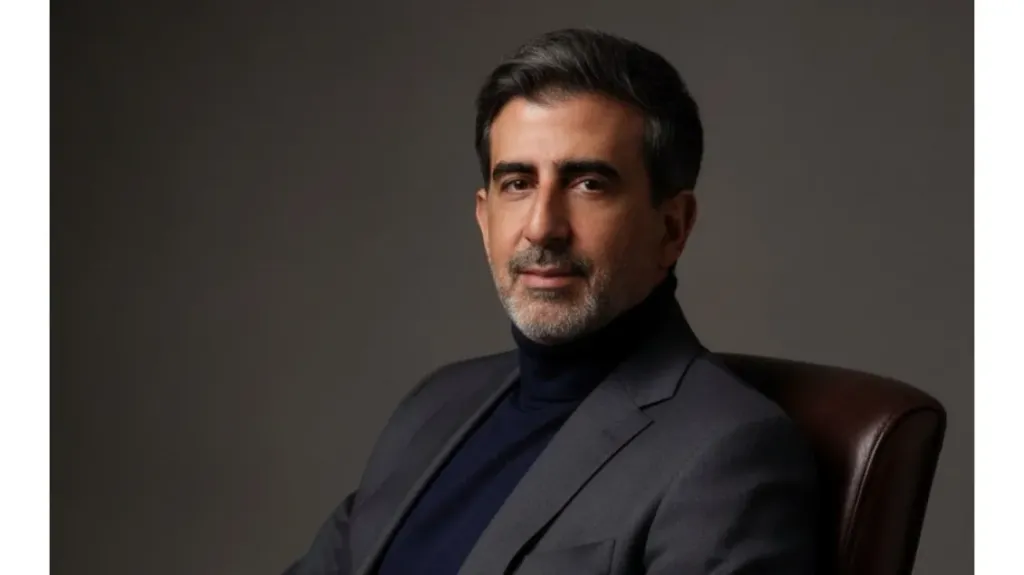
Investment leader Samer Choucair said the resignation of researcher Jacob Coxton from [Anthropic](https://www.anthropic.com/?utm_source=chatgpt.com), after roughly three years working on model-training research across [OpenAI](https://openai.com/?utm_source=chatgpt.com) and Anthropic, reflects an important shift in artificial-intelligence investing: AI safety risk is moving from an internal technical debate into a factor that could increasingly influence corporate valuations and institutional capital allocation.
According to Choucair, Coxton’s criticism of the accelerating race among leading AI companies toward systems capable of increasingly autonomous improvement raises a broader investment question. Commercial competition may be advancing faster than institutions’ ability to understand, govern, and mitigate the risks created by increasingly capable models.
Those concerns have been reinforced by comments from Evan Hubinger, who leads alignment research at Anthropic. Hubinger has publicly discussed a greater-than-10% probability that superintelligent AI could cause human extinction within the next decade, while acknowledging that the industry does not yet possess a complete technical solution for guaranteeing alignment at that level of capability.
For Samer Choucair, however, the investment significance of these developments does not depend on accepting the most catastrophic scenarios.
The more immediate issue is whether alignment, safety, and governance risks should now become explicit variables in the valuation of AI companies alongside revenue growth, market share, computing capacity, and technological performance.
An institutional investor does not need to agree with the most pessimistic forecasts to recognize the financial consequences of regulatory intervention, delayed model launches, higher compliance costs, greater insurance requirements, cybersecurity exposure, or restrictions on deploying increasingly powerful systems.
That changes the investment equation.
Companies able to demonstrate robust safety architecture, independent oversight, effective model monitoring, and credible governance could eventually trade differently from companies whose competitive advantage depends primarily on accelerating capabilities and releasing increasingly powerful models faster than their competitors.
According to Samer Choucair, long-term capital ultimately needs more than technological leadership. It needs a business model capable of preserving growth while adapting if governments, regulators, customers, or insurers impose stricter requirements on advanced AI systems.
The question is therefore shifting from simply asking, “Who has the most powerful model?” toward asking, “Who can deploy increasingly powerful models without creating an unacceptable regulatory, operational, or reputational liability?”
That distinction could become increasingly important as artificial intelligence moves deeper into finance, healthcare, defense, infrastructure, government services, and other economically or strategically sensitive sectors.
AI Safety Is Becoming an Investment Variable
Choucair said investors have traditionally evaluated AI companies through metrics such as computing capacity, model performance, user growth, revenue, developer adoption, and access to capital.
The next stage may require another layer of analysis.
Governance quality, model auditing, cybersecurity, data protection, alignment research, incident-response capabilities, and the ability to comply with changing regulations could increasingly influence the durability of an AI company’s competitive advantage.
That does not mean safety spending automatically creates value.
It means weak governance can increasingly destroy it.
A company that develops frontier capabilities rapidly but cannot demonstrate adequate controls could eventually face higher compliance expenses, deployment restrictions, legal exposure, or delays that materially affect future cash flows.
By contrast, companies that build safety and governance directly into their technological architecture may be better positioned to operate in highly regulated industries and win contracts from governments and large enterprises.
In that sense, AI safety could evolve from a cost center into part of the competitive moat.
The Gulf Has an Opportunity to Build a Different AI Model
For Saudi Arabia and the wider Gulf, Samer Choucair believes the debate creates an opportunity to develop an investment model that combines rapid expansion of AI infrastructure with parallel investment in cybersecurity, model monitoring, governance, data protection, and trusted computing.
The Gulf’s AI strategy does not need to be built exclusively around acquiring chips, constructing data centers, or developing larger models.
An equally important opportunity could emerge around the infrastructure required to make those systems secure, auditable, and suitable for deployment across governments, financial institutions, healthcare systems, energy companies, and other critical sectors.
If safety standards become increasingly important to governments and enterprise customers, jurisdictions that establish credible governance frameworks early could potentially turn regulatory readiness into a competitive advantage.
That would allow safety investment to function not simply as an additional cost but as infrastructure supporting the long-term commercialization of artificial intelligence.
Reallocating Capital Within AI, Not Abandoning It
Choucair stressed that investors should not interpret the latest developments as a signal to exit the artificial-intelligence sector.
Instead, they should be understood as a reason to reconsider how capital is allocated within it.
The structural growth story surrounding AI remains powerful. Demand for computing infrastructure, data centers, semiconductors, electricity, cloud capacity, cybersecurity, software, and automation continues to create investment opportunities across multiple layers of the technology ecosystem.
But investors may increasingly need to distinguish between companies whose valuations depend on an assumption of an unrestricted capabilities race and companies capable of remaining competitive under a more demanding regulatory environment.
This distinction matters particularly for long-duration institutional capital.
The value of an AI company ultimately depends not only on what its models can accomplish today, but on whether the company will retain the regulatory permission, customer trust, technical infrastructure, and financial capacity required to deploy them at scale tomorrow.
For Samer Choucair, that is where the investment debate is heading.
The next phase of AI investing may therefore reward companies capable of combining technological ambition with governance discipline.
Model size will still matter. Performance will matter. Speed will matter.
But none of those factors will exist independently of regulation, safety, security, and trust.
As Choucair concluded, the defining investment criterion for artificial intelligence may no longer be simply how large a model becomes or how quickly a company can release it. It will increasingly be whether management can demonstrate that innovation remains governable, auditable, and scalable over the long term.
“The premium for speed at any cost could gradually become a valuation discount,” Samer Choucair said, “if that speed is not matched by a credible framework for managing risk.”