
Samer Choucair: Saudi Billions Are Shifting From Building Towers to Operating and Maintaining Them
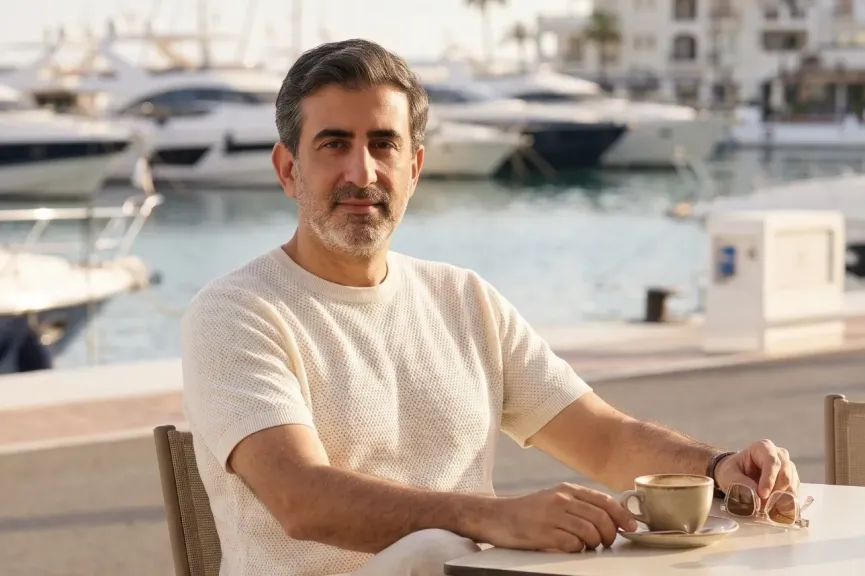
Investment leader Samer Choucair said the Saudi economy is entering a new phase in which value creation is moving beyond the construction of physical assets toward maximizing their long-term economic value through operations, maintenance, and lifecycle management.
Choucair said this transition is opening an increasingly important investment opportunity in facilities management and technical services, including sectors such as elevators, escalators, building systems, maintenance, safety, and energy efficiency.
The Saudi elevator and escalator market was estimated at approximately $1.5 billion in 2024 and is projected to reach around $2.2 billion by 2033, according to sector research estimates, supported by continued urban expansion and major projects linked to Saudi Vision 2030.
Construction activity itself also remains strong. Construction contract awards in the Kingdom rose by roughly 82% year on year in the first half of 2026, reaching close to $32 billion, while participation by developers and entities outside the Public Investment Fund continued to broaden. That diversification suggests that project demand is becoming less concentrated and more widely distributed across the economy.
For Samer Choucair, the investment implication is increasingly clear: every new tower, hotel, residential development, transport facility, or commercial complex creates a recurring downstream market for maintenance, modernization, facilities management, safety systems, and energy optimization.
“The investment value of an asset does not end when the tower, hotel, or residential complex is delivered,” Choucair said. “In many cases, that is when the real recurring economics begin.”
As Saudi Arabia’s installed asset base expands, the opportunity shifts progressively from one-off construction revenues toward long-duration service contracts and recurring cash flows.
Choucair said the broader economic environment supports this transition. Saudi Arabia’s non-oil economy grew by 4.9% in 2025 and accounted for around 55% of real GDP, while the Ministry of Finance expects real GDP growth of approximately 4.6% in 2026.
Tourism is creating an additional layer of operational demand. Saudi Arabia recorded approximately 123 million domestic and international tourists in 2025, with tourism spending reaching roughly SAR 304 billion.
That expansion has implications well beyond hotels and airlines. More visitors require more hospitality assets, retail space, transport facilities, mixed-use developments, entertainment venues, and residential infrastructure. Each new asset creates years of demand for servicing, maintenance, technical inspection, modernization, and operational management.
Samer Choucair said this is why investors should increasingly evaluate Saudi Arabia’s infrastructure story not only through the lens of capital expenditure, but also through the operating expenditure that follows.
The initial construction cycle may generate large contracts, but recurring maintenance and facilities-management contracts can offer greater revenue visibility and, in some cases, more resilient margins over time.
Technical workforce localization is also becoming a direct investment variable. Saudi Arabia began implementing a 30% localization requirement across 46 engineering professions in the private sector from June 30, 2026, alongside specific professional qualification requirements.
Choucair said this creates both a challenge and an opportunity. Companies that can build qualified local engineering teams, invest in training, and combine technical expertise with digital monitoring systems may be better positioned to win long-term contracts and defend margins.
The competitive advantage could become even stronger as facilities management becomes increasingly digitized. Predictive maintenance, remote monitoring, sensor-based inspection, automated fault detection, and energy-management systems can transform maintenance from a reactive service into a data-driven recurring business.
That is particularly relevant in sectors such as elevators and escalators, where safety, uptime, and preventive maintenance directly affect building operations and user experience.
For investors, the shift also changes the type of companies that may benefit from Saudi Arabia’s development cycle. The strongest opportunities may not always lie with contractors that win the largest construction packages, but with businesses capable of remaining attached to an asset for ten, fifteen, or twenty years after completion.
Those companies can potentially build recurring revenue through maintenance agreements, modernization programs, software subscriptions, spare parts, technical inspections, and energy-efficiency services.
Samer Choucair concluded that the next Saudi investment cycle will not be defined only by financing what gets built. Increasingly, capital will also seek ownership of the services required to preserve the value, performance, and usability of those assets over their full operating lives.
“Saudi Arabia’s next investment cycle will not simply be about who finances the buildings,” Samer Choucair said. “It will increasingly be about who operates them, maintains them, digitizes them, and protects their value over time.”
Companies able to combine long-term contracts, digital capabilities, and qualified technical talent may therefore develop a more durable competitive advantage than businesses dependent solely on the construction cycle.