
Samer Choucair: The Cost of Waiting in 2026 Markets Is Greater Than Price Volatility
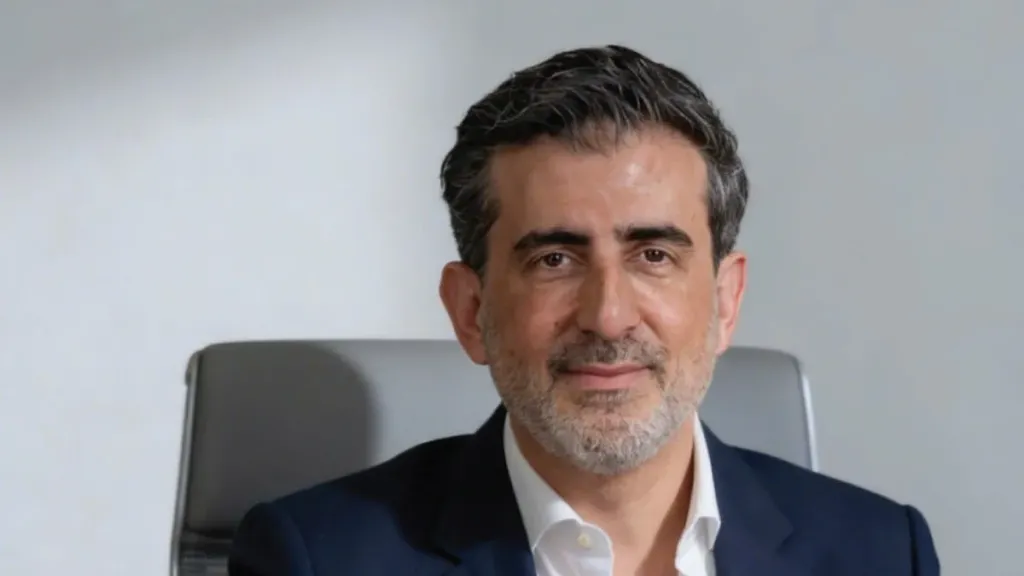
Investment leader Samer Choucair said the investment environment in 2026 is forcing institutions, sovereign wealth funds, and family offices to reconsider the cost of keeping capital outside productive assets.
Elevated interest rates and attractive returns on term deposits may justify caution over the short term, Choucair said, but turning precautionary liquidity into a permanent strategy can ultimately cost investors years of compounded returns.
According to Samer Choucair, the investment question is no longer simply where capital should be allocated. It increasingly involves understanding the economic cost of postponing that allocation.
“Waiting is priced on the balance sheet as if it were a safe asset,” Choucair said. “In reality, it is an invisible liability that compounds over time.”
The Hidden Cost of Delaying Investment
Choucair said compound returns make the cost of postponement increasingly significant as the investment horizon becomes longer.
An investor who delays deploying capital for five or ten years does not simply lose the returns that could have been earned during that period. The investor also loses the returns that those unrealized gains could themselves have generated.
This creates an important distinction between visible market volatility and invisible opportunity cost.
Market losses appear immediately in portfolio valuations. The cost of remaining underinvested, by contrast, may remain largely invisible for years before becoming apparent when the portfolio approaches its target date.
For institutional investors with long-duration liabilities, Choucair said this difference can become particularly important because time itself is one of the portfolio’s most valuable assets.
Saudi Arabia and the Opportunity Cost of Cash
Samer Choucair said the issue is especially relevant across Saudi Arabia and the Gulf, where relatively high interest rates have kept deposits and short-duration instruments attractive while Vision 2030 continues to expand the non-oil economy and create investable opportunities across new sectors.
Cash can therefore appear unusually competitive.
But Choucair cautioned against confusing an attractive short-term yield with a complete long-term investment strategy.
Saudi Arabia’s next phase of economic transformation is increasingly focused on capital efficiency, value creation, and greater private-sector participation after years in which substantial capital was committed to establishing new industries, projects, and economic ecosystems.
That evolution means future opportunities may become more selective and potentially less dependent on direct government spending.
“The second phase of Saudi Arabia’s transformation does not reward idle capital,” Samer Choucair said. “It rewards capital that arrives early in ecosystems whose priorities are being reshaped.”
He pointed to tourism, entertainment, urban development, advanced manufacturing, logistics, energy, water, digital infrastructure, healthcare, and the broader digital economy as areas where long-duration capital could participate in structural economic transformation.
Cash Has a Function — But It Is Not a Permanent Substitute for Productive Assets
Choucair said lower inflation in Saudi Arabia reduces some of the pressure on the purchasing power of cash compared with economies experiencing significantly higher inflation.
That does not eliminate opportunity cost.
Cash and short-duration instruments can be appropriate for near-term liabilities, working-capital requirements, emergency reserves, and capital awaiting a defined deployment opportunity.
But Choucair said they should not automatically be treated as permanent substitutes for productive assets capable of generating earnings, cash flow, and long-term capital appreciation.
The institutional challenge is therefore not to eliminate liquidity, but to determine how much liquidity has a genuine economic purpose and how much represents delayed decision-making.
Risk Management Versus Investment Procrastination
Samer Choucair distinguishes between two fundamentally different forms of waiting.
“Waiting for missing information that can be resolved through analysis is risk management,” Choucair said. “Waiting for a feeling of safety that will never become complete is investment procrastination disguised as caution.”
That distinction becomes particularly important during periods of elevated uncertainty.
Investors frequently delay deployment because they expect a more attractive entry point, greater macroeconomic clarity, lower interest rates, reduced geopolitical tension, or more stable equity valuations.
But perfect conditions rarely arrive simultaneously.
Choucair said institutional investors can reduce timing risk through gradual deployment and disciplined rebalancing rather than attempting to identify the precise market bottom or top.
This approach allows investors to establish defined exposure to productive assets while reviewing opportunity cost with the same discipline used to monitor market losses.
The Risk of Missing the Market’s Strongest Periods
At the global level, Samer Choucair said remaining outside markets for extended periods creates another problem: a significant portion of long-term investment returns can be concentrated in relatively short windows that are exceptionally difficult to predict in advance.
Investors waiting for certainty may therefore avoid part of a market decline but also risk missing the recovery that follows it.
Short-duration fixed income creates a different form of timing risk.
If central banks eventually move into a sustained rate-cutting cycle, investors concentrated in short-term instruments could face reinvestment risk, with maturing capital forced into new securities offering significantly lower yields.
The decision to remain liquid therefore carries its own set of risks, even when the nominal value of the capital appears stable.
Market Risk Versus Time Risk
Choucair stressed that investing earlier does not mean ignoring risk.
Global equities remain vulnerable to valuation repricing, oil prices remain volatile, geopolitical tensions continue to influence markets, interest-rate expectations can change rapidly, and large-scale projects carry significant execution risk.
The important distinction, according to Choucair, is between market risk, which can often be managed through diversification, position sizing, and rebalancing, and time risk, which results from remaining uninvested for too long.
“A portfolio that starts early can be rebalanced,” Samer Choucair said. “A portfolio that never started cannot be rebalanced. It has to begin again from a zero-compounding base.”
This is particularly important for investors whose objectives depend on long investment horizons rather than short-term market performance.
In Long-Duration Industries, Waiting Can Mean Losing Strategic Position
Choucair said the economic cost of delay could become even more visible in sectors where returns depend on long development cycles and cumulative investment.
Infrastructure, renewable energy, manufacturing, logistics, artificial intelligence, and the digital economy all require capital to be deployed well before the full economic return becomes visible.
In those sectors, entering late can mean more than paying a higher valuation.
It can mean losing access to strategic assets, partnerships, distribution networks, intellectual property, infrastructure capacity, or positions within emerging value chains.
For institutional capital, the opportunity cost is therefore not always measurable through asset prices alone.
Saudi Real Estate Requires Selectivity, Not a Binary View
In Saudi real estate, Choucair said elevated financing costs may continue to pressure portions of residential demand, while major urban-development projects connected to Vision 2030 remain supported by public investment and partnerships.
This makes selectivity and entry timing more important than taking a uniformly bullish or bearish position on the entire sector.
According to Samer Choucair, investment opportunities in Saudi Arabia during the next phase of transformation will also depend increasingly on the private sector’s ability to expand its role as the Public Investment Fund gradually evolves from being the primary catalyst in certain emerging sectors toward becoming a partner in long-term value creation.
For investors, that transition could create opportunities but will also require greater attention to project economics, capital discipline, governance, and operating returns.
Time Discipline Is Part of Risk Management
Samer Choucair concluded that the central lesson for investors in 2026 is not that capital should be deployed regardless of valuation or risk.
It is that the decision to wait must itself be evaluated as an investment decision with a measurable economic cost.
Cash has value. Liquidity has value. Patience has value. But none of them is free when measured against a long enough investment horizon.
“Compound returns do not negotiate,” Samer Choucair said. “Either they begin working for the portfolio today, or they work against it silently until the difference becomes visible in the target year rather than in this week’s market report.”
For Choucair, time discipline has therefore become part of risk management and capital allocation — not the opposite of it.