
Samer Choucair: A Sovereign Gift Is Not Valued by Its Price, but by the Cost of Operating and Governing It
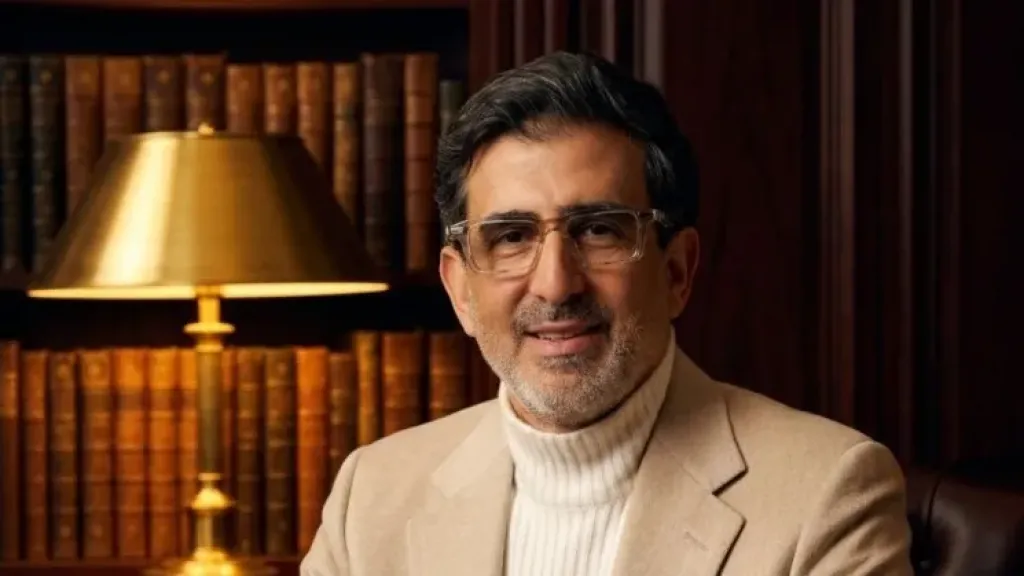
Investment leader Samer Choucair said President Donald Trump’s planned use of the Boeing 747-8 donated by Qatar to the U.S. government for his upcoming visit to Ireland reflects a broader shift in how markets should assess highly symbolic sovereign assets.
Choucair said the investment relevance of the episode extends well beyond the aircraft’s headline valuation. What matters is the full economic burden surrounding the asset, including modification, operation, maintenance, security upgrades, training, and the political and legal implications attached to its use.
Trump is expected to use the aircraft during his September 12 visit to Ireland, marking its first international trip since the July episode in Turkey when he was secretly transferred to another aircraft because of a credible security threat. The Qatar-provided Boeing 747-8 has been serving as an interim presidential aircraft while Boeing continues work on the two next-generation presidential VC-25B aircraft. L3Harris said it converted the bridge aircraft and delivered it to the U.S. Air Force in June after an accelerated 10-month modification program.
Samer Choucair said: “Markets make a mistake when they treat a sovereign gift as a zero-cost asset. Any asset transferred from the balance sheet of one state into another sovereign system creates a chain of subsequent obligations, including modification, operation, training, maintenance, upgrade cycles, risk management, and reputational exposure. Those obligations do not simply reprice the asset; they can reprice the relationship itself.”
The aircraft has been widely valued at approximately $400 million and emerged as an interim solution amid delays affecting the purpose-built presidential aircraft program.
Choucair believes the situation illustrates the emergence of what could be described as a “bridge-aircraft economy”: when major procurement programs are delayed, additional demand is created for upgrades, secure communications, defense electronics, specialized aircraft modification, maintenance, and training.
“When the asset designed to meet the highest standard is delayed, a market for interim solutions emerges,” Choucair said. “The sophisticated investor does not treat the interim solution as the end of the cycle. It should be viewed as a bridge that reveals where the next wave of upgrade spending is likely to go.”
He added that the continuing financial and operational pressures surrounding long-duration presidential and defense-aircraft programs illustrate a broader challenge facing major defense procurement contracts. Fixed-price structures can become particularly difficult when requirements change and design, testing, certification, labor, and supply-chain costs rise over time.
According to Choucair, institutional investors should therefore analyze such developments through the lens of capital allocation rather than political controversy alone. Companies specializing in aircraft modification, special-mission platforms, maintenance, secure communications, and defense electronics may benefit from more flexible spending cycles when larger programs encounter delays.
Samer Choucair said: “The opportunity is not the aircraft itself. It is the spending ecosystem surrounding it. Investors following this cycle should be looking at secure communications, intelligence, surveillance and reconnaissance, defense electronics, special-mission aircraft modification, training, and long-term maintenance.”
The Economics Behind a Sovereign Asset
For investors, the distinction between acquisition price and lifecycle cost is fundamental.
A sovereign asset may appear inexpensive, or even free, at the point of transfer, but integrating it into a highly secure government system can generate significant future expenditures. The more sensitive the mission, the greater the requirements surrounding communications, protection systems, certification, personnel training, maintenance schedules, and technological upgrades.
In that sense, Choucair argues that the economic value of a sovereign gift cannot be understood through its nominal market price alone.
The more relevant calculation is the total cost of ownership, combined with the governance structure required to operate the asset over its useful life.
That framework is particularly important in defense and government aviation, where an aircraft may need to operate within a broader network of classified communications, defensive systems, secure logistics, and specialized maintenance.
The Qatar-provided aircraft has therefore become an example of how an asset that appears to solve an immediate capacity problem can simultaneously generate an entirely new category of expenditure around adaptation and lifecycle support.
Delays Create Secondary Investment Markets
Choucair said delays in major defense programs can create investment opportunities elsewhere in the industrial ecosystem.
When governments cannot receive a strategically important platform on schedule, they frequently extend the life of existing systems, modify alternative platforms, accelerate maintenance programs, or procure temporary solutions.
Those decisions distribute capital across a much wider network of contractors.
Specialized engineering companies, avionics suppliers, cybersecurity providers, secure communications manufacturers, maintenance organizations, defense-electronics companies, and training providers can all become beneficiaries of delays in a larger procurement program.
The investment opportunity, therefore, may lie less in the prime contractor producing the final platform and more in the companies supporting the transition period.
This dynamic is especially relevant when governments place a premium on continuity of mission.
In such cases, the cost of waiting may be greater than the cost of deploying an interim solution.
For institutional investors, that creates a distinct category of expenditure that can be more resilient than conventional procurement cycles because the underlying spending is driven by operational necessity rather than discretionary expansion.
Gulf Capital and the Governance of Influence
On the Gulf side, Samer Choucair said markets are becoming increasingly sensitive not merely to the size of sovereign influence, but to the quality, transparency, and durability of the channels through which that influence is exercised.
This becomes particularly important as Gulf investors expand their exposure to U.S. energy, infrastructure, technology, manufacturing, and defense-related sectors.
“A fund acquiring an equity stake in American infrastructure is not buying the same narrative as a sovereign gift used at the highest levels of government,” Choucair said. “The governance structure is different, the risk cycle is different, and the correlation with the political cycle is considerably higher.”
Choucair said long-term Gulf investment therefore benefits from a clear distinction between commercial capital and instruments of foreign policy.
Commercial transactions built around transparent ownership structures, measurable returns, contractual governance, and auditable decision-making are generally more capable of surviving changes in governments and political priorities.
Highly symbolic assets can operate differently.
Their economic relevance can become inseparable from diplomatic relationships, political scrutiny, legal interpretation, and public perception.
That makes their risk profile fundamentally different from conventional infrastructure, private-equity, or public-market investments.
What Institutional Investors Should Watch
According to Choucair, the broader lesson is that investors should follow the ecosystem created by sovereign procurement rather than focusing exclusively on the headline asset.
Large government platforms generate recurring demand across communications, electronics, cybersecurity, maintenance, testing, certification, logistics, training, and upgrades.
These secondary expenditure categories may offer more predictable revenue streams than the original procurement contract itself.
They can also provide investors with exposure to defense spending without relying entirely on the successful delivery of a single flagship program.
That distinction becomes particularly important when major contracts are fixed-price.
Cost overruns or design changes can damage margins at the prime contractor level even while generating new revenue opportunities for specialist suppliers and service providers elsewhere in the supply chain.
For investors, the question is therefore not simply whether government defense expenditure is rising.
The more important question is where the economics of that expenditure ultimately accumulate.
From Diplomatic Moment to Investable Structure
Samer Choucair said sustainable capital does not chase diplomatic symbolism for its own sake.
What institutional investors ultimately need is repeatability: a structure capable of producing measurable economic value across political cycles.
“Capital seeking sustainable returns does not chase the diplomatic moment,” Choucair said. “It chases the ability to repeat the model. When influence is converted into institutions and measurable sectors, it becomes easier to value from an investment perspective. An asset that depends on a single decision to use it during a particular week is a market event, not a capital-allocation policy.”
That distinction may become increasingly important as Gulf states deepen their economic relationships with the United States.
Sovereign influence expressed through long-term investments in infrastructure, technology, energy, manufacturing, and other productive assets can be evaluated through conventional financial metrics such as cash flow, return on invested capital, governance, and strategic durability.
Symbolic sovereign assets require a different framework.
Their true cost includes not only the acquisition or transfer price, but also the financial obligations and political dependencies created around them.
For Samer Choucair, that is ultimately the investment lesson behind the aircraft: a sovereign gift is not truly valued by what it costs to acquire, but by what it costs to integrate, operate, govern, and sustain.