
Samer Choucair: Gulf Capital Is Reordering Its Priorities as Global Funding Costs Rise
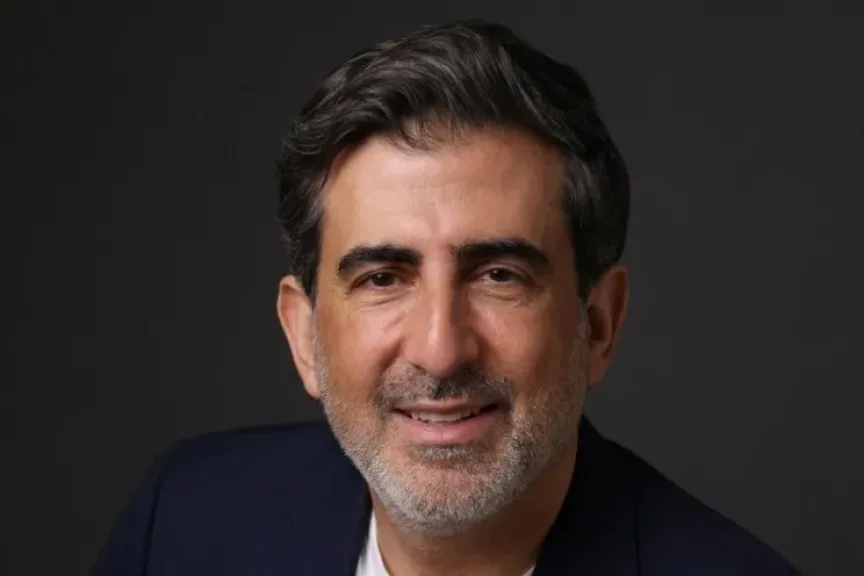
In a week marked by a selloff across global fixed-income markets and rising funding costs, an increasingly visible divergence emerged between capital behavior in the Gulf and in other emerging markets. Saudi Arabia raised $3.25 billion through an international sukuk offering that attracted approximately $16.5 billion in orders—more than five times the size of the issuance—while Egyptian debt instruments experienced partial foreign outflows alongside renewed pressure on the Egyptian pound.
Investment leader Samer Choucair said the divergence is about more than the direction of interest rates. It increasingly reflects the quality, duration, and function of capital itself.
The Gulf, Choucair argued, has developed a greater ability to attract international financing and recycle that capital into a long-term investment ecosystem. Egypt, meanwhile, is testing the resilience of its capital flows against geopolitical shocks, currency volatility, and the continuing sensitivity of foreign investors to global risk conditions.
Money Is More Expensive, but Capital Has Not Left the Gulf
U.S. Treasury yields moved higher as markets repriced expectations for monetary policy and the possibility of interest-rate cuts, while regional geopolitical tensions kept risk premiums elevated across assets that are particularly sensitive to short-term international flows.
Despite that environment, Gulf issuers have maintained considerable access to global investors.
Saudi Arabia’s latest international sukuk transaction was structured through an Ijara format and divided into two tranches: $1.25 billion of five-year securities maturing in 2031 and $2 billion of ten-year securities maturing in 2036.
Strong investor demand allowed pricing to tighten by approximately 30 basis points from initial guidance, with the respective tranches priced at around 70 and 80 basis points over comparable U.S. Treasuries.
Samer Choucair said the significance of the transaction lies not only in the scale of oversubscription, but also in the composition and behavior of the investors behind that demand.
“Coverage exceeding five times the size of an issuance in an environment of rising funding costs indicates the presence of long-term institutional demand,” Choucair said. “It is fundamentally different from liquidity entering a market simply to capture a temporary yield spread.”
The Gulf Is Recycling Capital Back Into Its Economy
Choucair said one of the most important distinctions between Gulf economies and several other emerging markets is their growing ability to transform financing into investment linked to long-term economic expansion.
Saudi Arabia’s Public Investment Fund, the National Investment Strategy, and the broader Vision 2030 framework have created structural demand for both dollar- and riyal-denominated financing. That capital supports fiscal requirements and refinancing needs while simultaneously funding infrastructure, industrial development, tourism, technology, and other strategic sectors.
This does not eliminate risk. Higher fiscal deficits, elevated global borrowing costs, oil-price volatility, and the Gulf’s sensitivity to U.S. monetary policy remain important considerations.
Yet Gulf markets increasingly combine characteristics that are difficult to find simultaneously across many emerging economies: relatively stable currencies, substantial reserves, powerful sovereign wealth funds, improving governance frameworks, and increasingly sophisticated capital markets, listings, and public offerings.
Samer Choucair said strong demand for Saudi sukuk illustrates an important shift in asset-manager behavior. Risk appetite has not disappeared, but investors are not yet convinced that the current volatility cycle has ended. That combination increases the appeal of Gulf issuers with clearer credit curves and more predictable financing frameworks.
Egypt: High Returns Versus Fragile Capital Flows
In Egypt, capital recycling is taking a different and more domestically focused form.
Avanz Capital is preparing to establish Manara 2 with approximately EGP 3 billion in investment capital aimed at supporting export-oriented businesses and expanding their production and export capacity.
The initiative follows an early exit from an investment in a logistics-services company that generated approximately 4.1 times invested capital and an internal rate of return of around 92% in less than two years, with the original investment made in Egyptian pounds and the exit completed in dollars.
For Samer Choucair, the example highlights the distinction between strategic capital and hot money.
Domestic private-equity funds can recycle exit proceeds into companies capable of generating hard currency through exports. Government debt instruments, meanwhile, may remain attractive because of high real yields, but their shorter maturities create a fundamentally different risk profile.
The distinction matters because one type of capital builds productive capacity, while the other can reverse rapidly when currency expectations, global yields, or geopolitical risk change.
Partial Outflows Do Not Necessarily Mean a Mass Exit
The Egyptian pound declined by approximately 1.7% over a relatively short period while some debt-market sessions recorded net foreign selling as geopolitical concerns and profit-taking encouraged investors to reposition after earlier gains.
However, non-resident holdings of Egyptian debt instruments remain elevated compared with previous cycles, while renewed buying has appeared at weaker price levels. For Choucair, that points more toward portfolio repositioning than a wholesale foreign exit—at least for now.
Samer Choucair cautioned against treating every currency decline or every session of net foreign selling as evidence that Egypt’s investment thesis has collapsed.
Institutional investors distinguish between forced exits caused by a shortage of hard currency and normal repricing within a market operating under a more flexible exchange-rate regime, higher reserves, and a stronger foreign-currency position within the banking system.
Choucair said the quality of capital has consequently become more important than its headline volume.
Capital connected to exports, manufacturing, and logistics tends to be structurally more durable than money entering short-duration debt instruments primarily to capture elevated yields.
Capital Is Prioritizing Operating Cash Flow
From an institutional-investment perspective, Gulf sovereign credit remains part of the diversification toolkit for investors seeking yields above those available in developed markets while retaining exposure to credit risks that can be modeled with greater clarity than in many fragile emerging economies.
Within equities, banks, infrastructure companies, and new listings can benefit from the continued recycling of liquidity throughout Gulf economies.
Egyptian equities, by contrast, remain considerably more sensitive to exchange-rate movements, financing costs, and shifts in foreign investor appetite.
Private equity and venture capital reveal another dimension of the divergence. A portion of Gulf capital is increasingly moving toward operating assets with regional scale, while Egyptian capital is placing greater emphasis on exporters and companies capable of pricing in dollars or accessing international markets.
According to Samer Choucair, this reflects one of the defining investment equations of 2026: when financing becomes more expensive, investors demand productivity and genuine cash generation rather than relying primarily on interest-rate differentials.
Risk Is Redrawing the Capital-Allocation Map
Geopolitical risk remains the factor most capable of changing investor appetite unevenly across markets.
Any delay in U.S. monetary easing could further increase refinancing costs, particularly for borrowers dependent on short-duration debt.
For Egypt, weakness in export revenues, workers’ remittances, or Suez Canal receipts could quickly place renewed pressure on the domestic supply-demand balance for dollars.
Saudi Arabia presents a different opportunity set. Financing linked to Vision 2030 and the Kingdom’s industrial, tourism, logistics, and technological transformation remains a central destination for long-duration capital.
In Egypt, Choucair said the stronger structural opportunity is not necessarily found in chasing the highest nominal yield available on Treasury bills.
Instead, investors should focus on companies capable of converting domestic financing into export capacity and sustainable hard-currency cash flows.
The distinction is critical: a high nominal yield compensates investors for risk, but a productive asset can potentially transform the underlying risk itself.
Capital Is Not Retreating—It Is Redefining Its Function
Samer Choucair said the current environment should not be reduced to a simple choice between the Gulf and Egypt.
For sovereign wealth funds, institutional asset managers, and family offices, the more important development is a redefinition of what capital is expected to accomplish.
Saudi Arabia and the wider Gulf increasingly offer the ability to attract international financing and recycle it through economies seeking to broaden their productive bases.
Egypt offers higher yields and potentially significant repricing opportunities, but remains more exposed to capital flows that can reverse when global conditions deteriorate.
Choucair said the next phase of investing will reward those who can distinguish between financing growth and financing maturities, and between assets whose capital is recycled through the Vision 2030 ecosystem and assets whose investment case depends primarily on a temporary interest-rate differential.
For Egypt, the most durable opportunities are likely to remain concentrated in sectors capable of generating dollars rather than simply capturing high domestic yields.
If current conditions persist, institutional demand for Gulf issuance could remain resilient even as global financing costs stay elevated. Egypt, meanwhile, will continue to offer substantial opportunities but will require more active management of exchange-rate risk, debt duration, and liquidity.
Samer Choucair concluded that capital does not move randomly against the current. It gravitates toward markets where risk is managed within a credible and transparent framework—and becomes more cautious in markets where every external shock has the potential to trigger an immediate repricing of the portfolio.