
Samer Choucair: Dollar-Denominated Exits Open a New Chapter for Institutional Investment in Egypt
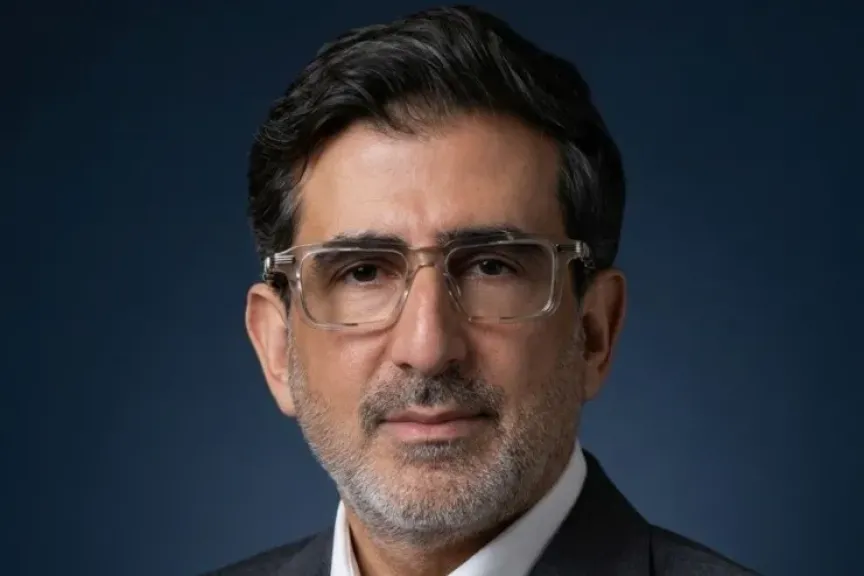
Investment leader Samer Choucair said Avanz Capital Egypt’s move to launch a new investment vehicle, Manara 2, targeting EGP 3 billion in investments, comes at a moment that reflects a broader shift in how private capital is being allocated in Egypt: away from simply financing domestic growth stories and toward companies capable of generating foreign-currency revenues.
Choucair said the announcement coincided with the Manara fund’s exit from Bosta, generating a reported 4.1x return on invested capital and a 92% internal rate of return over roughly two years. The investment was originally made in Egyptian pounds, while the exit was completed in U.S. dollars.
For Samer Choucair, that distinction is strategically important. It demonstrates not only the potential to generate attractive investment returns, but also the market’s ability to recycle capital through exits that produce convertible foreign-currency proceeds.
Exports Are Becoming the New Investment Benchmark
Choucair said Egypt’s ambition to increase exports to $145 billion by 2030 is creating a different framework for evaluating private-market opportunities.
Egypt’s non-oil exports reached approximately $48.57 billion in 2025, representing growth of around 17%, while total exports reached approximately $28 billion during the first half of 2026, up 7.1%.
Yet the country’s export structure remains highly concentrated.
The largest 50 exporters account for roughly 43% of exports, while the top 1,000 companies represent approximately 85%. Choucair said this concentration creates an important investment opportunity among medium-sized exporters capable of broadening Egypt’s foreign-currency earnings base.
“Egypt is moving more clearly from financing domestic growth toward financing the ability to earn hard currency,” Choucair said.
For institutional investors, revenue growth measured purely in Egyptian pounds is becoming less compelling if the underlying cash flows and eventual exit routes remain entirely dependent on the domestic market.
A company capable of converting Egyptian production costs into dollar, euro, or other foreign-currency revenues can offer a fundamentally different risk-return profile.
From Proving the Exit to Recycling Capital
Samer Choucair said Manara’s development provides an important example of how an institutional private-capital ecosystem can mature.
The fund was launched in 2022 with authorized capital of EGP 2 billion and an initial close of EGP 905 million, backed by banking and insurance institutions. It subsequently invested across companies and funds including Bosta, Trella, Algebra Ventures, and Ezdehar.
The acquisition of Avanz Capital Egypt by Exits MENA in August 2026, followed by the Bosta exit and the launch of Manara 2, creates what Choucair described as an important sequence for investors: platform expansion, evidence of exit capability, and then the recycling of liquidity into a new generation of export-oriented businesses.
That sequence matters because one of the central challenges facing emerging-market private equity is not simply identifying attractive companies. It is demonstrating that investors can eventually monetize those positions and repatriate or redeploy the resulting capital efficiently.
A successful dollar-denominated exit therefore carries significance beyond the performance of one investment.
It can establish a reference point for future transactions and potentially reduce the perceived liquidity and exit risk attached to Egyptian private-market assets.
Where Are the Opportunities?
Choucair identified food processing, ready-made garments, chemicals, building materials, engineering goods, and logistics as some of the sectors best positioned to benefit from an increasingly export-driven investment strategy.
Egyptian food-industry exports reached approximately $4.47 billion during the first seven months of 2026, representing growth of 10.7%, while ready-made garment exports reached $1.775 billion during the first half of the year, up 15%.
For investors, however, sector growth alone is not sufficient.
Samer Choucair said the strongest opportunities are likely to be businesses capable of combining competitive production costs with reliable international demand, scalable capacity, disciplined working-capital management, and the operational standards required to serve foreign markets.
Logistics remains an essential component of the same investment thesis.
Increasing production does not automatically create exports. Goods still need to move efficiently through warehouses, ports, customs processes, distribution networks, and international payment systems.
Investment in transportation, fulfillment, supply-chain technology, and export infrastructure can therefore become an indirect way of gaining exposure to Egypt’s broader export expansion.
The Real Test Is Portfolio Quality
Choucair cautioned that an export-oriented strategy does not eliminate investment risk.
Currency volatility, execution risk, corporate governance, sector concentration, working-capital requirements, and dependence on individual export markets all need to be incorporated into valuation and portfolio construction.
“The export story should be measured by the percentage of revenues generated in hard currency, the cash-conversion cycle, and profitability after neutralizing exchange-rate effects—not by slogans,” Choucair said.
This distinction is particularly important in Egypt.
A company can report substantial nominal revenue growth when the Egyptian pound depreciates, while its underlying volumes, margins, or real economic profitability may tell a very different story.
Institutional investors therefore need to distinguish between currency-driven accounting growth and genuine operating growth.
The same principle applies to exporters. Dollar revenue is attractive, but its quality depends on how much imported input, foreign-currency debt, working capital, and capital expenditure is required to generate it.
A New Framework for Egyptian Private Equity
Samer Choucair said Manara 2 could ultimately be important for reasons extending beyond the EGP 3 billion it intends to deploy.
If capital is successfully directed toward companies capable of expanding exports and generating sustainable foreign-currency cash flows, the strategy could help establish a different valuation framework for Egyptian private equity.
Instead of valuing businesses primarily according to their exposure to domestic consumption, investors could increasingly differentiate companies according to exportability, foreign-currency generation, operating productivity, and the availability of credible exit routes.
That would represent a significant evolution for institutional capital.
The most valuable Egyptian companies would not necessarily be those growing fastest in nominal local-currency terms, but those capable of converting Egypt’s cost base, industrial capacity, geographic position, and workforce into internationally competitive cash flows.
“The real test for Manara 2 will not be whether it can raise EGP 3 billion,” Samer Choucair concluded. “The real test will be whether it can identify companies capable of converting that capital into sustainable exports.”
If that model succeeds, Choucair said it could support a broader transformation in Egypt’s private-equity market, with companies increasingly repriced according to export-generated cash flows rather than domestic consumption alone.