
Euro Decline Reprices the Policy Gap Samer Choucair: Capital Chases Real Returns, Not Currency Pairs
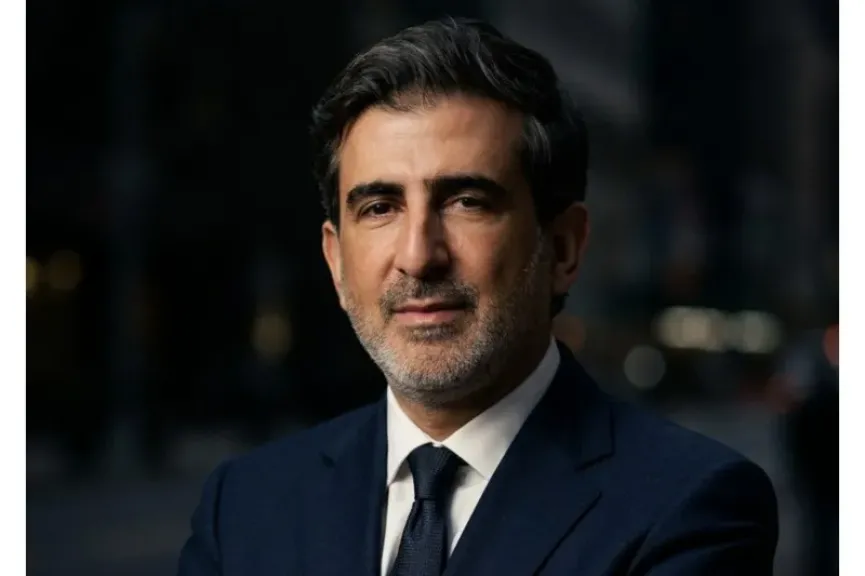
Investment leader Samer Choucair said the euro’s decline to around $1.1566, its lowest level in two weeks, was more than a routine move in the foreign-exchange market. In his view, it reflected a broader repricing of monetary-policy divergence and the economic consequences of the latest energy shock.
Choucair said Brent crude approaching $95 a barrel, alongside the rise in the U.S. 10-year Treasury yield toward 4.80%, strengthened the dollar through three channels: higher yield, safe-haven demand, and the relative resilience of the U.S. economy to energy shocks.
The euro was trading around $1.1566 on September 2 as investors increased downside hedging, while rising energy prices and a more hawkish Federal Reserve outlook added pressure to the European currency.
Three Forces Are Pressuring the European Currency
Samer Choucair said euro weakness reflects the interaction of three major variables: a widening yield advantage in favor of dollar-denominated assets, deterioration in Europe’s terms of trade as energy prices rise, and a market repricing of the probability that the Federal Reserve could maintain a more restrictive policy stance through September.
Choucair said higher energy prices create an especially difficult policy equation for the European Central Bank. Expensive energy fuels inflation, but at the same time erodes real household income and weighs on industrial demand. As a result, tighter monetary policy may become less effective as a sustainable source of support for the euro.
Societe Generale has been associated with a year-end EUR/USD target near 1.15, while ING said this week that a move toward approximately 1.15 by the end of September was plausible if pressure from energy prices and a more hawkish Federal Reserve persists.
For Choucair, the key point is that currency weakness cannot be separated from the broader macroeconomic framework. Higher energy costs weaken European purchasing power and corporate margins at precisely the moment when global capital can earn increasingly competitive returns in dollar assets.
Options Markets Are Positioning for Further Weakness
Samer Choucair said the more important signal is not simply the euro’s spot price, but the shift taking place in options-market positioning.
Investor positioning has become increasingly bearish on the euro, while the preference for dollar exposure extended for nine consecutive sessions, the longest such run since 2017.
Choucair said the market’s transition from simply trading directional moves to actively purchasing downside protection raises the cost of holding unhedged euro-denominated assets. It also means that any short-term rebound in the currency could remain vulnerable to profit-taking unless the underlying energy picture or the Federal Reserve outlook materially changes.
For institutional investors, he argued, EUR/USD should not be treated simply as a short-term speculative trade.
The movement is instead part of a simultaneous repricing of energy, the cost of capital, and the relative quality of underlying assets.
Higher U.S. Yields Are Redrawing Global Portfolios
Choucair said elevated U.S. Treasury yields have restored dollar cash and short-duration dollar assets to a more important position within strategic asset allocation.
At the same time, higher bond yields increase discount rates applied to long-duration assets, creating additional valuation pressure on growth stocks and technology companies whose expected cash flows lie further into the future.
Higher oil and gas prices are also redistributing returns across industries. Energy companies and exporters can benefit from stronger pricing, while energy-intensive European manufacturers, transportation businesses, and industries with limited pricing power face greater pressure on operating margins.
Samer Choucair said global funds therefore need to compare returns on a hedged basis rather than focusing exclusively on nominal yields, particularly when non-euro investors allocate capital to European equities or fixed-income securities.
A European bond yielding attractively in local-currency terms may look very different once the cost of currency hedging is incorporated.
That distinction, Choucair said, is becoming increasingly important in an environment where interest-rate differentials and currency volatility can materially alter the investor’s realized return.
The Gulf Benefits — but Also Faces the Cost of a Strong Dollar
Choucair said the consequences extend directly into Gulf markets because several major regional currencies, including the Saudi riyal, are linked to the U.S. dollar, while oil exports are predominantly priced in dollars.
A weaker euro can reduce the effective cost of purchasing European equipment, technology, professional services, and selected assets for Gulf investors and corporations.
For Saudi Arabia, Choucair said this could create tactical advantages for parts of the investment program associated with Vision 2030, particularly where European capital goods, industrial technology, infrastructure expertise, or strategic corporate assets are involved.
But the other side of the equation is equally important.
A stronger dollar combined with higher Treasury yields raises the cost of dollar funding, making disciplined project execution, capital structure management, and debt allocation increasingly important.
Gulf banks could benefit from a prolonged higher-rate environment through stronger interest income, while companies earning primarily in local markets but carrying dollar-denominated liabilities may require more sophisticated funding and hedging strategies.
For Choucair, this is precisely why the currency move should not be viewed in isolation.
The same dollar strength that creates purchasing-power advantages against Europe can simultaneously increase the hurdle rate applied to new projects.
The Opportunity Is in the Assets, Not the Currency
Samer Choucair said the most attractive investment opportunities are unlikely to come from simply predicting the next move in the euro.
Instead, institutional capital should focus on identifying assets capable of generating real cash flows in an environment characterized by higher energy prices and elevated interest rates.
Energy assets, infrastructure associated with security of supply, companies with globally diversified revenues and dollar-based pricing power, and selected European assets could all attract greater investor attention.
The crucial word, however, is selected.
Choucair warned that buying European assets purely because valuation multiples have declined could create a classic value trap if investors fail to account for energy costs, financing expenses, currency risk, and the underlying competitiveness of the business.
Cheap valuation does not necessarily mean attractive valuation when structural costs are rising.
That distinction becomes particularly important for industrial businesses whose margins are sensitive to energy prices or for heavily leveraged companies that must refinance debt at substantially higher rates.
The Next Scenarios for the Euro
Choucair said a decline in geopolitical tensions combined with lower energy prices could produce a rapid euro rebound, particularly because downside hedging has become increasingly crowded.
If large numbers of investors are positioned for further weakness, even a modest improvement in the macroeconomic environment could trigger a relatively sharp reversal.
The opposite scenario is equally important.
Persistent geopolitical pressure and elevated oil prices could push the euro below $1.15 while driving sovereign bond yields higher again.
ING has said that higher energy costs and a more hawkish Federal Reserve create scope for EUR/USD to move toward 1.15 by month-end.
Additional tightening from the European Central Bank could temporarily support the currency, Choucair said, but such support could come at the cost of weaker economic growth if European businesses and households continue to face elevated energy expenses.
Meanwhile, a more restrictive Federal Reserve could strengthen the dollar while simultaneously increasing pressure on U.S. equity valuations through a higher discount rate.
The result is not a simple bullish-dollar or bearish-euro trade.
It is a broader repricing of the relative cost of capital across regions.
Capital Chases Real Returns, Not Currency Pairs
Samer Choucair concluded that the first question for an institutional investor should not be where the euro is heading.
The more important question is which economy, corporate balance sheet, and asset class can withstand higher interest rates and more expensive energy for longer while continuing to generate durable real returns.
That framework, he said, argues for reducing unhedged exposure to the more cyclical parts of Europe, improving the quality and liquidity of dollar holdings, and focusing across the Gulf on productive assets capable of converting the commodity cycle into sustainable economic growth.
For Saudi Arabia, that means directing attention toward businesses and infrastructure that can translate energy-linked cash flows into industrial capacity, logistics expansion, digital transformation, and long-term productivity under Vision 2030.
The central investment lesson, Choucair argued, is straightforward: capital does not ultimately chase a currency pair. It chases the highest-quality real return available after accounting for inflation, financing costs, energy exposure, and currency risk.